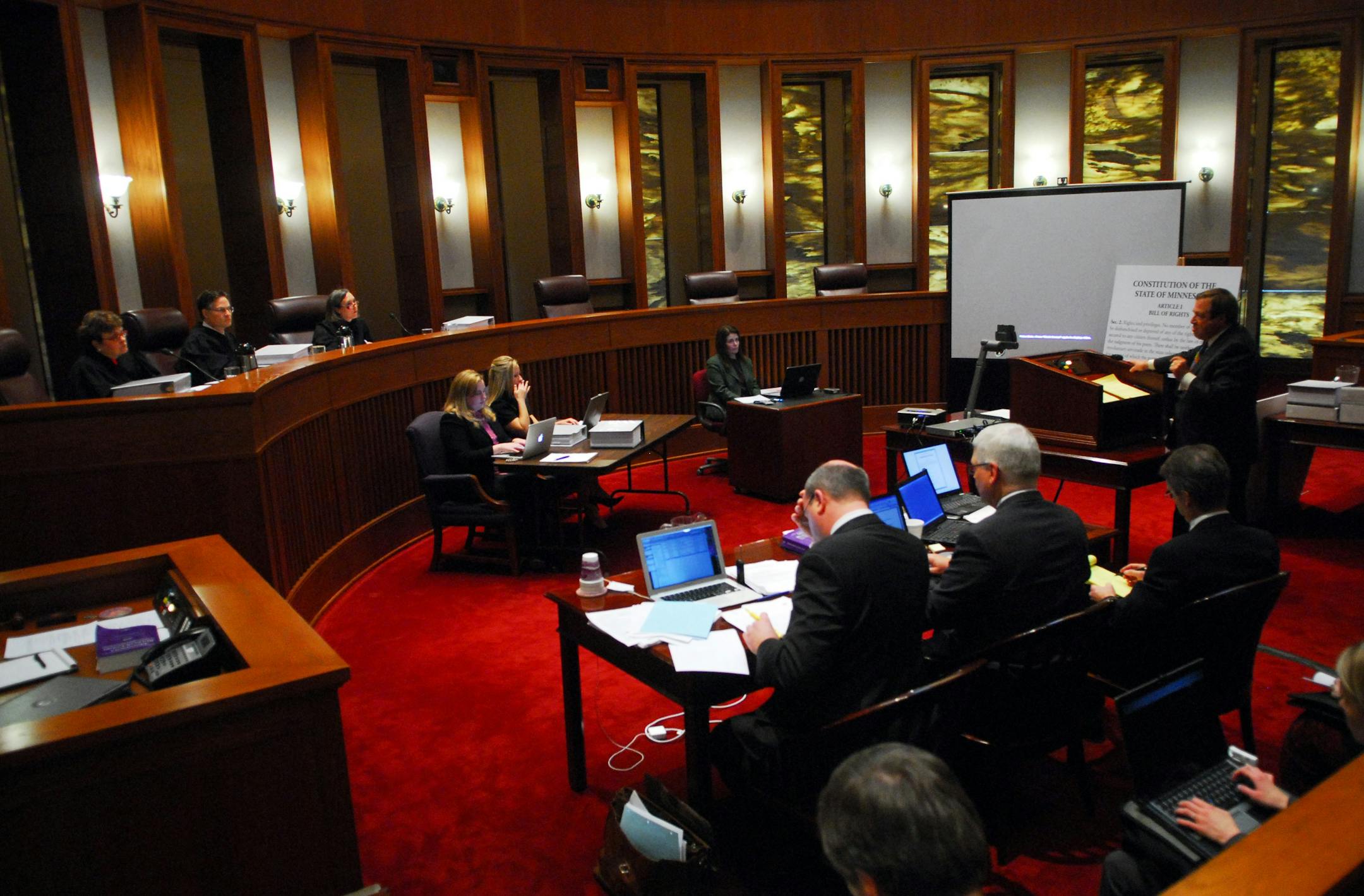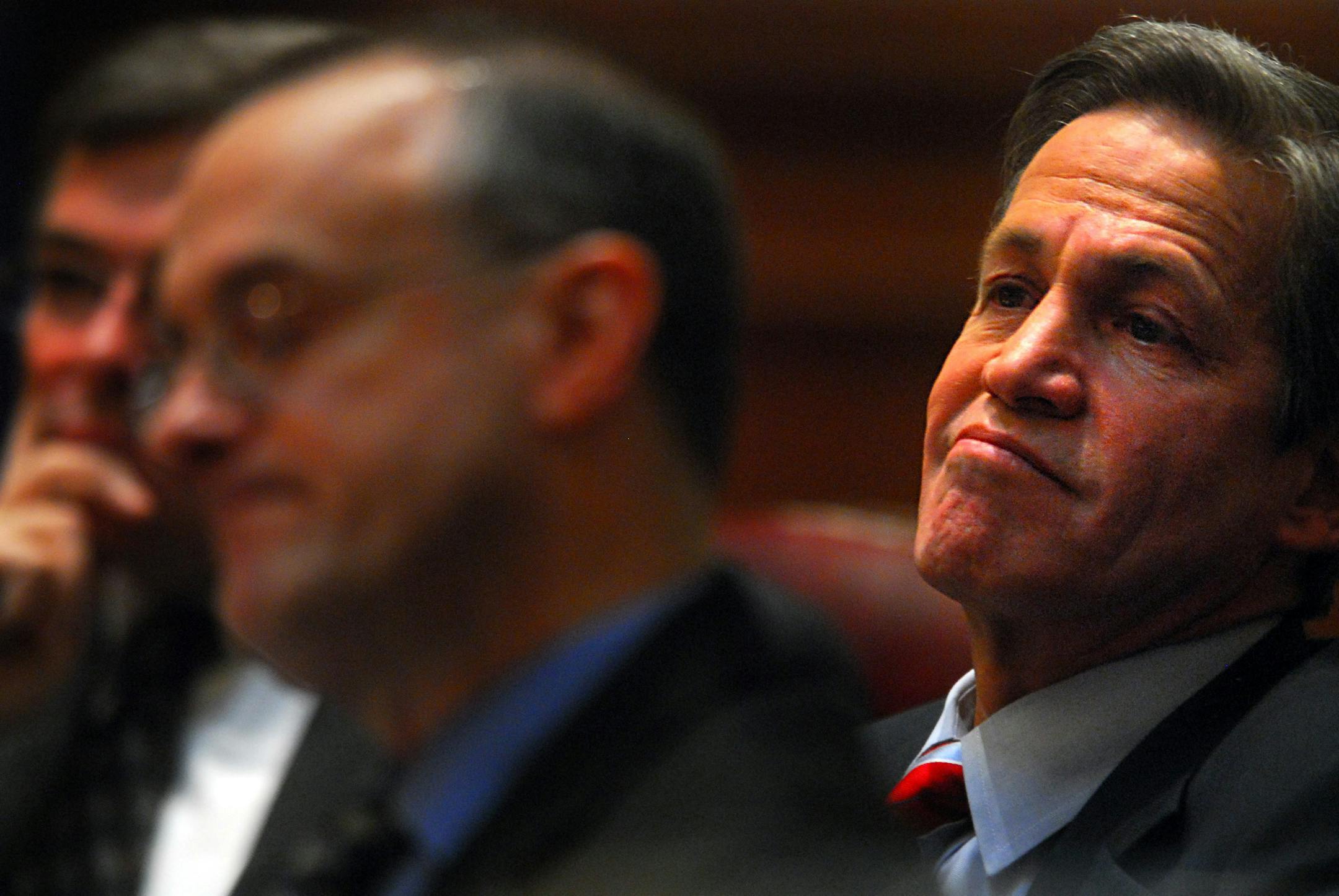
The trial to determine Minnesota's disputed U.S. Senate election got off to a slow start Monday -- and then bogged down.
The trouble came over testimony that workers for Republican Norm Coleman's campaign had marked or obscured copies of some absentee ballot envelopes offered as evidence. The acknowledgment provoked confusion and prompted the judges to demand the original documents.
On that note, the first day of the trial abruptly halted, leaving the second's agenda something of a mystery.
That turn promised to prolong a trial that Coleman lawyer Joe Friedberg predicted in his opening statement would be "extremely tedious" and involve the examination of 5,000 ballots, one at a time.
The Coleman campaign is arguing as part of its court challenge that as many as 5,000 rejected absentee ballots from the Nov. 4 election should be counted. It says those ballots are comparable to some that were judged wrongly rejected and counted during the administrative recount.
The claim is the centerpiece of Coleman's effort to overturn recount results that left DFLer Al Franken with a 225-vote lead.
The day's proceedings slowed after Franken lawyer Marc Elias questioned a Coleman witness about envelopes for more than a dozen absentee ballots that the Coleman campaign said were marked "accepted" but were not counted by county elections officials
Judge Denise Reilly, a member of a three-judge panel hearing the case, asked the witness how a judge could determine who made marks on copies the campaign made of some of the rejected absentee ballot envelopes. Without seeing the originals, "it's difficult to know that completely," replied Gloria Sonnen, who is working with the Coleman recount lawyers.