

One familiar lesson of the Donald Trump era is that no matter how bad today is, tomorrow can always be worse. We learned that there is no bottom to his capacity for outrageous conduct, and no limit to his party's tolerance for it.
Jan. 6 was one of the greatest catastrophes in the history of the American republic. An incumbent president who had decisively lost his re-election bid roused his deranged disciples to attack the U.S. Capitol in an effort to keep him in office. It was an attempted coup, nothing less. Lives were lost; members of Congress and their aides were traumatized; and the president who instigated the attack took pleasure in it.
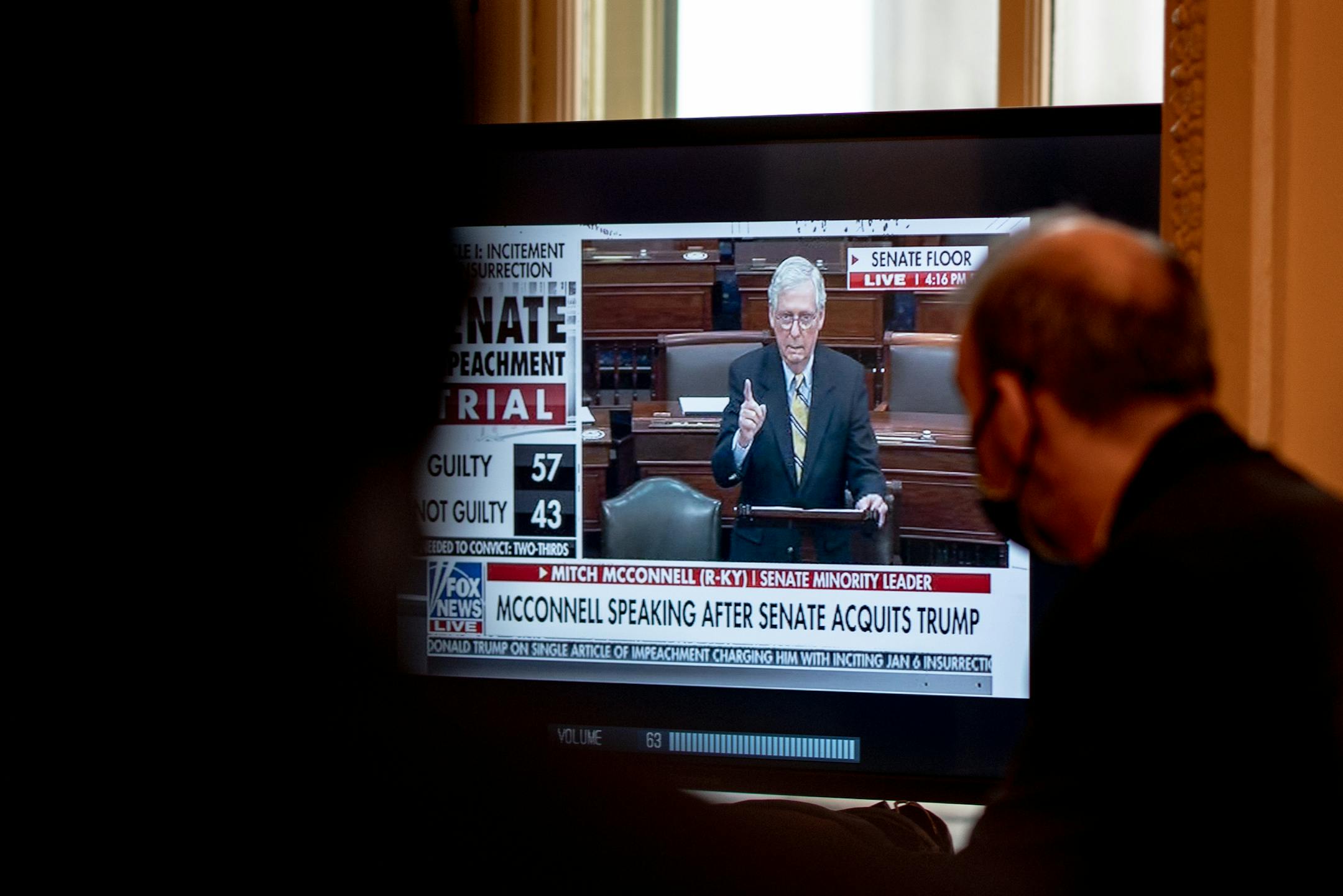
But Saturday's Senate vote to acquit Trump in his impeachment trial was worse. Forty-three duly elected representatives of the people of their states chose to ignore or rationalize Trump's blitzkrieg. They repudiated their sworn duty to "support and defend the Constitution of the United States against all enemies, foreign and domestic."
No American president has been so openly contemptuous as Trump of the constraints of the Constitution. He decided long ago to treat any defeat at the polls as the result of fraud, regardless of the reality. If the democratic processes of our system did not give him what he wanted, he would wage war on them. And he did — starting months before Americans went to the polls and continuing for months afterward.
Any elected government can be hijacked by a skilled and ruthless demagogue. But in the design of our system, Congress is supposed to serve as a counterweight to the president, jealous of its prerogatives and independent of the executive branch. The impeachment power is the ultimate check, allowing legislators to remove any president who abuses his office.
But the impeachment power now has about as much importance as the Third Amendment — which forbids quartering of soldiers in private homes during peacetime. Trump's second acquittal leaves no doubt that for most Republican members of Congress, party comes before country, now and forever.
The framers feared the emergence of political parties and thought the framework they erected would prevent it. In his farewell address, President George Washington declared, "The common and continual mischiefs of the spirit of party are sufficient to make it the interest and duty of a wise people to discourage and restrain it."
Disagreements over religion, government and other matters, wrote James Madison in the Federalist, has often "divided mankind into parties, inflamed them with mutual animosity, and rendered them much more disposed to vex and oppress each other than to cooperate for their common good." A better explanation of Trump's acquittal would be hard to find.


