

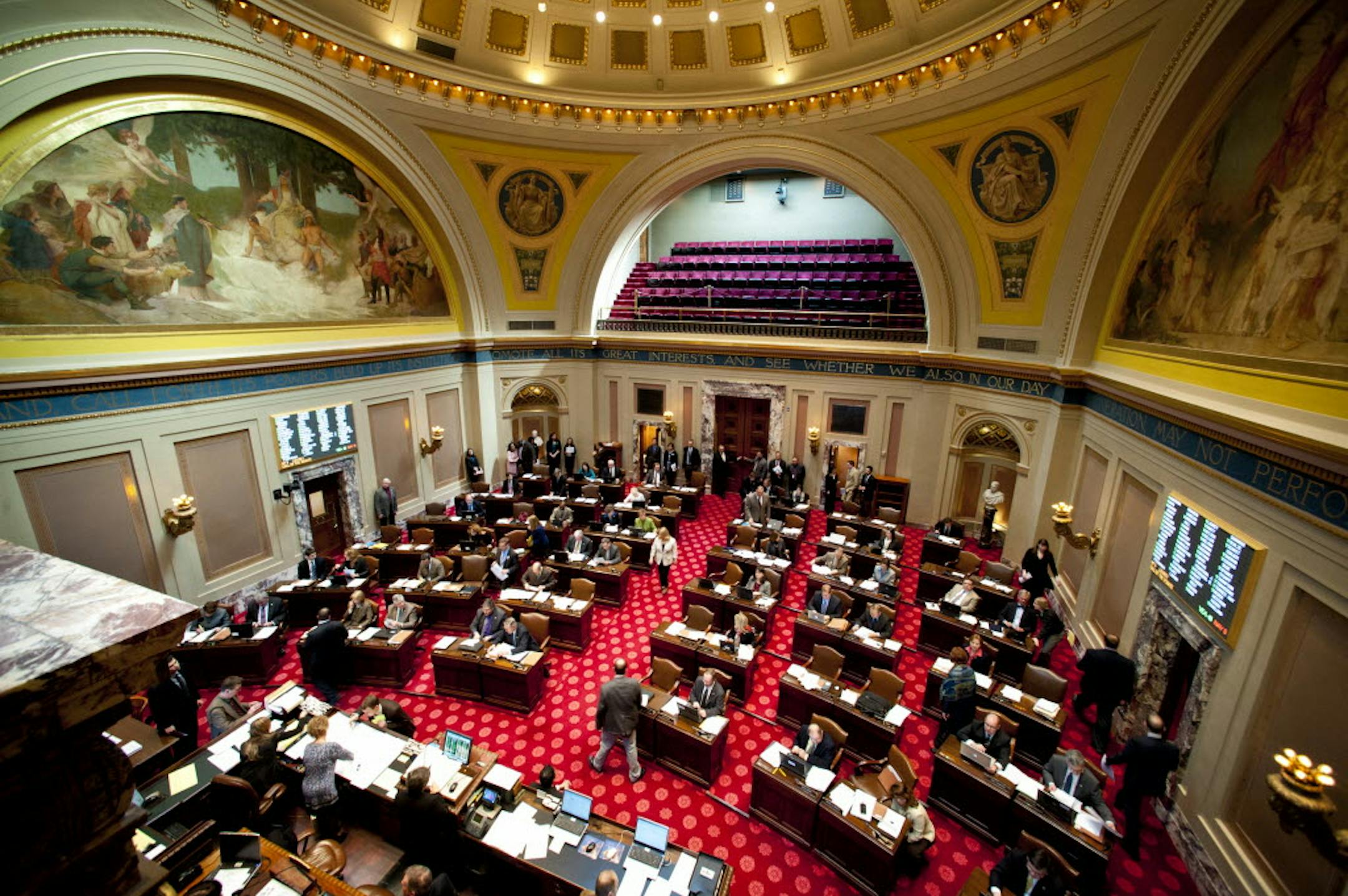
The Minnesota Senate is grinding through hour after hour of debate on sweeping changes to the state's health insurance system.
"This is a gargantuan undertaking," Gov. Mark Dayton said Thursday, legislation that will create the new Minnesota Health Insurance Exchange headed to the Senate floor. "I'm mindful that the expectations are very high so people will probably be disappointed."
The exchange is expected to be a user-friendly online marketplace where an estimated 1.3 million Minnesotans and small businesses will be able to shop for health insurance, starting next year.
"We have a bill that will work for industry in Minnesota and also importantly will work for consumers in the state of Minnesota," said Sen. Tony Lourey, DFL-Kerrick, who has shepherded the exchange bill through nine committees and 27 hours of debate over the past two months.
The exchange, Lourey said, will have a "profound impact" on Minnesota's economy. Not only will 300,000 uninsured Minnesotans have access to health coverage, he said, the state's health care providers will no longer have to shoulder $150 million in uncompensated costs from treating people without health insurance.
For opponents, the expectations are more dire. Opponents see the exchange as an expensive, intrusive government overreach into private health decisions. Critics worry about how the exchange will safeguard consumer privacy; about how its $60 million annual budget will be financed; and about the power its seven-member board will have to include or exclude health plans from the online marketplace.
"I'm very concerned," said Sen. Julie Rosen, R-Fairmont, who made the first attempt to amend the bill. "We are creating the most powerful board in the state of Minnesota and if we don't have measures to keep them accountable going forward, we will be back."
By next year, health insurance will be mandatory in this country, and these state-based exchanges are a cornerstone of the federal Affordable Care Act healthcare reforms. Minnesota has until the end of this month to set up its own exchange, or use one developed by, and run out of, Washington, D.C. The Minnesota House passed its exchange bill Monday.


