

Minnehaha Falls has been attracting tourists to Minnesota for nearly 200 years, with a sharp uptick after 1855, when Henry Wadsworth Longfellow penned "The Song of Hiawatha," his fanciful epic poem about the love of an Ojibwe warrior for a maid named Minnehaha.
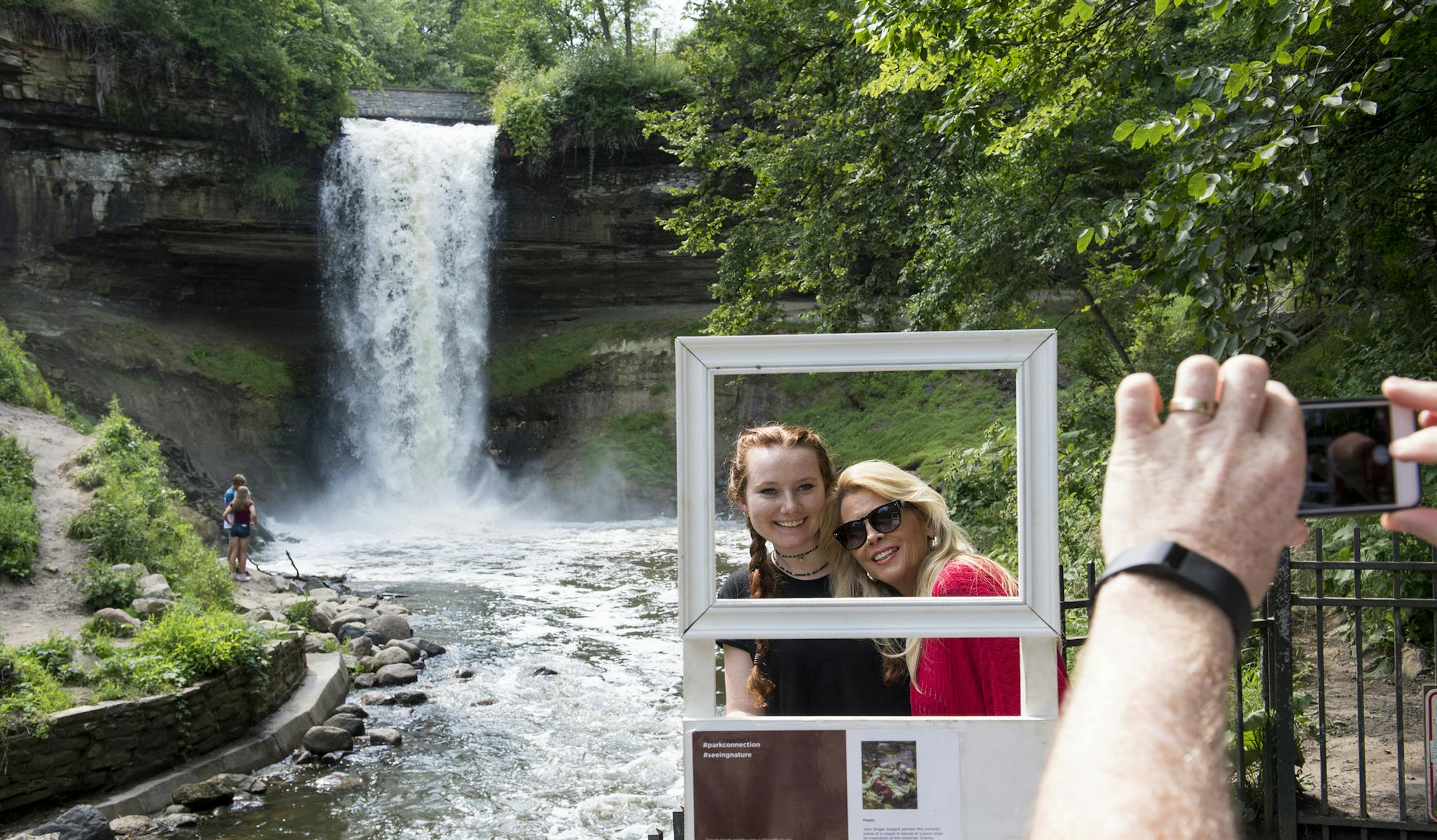
The pretty waters were romanced in tourist brochures that lured such illustrious visitors as painters George Catlin and Albert Bierstadt and writer Henry David Thoreau.This summer every visitor to Minnesota's most famous cascade can make art by using the handy picture frame on a stand poised at its base.
Looking through it, visitors discover an ideal view of the foaming water tumbling from a limestone ledge into the rocky basin below. With a bit of maneuvering, the frame fits family or friends into the picture, too.
The frame is one of 19 that have been strategically positioned along the Mississippi National River and Recreation Area from Fridley to Prescott, Wis.
The vistas they overlook have been dubbed "Masterpieces of Nature" by park officials and the Minneapolis Institute of Art, which is co-sponsoring the program. Both organizations encourage people to upload and tag their snapshots on Instagram (#seeingnature) and other social media. The stands will be available through Sept. 18.
"One of our missions is to take art outside the museum's walls and into the community," said Kim Huskinson, marketing manager at the institute. "Though there aren't any paintings out there, people do see nature differently when framed through the lens of art."
Part of the national park system, the Mississippi Recreation Area encompasses 54,000 acres and stretches 72 miles along the river from Anoka County south to Hastings. The only national park dedicated exclusively to the Mississippi, it incorporates urban and natural sites that are mostly owned and managed by city, state or private entities.
"People have been taking the Mississippi for granted for so long," said Katie Nyberg, executive director of Mississippi Park Connection, a nonprofit organization that supports the National Park Service. "It's the fourth longest river in the world and the largest in North America. It starts here in Minnesota, flows through 10 states, and is the migration highway for 40 percent of America's birds.


