

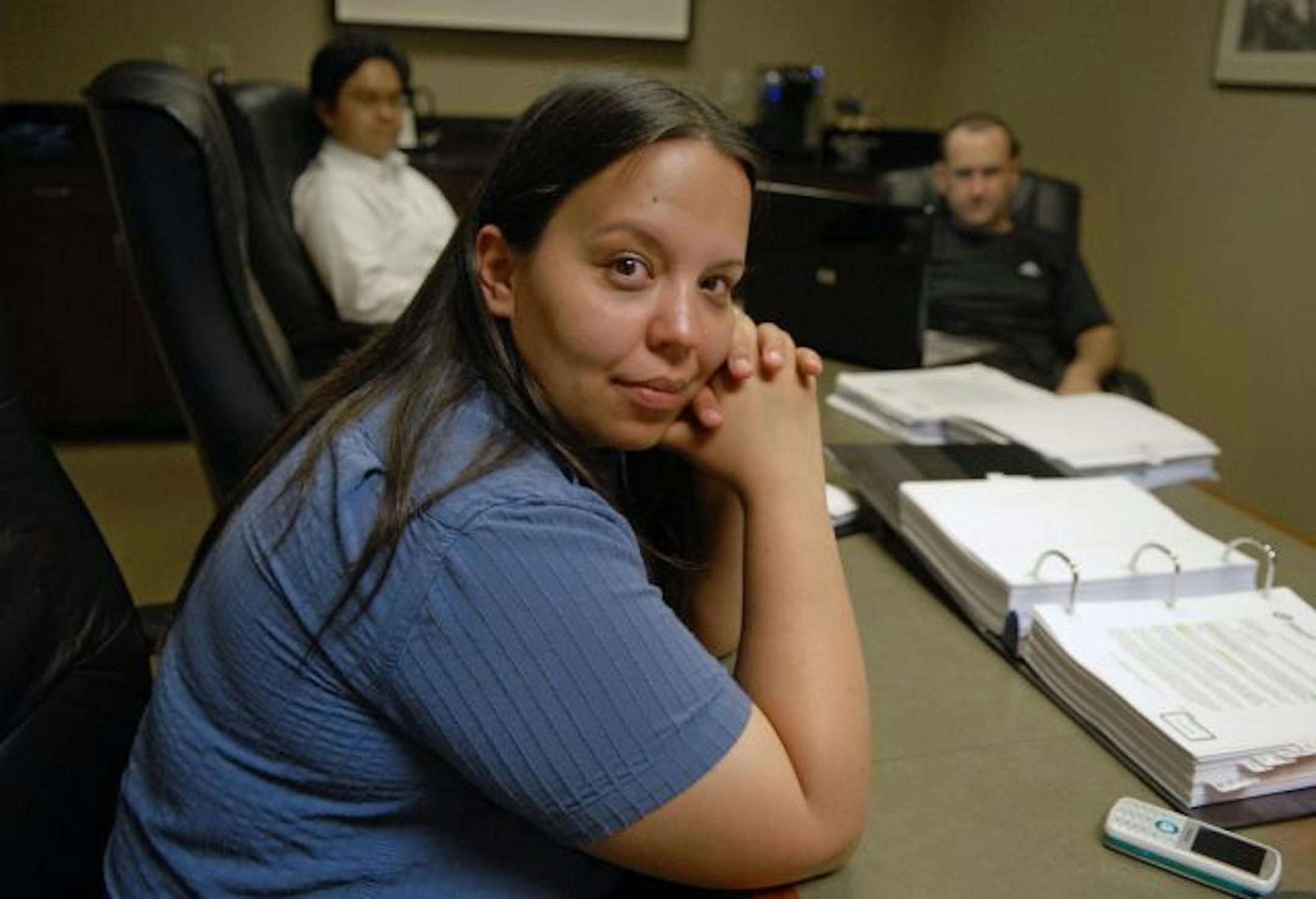
The first match ended with record companies celebrating and a Brainerd single mother stunned with a $220,000 bill for illegal file sharing. Now both sides are gearing up for a rematch to begin today.
Although the recording industry maintains it is confident of a repeat victory, Jammie Thomas-Rasset has a new legal team and a new strategy that challenges all music copyrights, arguing that the songs belong to the artists, not the record companies.
The future of file-sharing, and possibly the music industry, may depend on what happens in the Minneapolis Federal Courthouse, room 15E.
In 2006, the Recording Industry Association of America (RIAA) accused Jammie Thomas, then 28, of illegally downloading and distributing 24 songs through Kazaa, a file-sharing network. The record companies claimed she used Kazaa to download 1,700 songs.
Of more than 30,000 suits brought by the recording industry against file-sharers, Thomas-Rasset's is the only one to go to a jury trial.
Before her trial in 2007 she had a chance to settle for between $3,000 and $5,000, said Cara Duckworth, spokeswoman for the RIAA. She fought instead, denying that she had downloaded or distributed any music.
A federal jury in Duluth found the mother of two liable for copyright infringement and set damages at $9,250 per song or $220,000, more than six times the $36,000 a year she said she made working for the Mille Lacs Band of Ojibwe.
But months later, presiding Judge Michael Davis dismissed the verdict, saying he had erred when telling the jury that simply making songs available constituted infringement.


