

A sensible, bipartisan solution to the conflicts of interest that too often arise between credit ratings agencies and the firms that hire them to judge their products should be adopted by the Securities and Exchange Commission.
The reform, championed by Sen. Al Franken, D-Minn., and Sen. Roger Wicker, R-Miss., is the result of an amendment to the 2010 Dodd-Frank financial-reform legislation. The amendment triggered a two-year study that requires the SEC to act if it determines that it is "necessary or appropriate in the public interest or for the protection of investors."
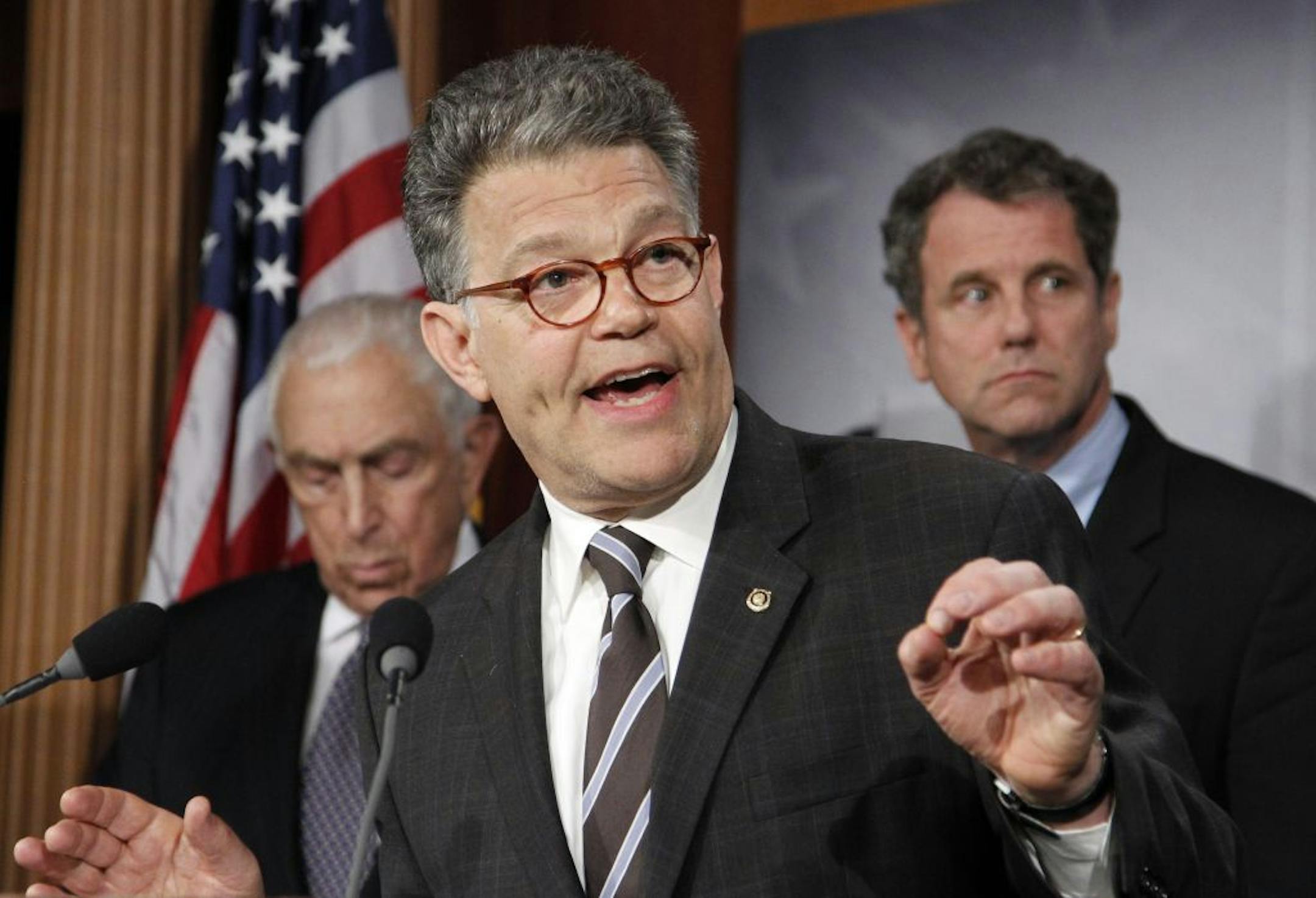
This was the issue at hand at a May 14 Credit Ratings Roundtable convened by the SEC. Franken appealed directly for a plan that would create an independent, SEC-appointed board that would assign which ratings agency would calculate the risk of financial products.
Currently, sellers of financial products hire their own ratings agencies. This can create a conflict of interest, because agencies have an incentive to signal that they will assign a high rating to win the business.
"The analogy I like to use is if a figure skater paid the judges to give her a '10' every time," Franken told an editorial writer.
At the roundtable, Franken used a regional example that connected Wall Street to Main Street. "A pension manager making investments for the pension funds of volunteer firefighters in Kandiyohi County in central Minnesota simply doesn't have the resources to do his or her own credit risk analysis," he told commissioners.
Those agencies with the resources — like Standard & Poor's, Moody's, and Fitch, the three firms that dominate the market — are resisting changing a system that has brought them benefits.
"The [Franken] proposed system could create new conflicts, be costly, slow to implement and cause uncertainty to the marketplace," Douglas Peterson, president of Standard & Poor's, said at the roundtable. "We believe that a government-run assignment system is not the best way forward."


