What does it take to boost bus ridership? I recently visited one peer city which offers some clues.
Seattle is among many cities across the country that have been experimenting with enhanced bus lines, which are similar to the changes Metro Transit is planning for St. Paul's Snelling Ave. and several other corridors. It was also the fastest growing city in the United States last year, expanding its population by 2.8 percent between 2012 and 2013.
Below are some observations about the bus -- and other transit options -- from this MPLS blogger's trip.
Seattle and the Twin Cities are often considered peers because they share a metropolitan area of just over 3 million people. The Seattle area sits just one spot ahead of the Twin Cities in a list of the country's largest metro areas (UPDATE: Some readers have pointed out that the Seattle area's population is more concentrated).
Yet Seattle's transit system averaged 62 percent more average weekday riders than the Twin Cities in 2012, according to the National Transit Database. In both cities, most of those riders took the bus.
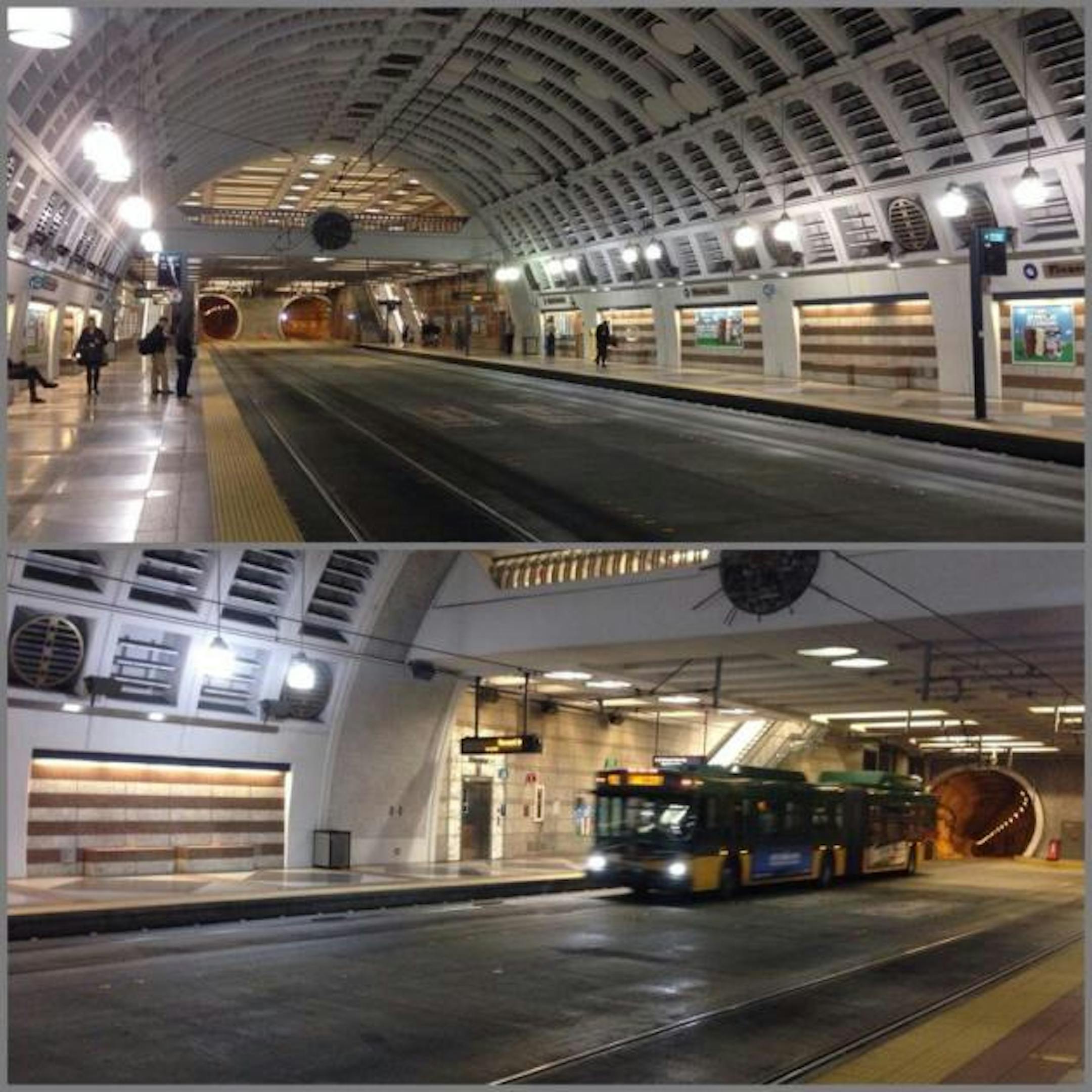
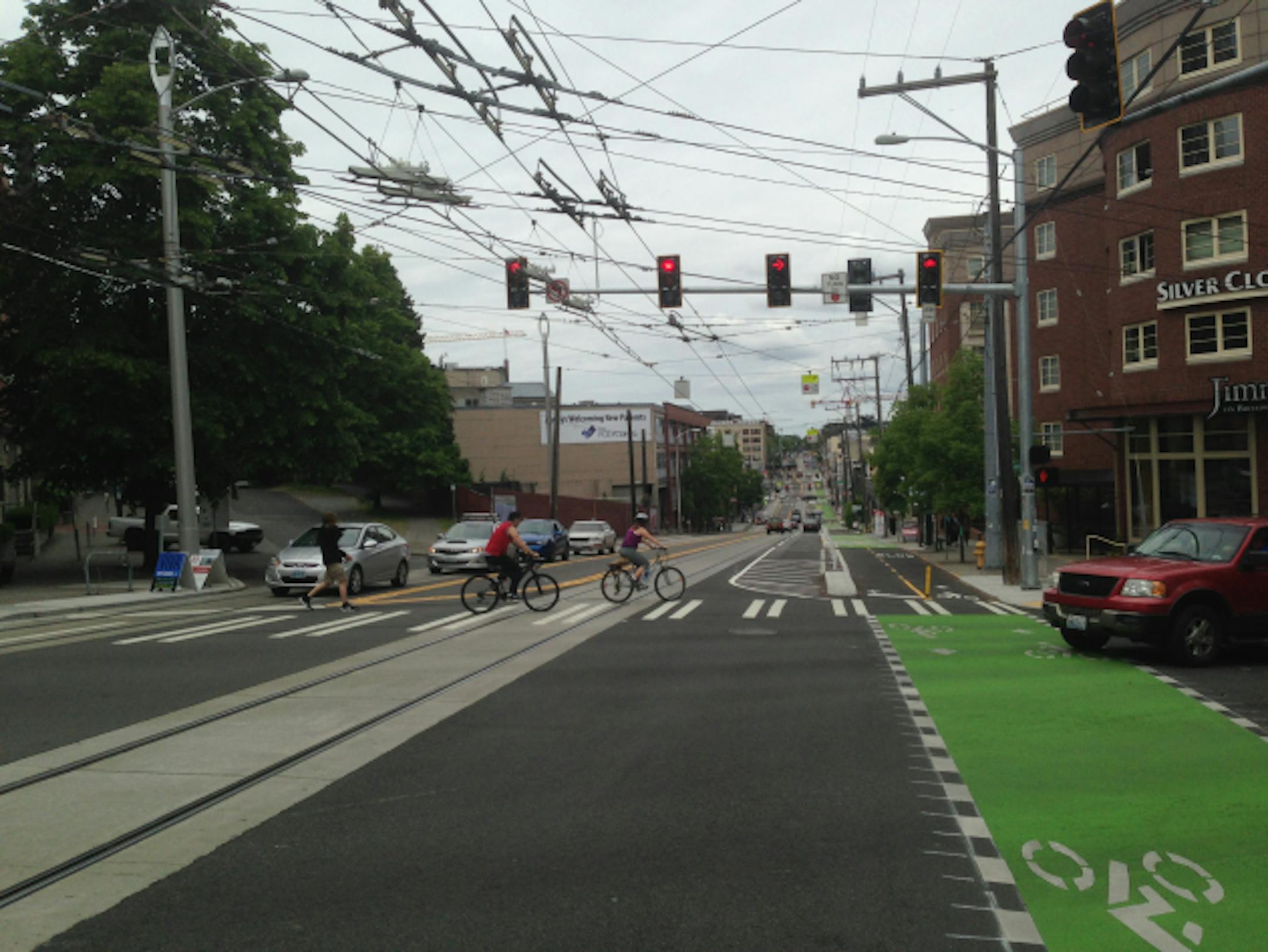
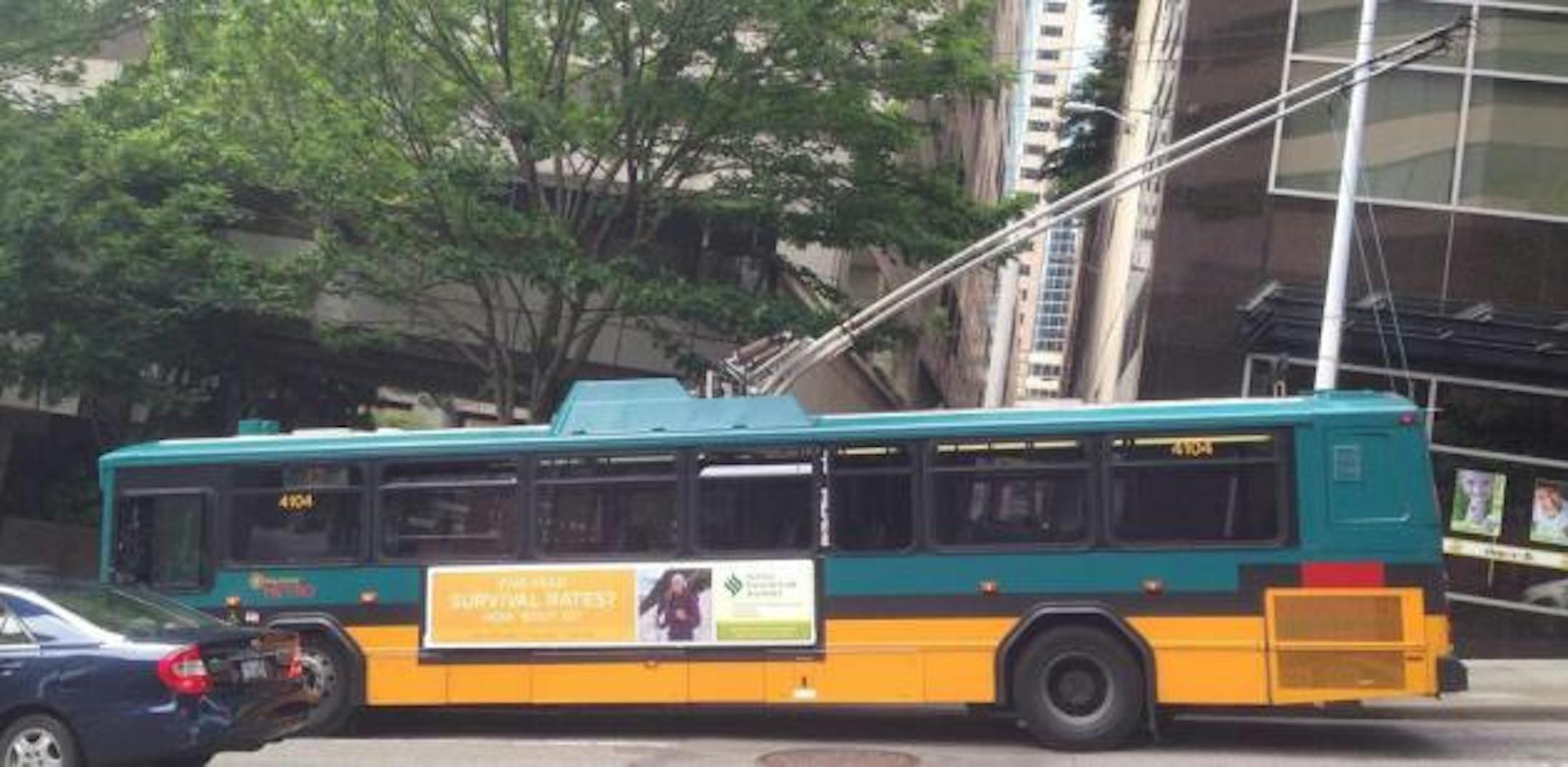
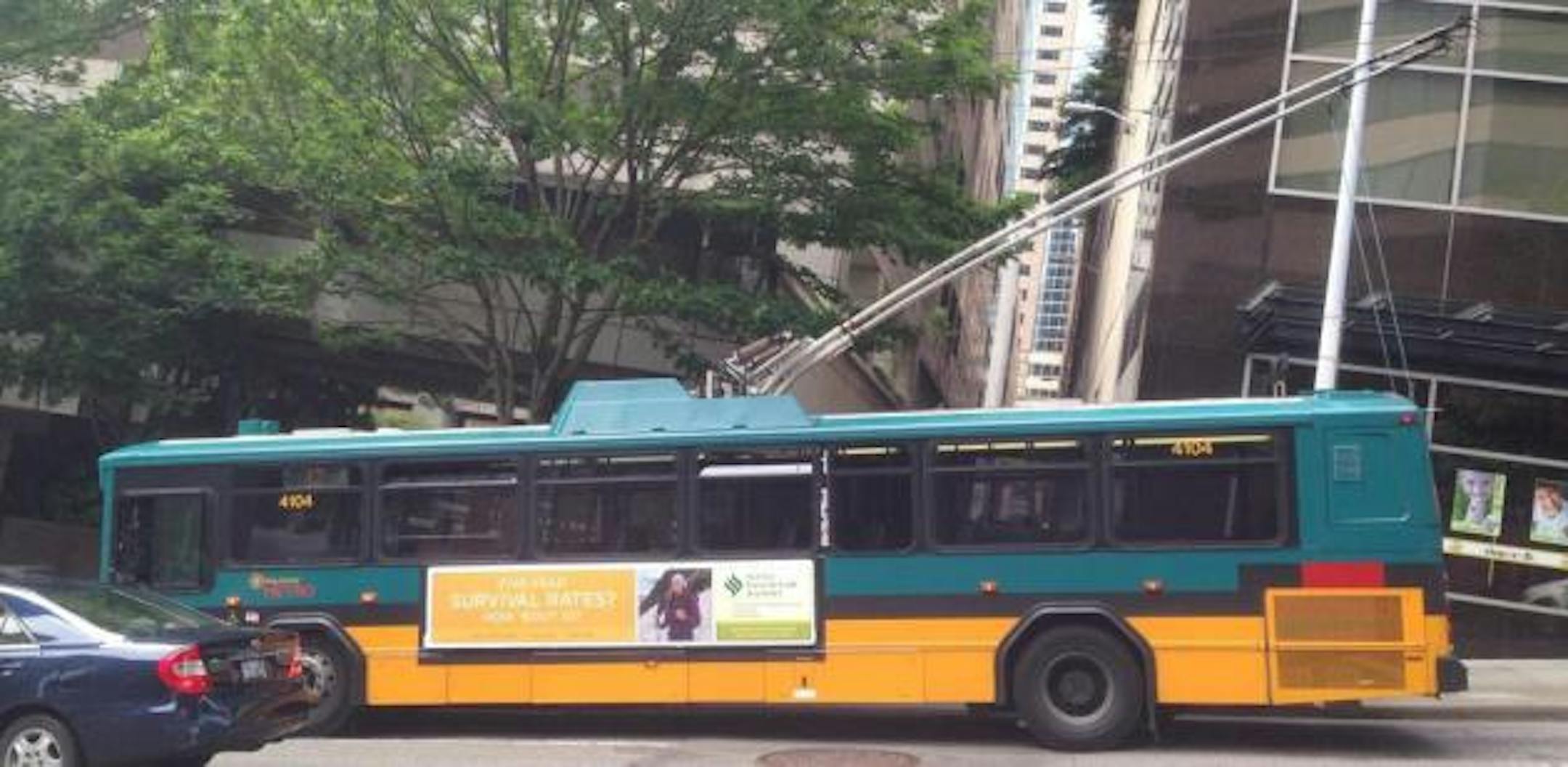
The most obvious difference between the two bus systems is the use of electrified overhead wires that are weaved across Seattle to power the trolley buses. The electric motor makes the buses nearly silent when stopped, much quieter when driving and eases their travel up hills.
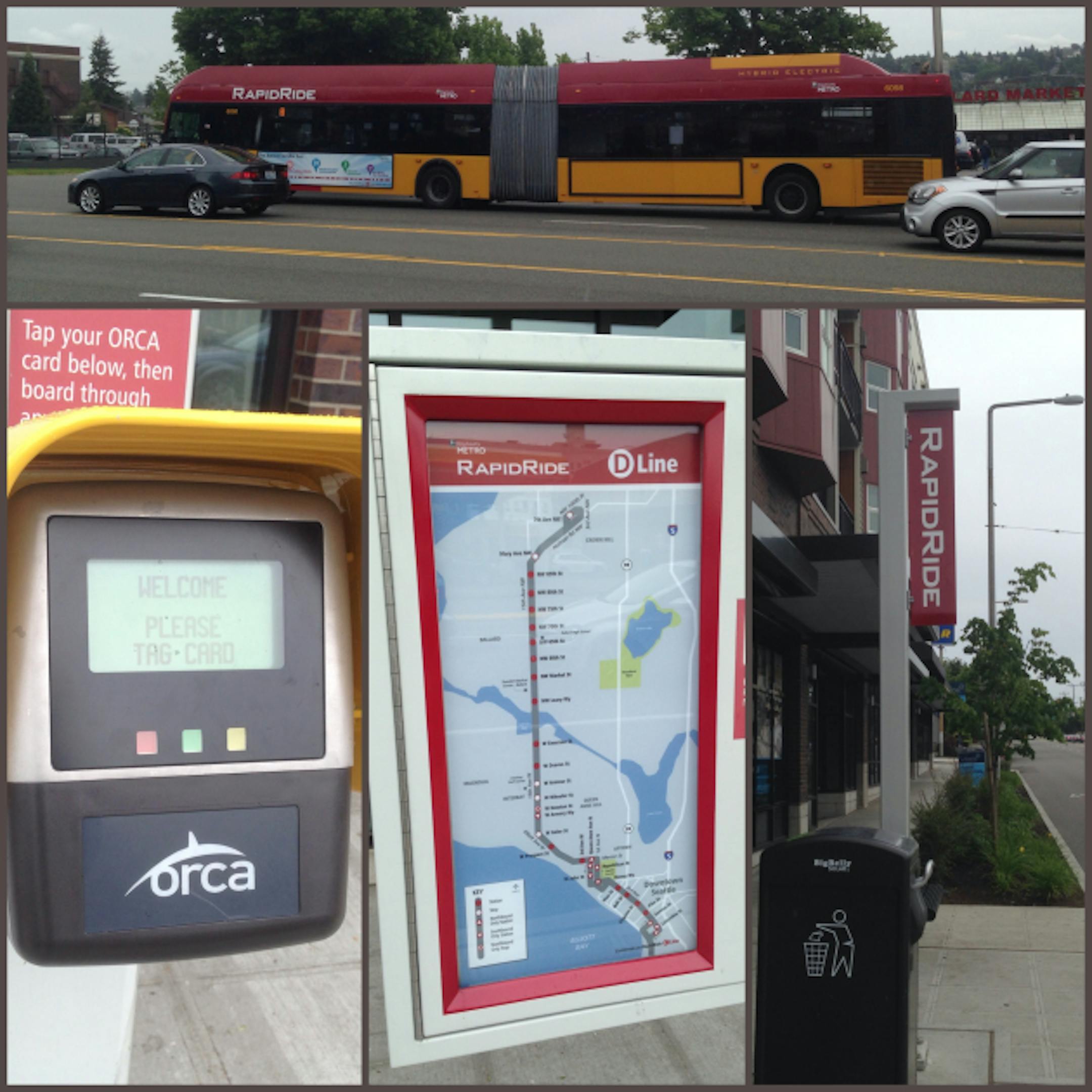
But in the last several years Seattle's King Country Metro Transit has also begun to roll out RapidRide. The series of enhanced bus lines boast 10-minute frequencies during peak hours, traffic signal priority, onboard wi-fi, real-time arrival information at stops, more space between stops and pre-boarding payment systems (right).
RapidRide now consists of six routes, the latest of which was launched this June. King County Metro Transit has seen major ridership increases along each of the corridors, which collectively now account for 12 percent of total ridership in the bus system at 50,000 rides a day. The program's total budget is $212 million.