

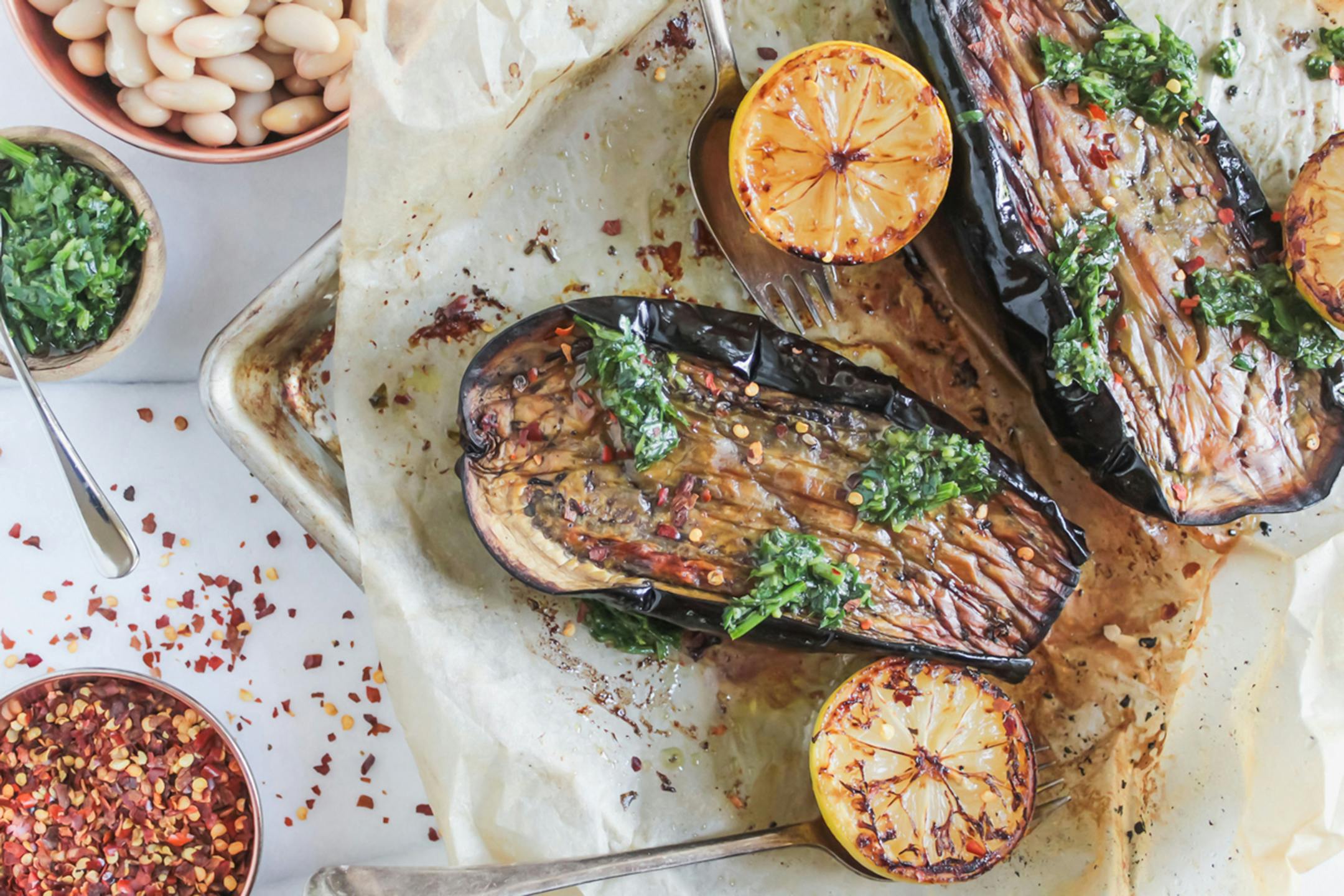
As much as I appreciate Eggplant Parmigiana, there's a lot more that a good eggplant can do.
The whole world appreciates eggplant for its flavor and versatility. At our farmers markets, you'll find all sizes, shapes and colors piled high on the tables — shiny and black, thin and foot-long, bright fuchsia, magenta with white striations, pale violet, pale green, egg-shaped and ivory. As chef, Gourmet editor and author Ruth Reichl wrote in her cookbook "My Kitchen Year," "No other vegetable is so content to abandon itself to your will."
Though technically a fruit, eggplant is edible only when cooked. Regardless of shape, color or variety, all eggplants taste pretty much the same. When choosing any eggplant, look for those that are firm, smooth, glossy and heavy for their size, meaning super fresh and local. Store them at room temperature — not in the refrigerator, as they hate the cold. Pile them in a big bowl on the counter for a lovely still life until ready to cook.
Eggplant is a key ingredient in moussaka, ratatouille and baba ghanoush. And on its own, whole or halved, roasted eggplant makes a wonderful container for cooked beans or grains as a mighty yet meatless meal. Middle Eastern countries with hot, dry climates boldly season roasted eggplant to marinate for a few hours, or even a day, to absorb the flavors.
No matter how you choose to prepare eggplant, do not baby it. It's best fully cooked to become tender and very soft. I like them best when the skin is mercilessly blackened and they've collapsed — silky and creamy and indulgent, yet surprisingly good for you, too.
Eggplant with Chermoula and White Beans
Serves 4 to 6.
Seasoned with a blend of herbs and spices used in North African cooking, this roasted eggplant makes a hearty side dish or, topped with cooked beans and/or grains, a satisfying meatless main. Extra spice paste may be stored in a covered container in the refrigerator for up to 3 days. From Beth Dooley.
• 1 clove garlic, crushed


