

When the World Trade Center towers fell on 9/11, debris rained down near Manhattan's historic St. Paul's Chapel. But an old sycamore tree took the brunt of the blast, and the 1766 chapel where George Washington once worshipped didn't even lose a window.
Sculptor Steve Tobin paid tribute to the tree and the tragedy in a monumental 20-foot bronze casting of the sycamore's stump and roots. The 2004 work, known as the Trinity Root, is the only art memorial on display near the site of the disaster.
The project was a turning point for Tobin. After years of working in bronze, he felt he could not make another piece to compare to the Trinity Root. He switched to working with steel, and the style of his root sculptures shifted from naturalism to modernist. The result, a series of works called Steelroots, is on display outdoors at the Minnesota Landscape Arboretum in Chanhassen starting Saturday and running through January.
While the arboretum has hosted special exhibitions for nine years, this is the first with a single artist whose work falls into the fine art tradition, said Sandy Tanck, the arboretum's manager of interpretation.
"It's a magical fit," she said. "This artist works out of reverence for nature, which resonates with us. It brings parts of plants that people often ignore out of the ground so we can consider them. And the way the art works in the landscape is fascinating to me."
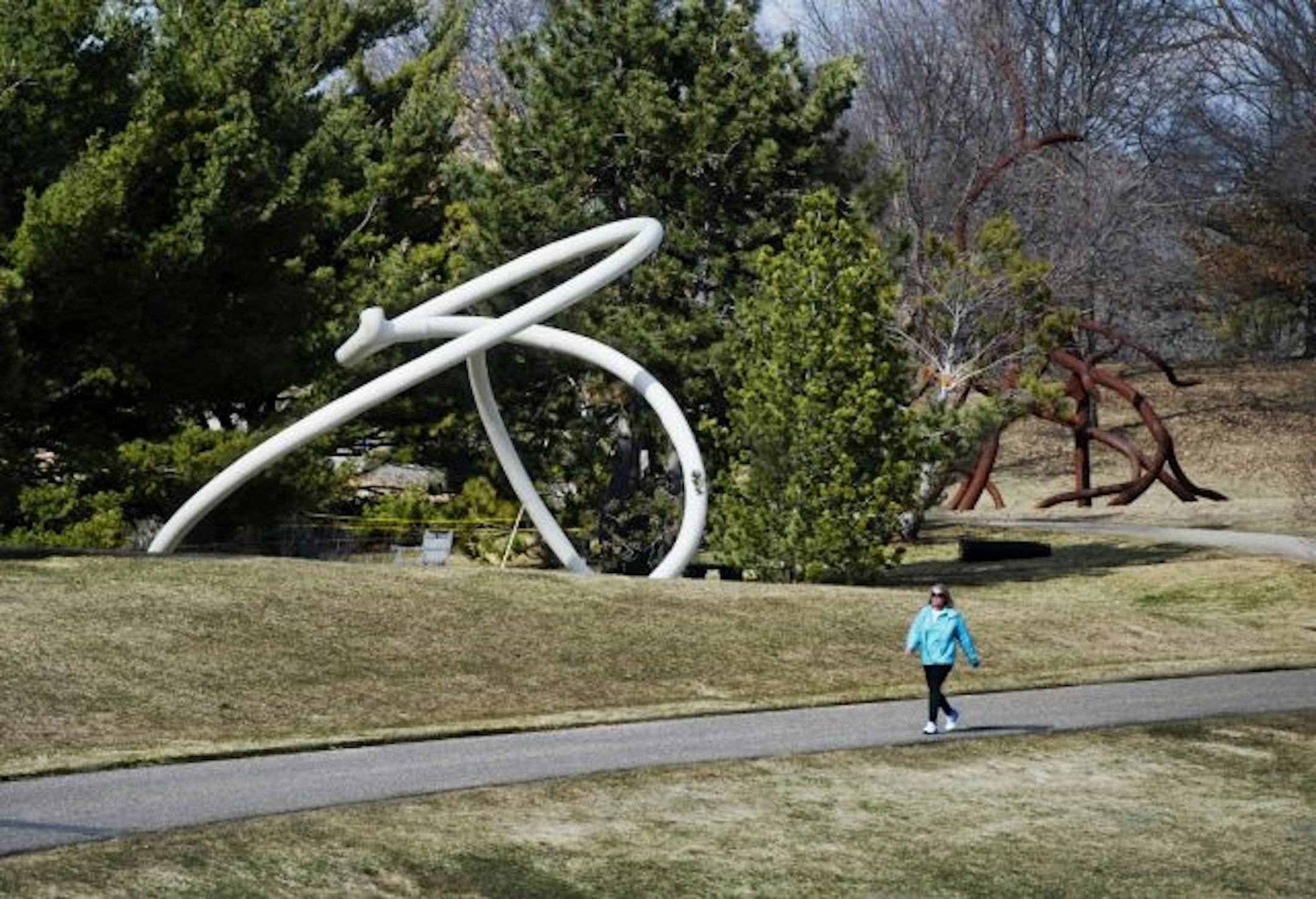
Sixteen of Tobin's sculptures are on display within about a half mile of the arboretum's Oswald Visitor Center. Made from reclaimed steel pipe that show the scars of use, they range from a playful white piece with curly projections that rattle and bounce up and down when touched to a rust-colored, 40-foot giant that seems to grip the earth even as a lone root reaches for the sky.
"My training is in math and physics, but I've always been interested in nature and the earth," Tobin said by phone from his home in Pennsylvania. He has worked in clay, glass and bronze and is well known for sculptures of African termite mounds, the forest floor and sweeping bronze "walls" of bones. But Tobin said roots are a subject that could keep him busy for much of the rest of his career.
"The power of the unseen is what fascinates me," he said. "We look at trees and we focus on what's visually apparent. But what's important is what's below ground.


