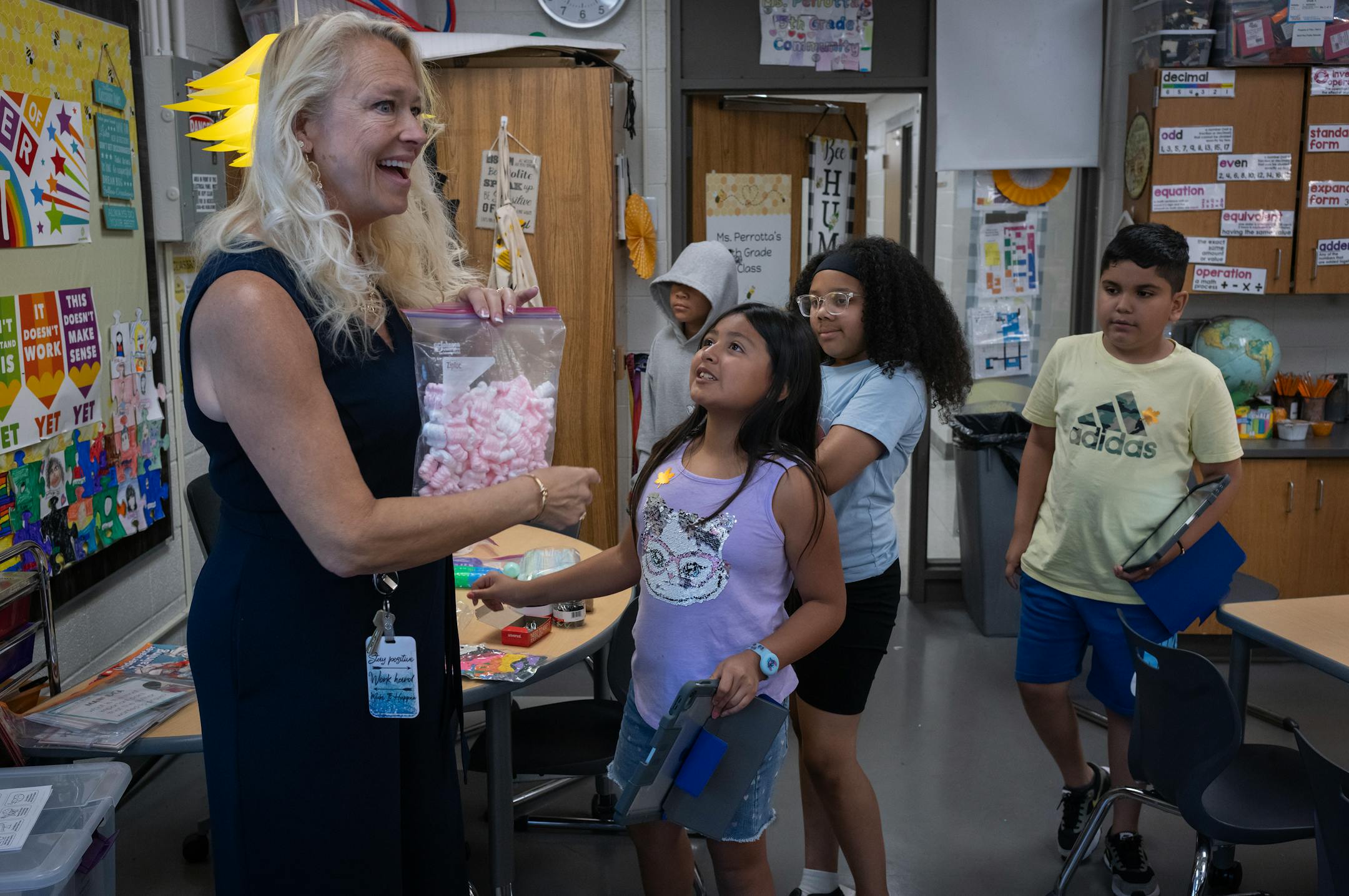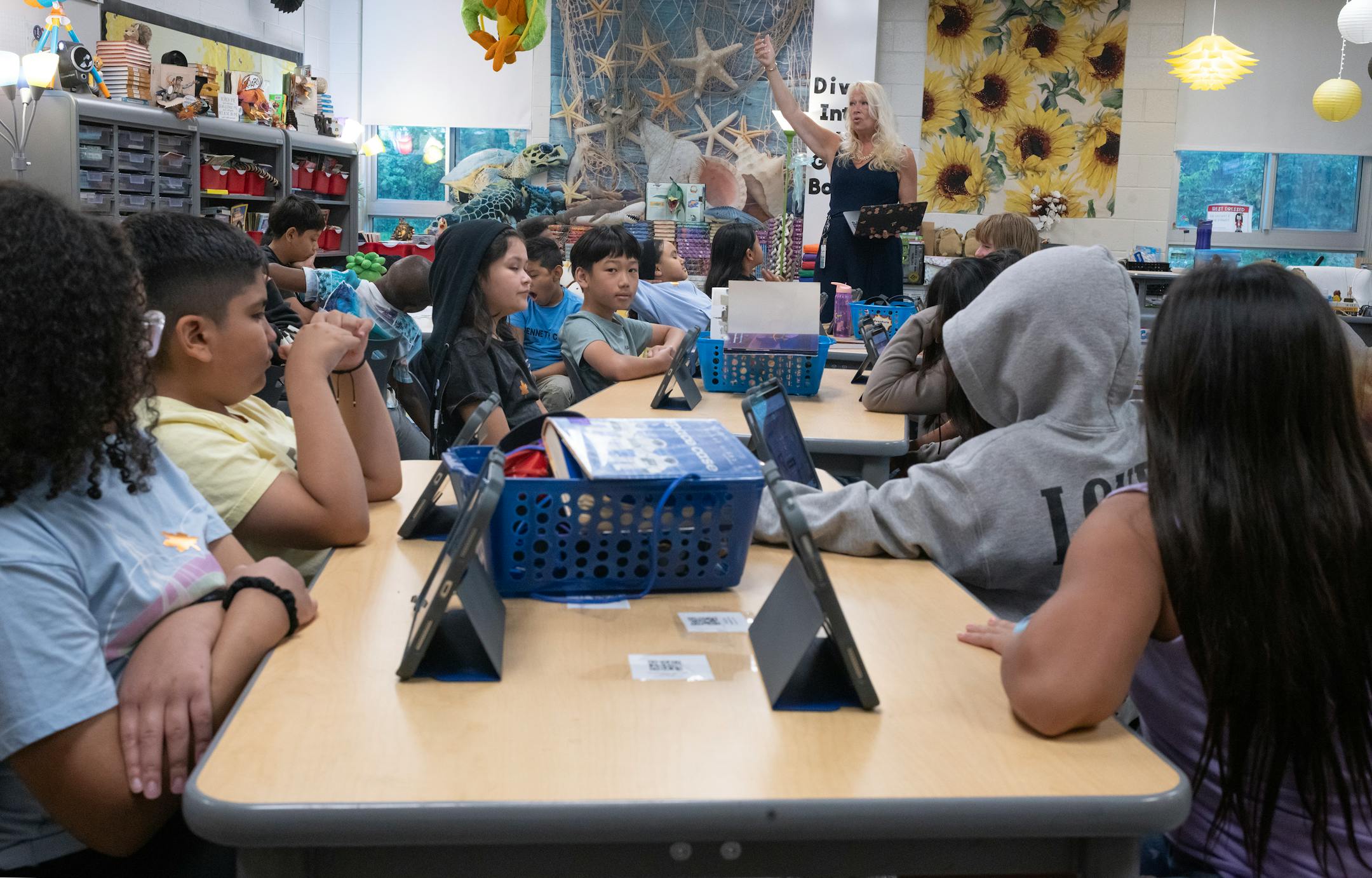
The assignment for Kathryn Perrotta’s fourth-graders was to learn about density by building a “neutral buoyancy” contraption that wouldn’t sink or float.
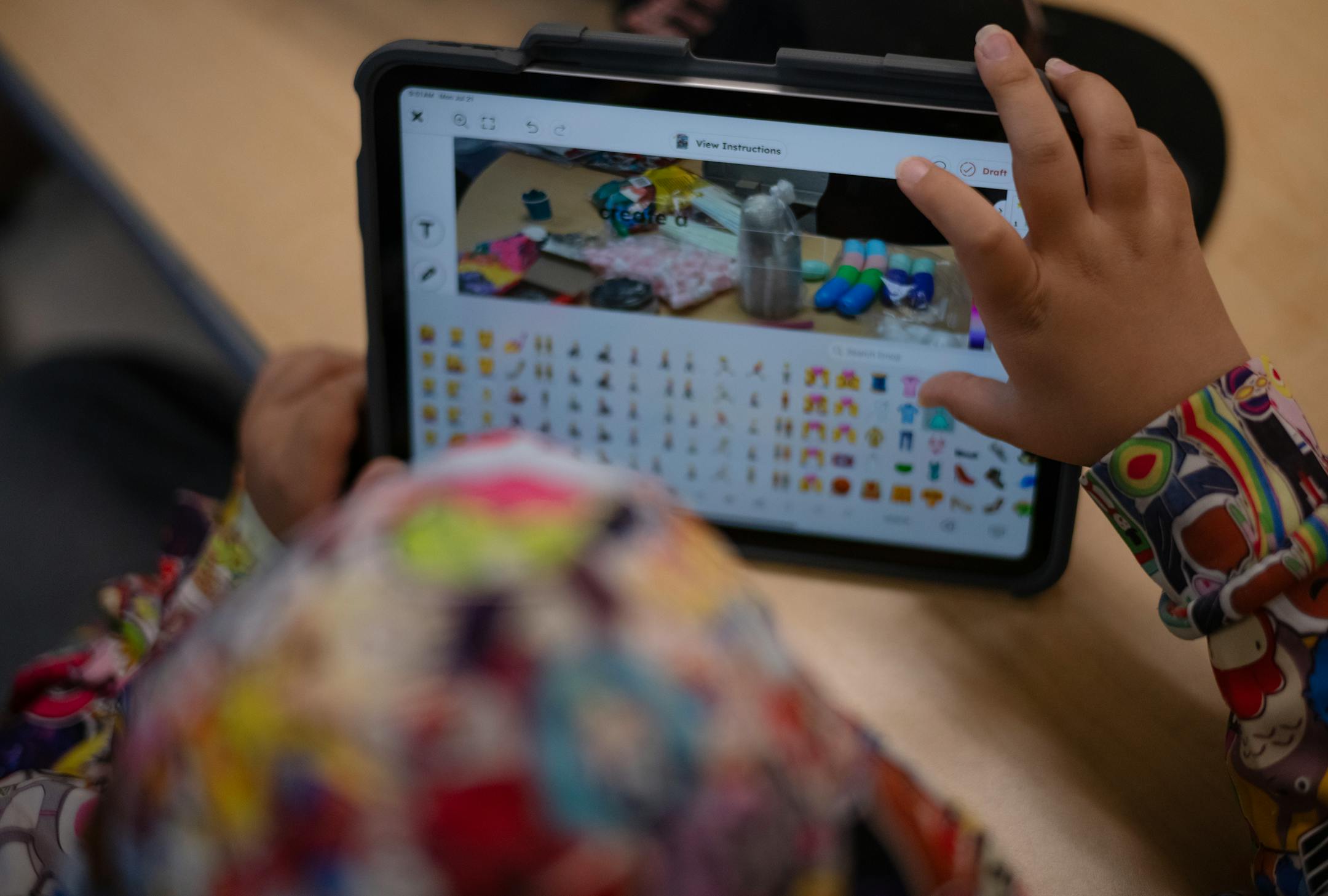
The St. Paul summer school students turned to their iPads and an app where they had drafted plans the day before. Then they ditched the screens for a bin full of materials, including balloons, straws, marbles and popsicle sticks, and worked with their peers to bring their plans to life.
That practice — look online to learn, then reinforce a lesson with hands-on, off-screen activities — is intentional, and one Perrotta comes back to with most of her lessons at Frost Lake Elementary.
“I want parents to know that screen time in the classroom is not passive,” Perrotta said. “It’s something that is purposeful, closely monitored and balanced.”
The pandemic forced educators and families to embrace technology in learning, and most Minnesota school districts now provide a tablet or laptop for each child. But amid broader cultural concerns about screen time and its impact on kids’ attention spans and mental health, parents and teachers are asking more questions about moderation for in-class devices, especially for younger students.
Schools statewide have already had to reckon with cellphones after the Legislature in 2024 required districts to develop policies about phone use in class. The next push, education leaders say, could be for additional guidance or structure on how — or how long — devices are used in class.
“I feel like during COVID, everyone just kind of said, ‘Go for it,’ when it came to tech in education,” said Marguerite Ohrtman, the director of school counseling at the University of Minnesota. “We didn’t know what that impact was, and now we have people going, ‘Oh wait, is this addictive? Is there long-term harm?’ ”
In 2022, a state law went into effect banning students in publicly funded preschools and kindergartens from using a device meant for individual use (like an iPad or smartphone) “without engagement from a teacher or other students.”