

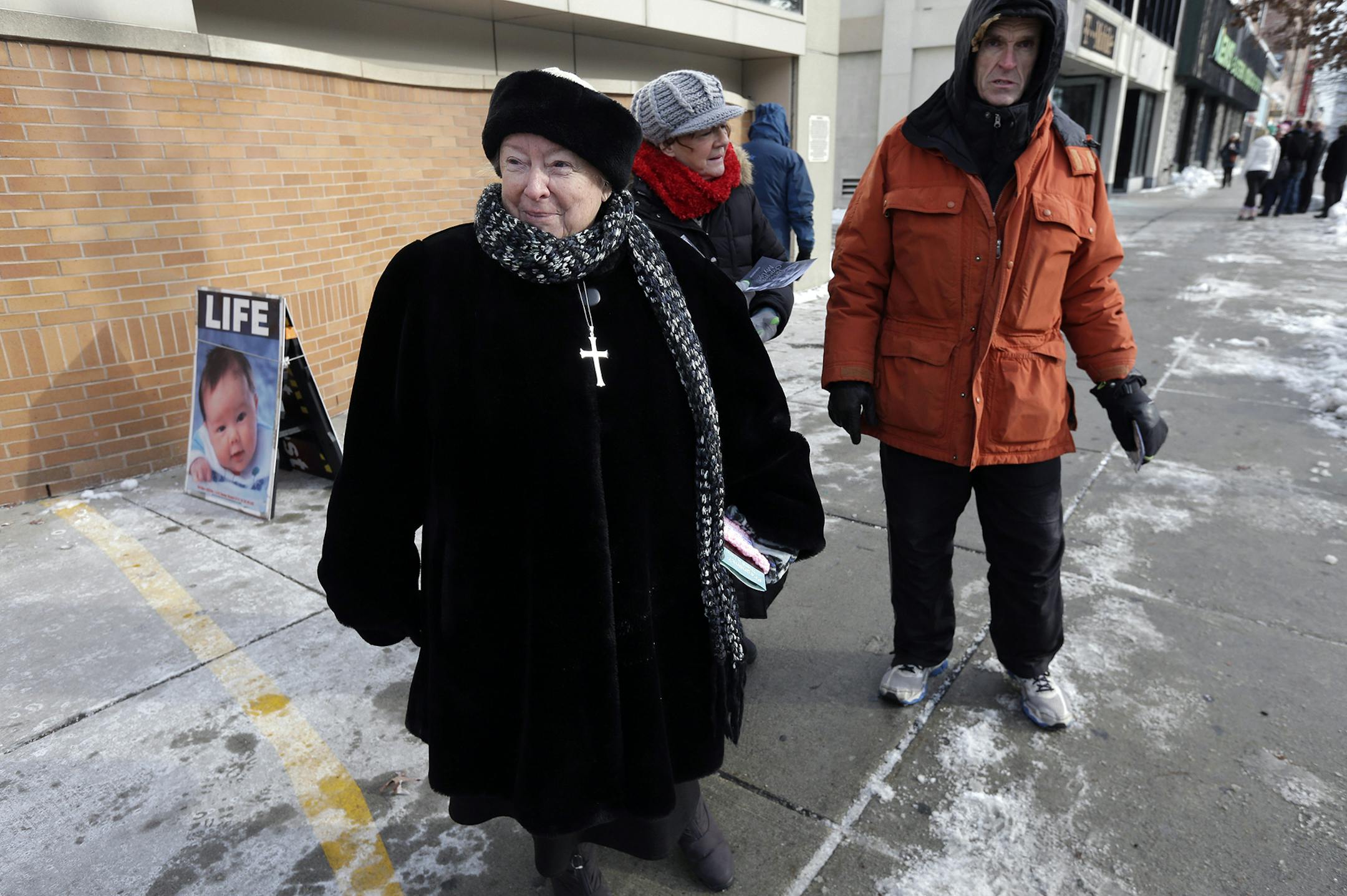
The U.S. Supreme Court attempted to balance free speech and public safety issues last week when it struck down a Massachusetts law that required 35-foot buffer zones around clinics that perform abortions. Justices unanimously ruled that the law violated First Amendment free-speech rights.
Anti-abortion activists view the decision as a victory. But it remains to be seen whether it will lead to successful challenges of less-sweeping, keep-your-distance laws in other states. Our hope is that local governments will still be allowed to protect clinic clients and employees from harassment.
Chief Justice John Roberts joined the court's four liberals — and drew criticism from Justice Antonin Scalia — in striking down the law on narrower grounds than conservatives had hoped.
Based on the finding that the 35-foot zone was too large an area to limit public access because of demonstrations that occurred at one clinic in Boston, Roberts wrote:
"Here the Commonwealth has pursued [public safety] interests by the extreme step of closing a substantial portion of a traditional public forum to all speakers." He added that the size of the buffer zones "burden substantially more speech than necessary to achieve the Commonwealth's asserted interests."
In a separate opinion, Scalia criticized Roberts and the court for "giving abortion-rights advocates a pass when it comes to suppressing the free-speech rights of their opponents."
The case was brought by several abortion opponents, led by Eleanor McCullen, a self-described grandmother who says she does "gentle sidewalk counseling" outside a Boston clinic. They argued that the law unfairly restricted their speech against abortion but did not restrict those on the other side of the issue.
Yet in many cases over the years, such "counseling'' has been anything but gentle. Harassment, blocked sidewalks, even fatal shootings have occurred at abortion clinics — prompting the buffer-zone laws.


