

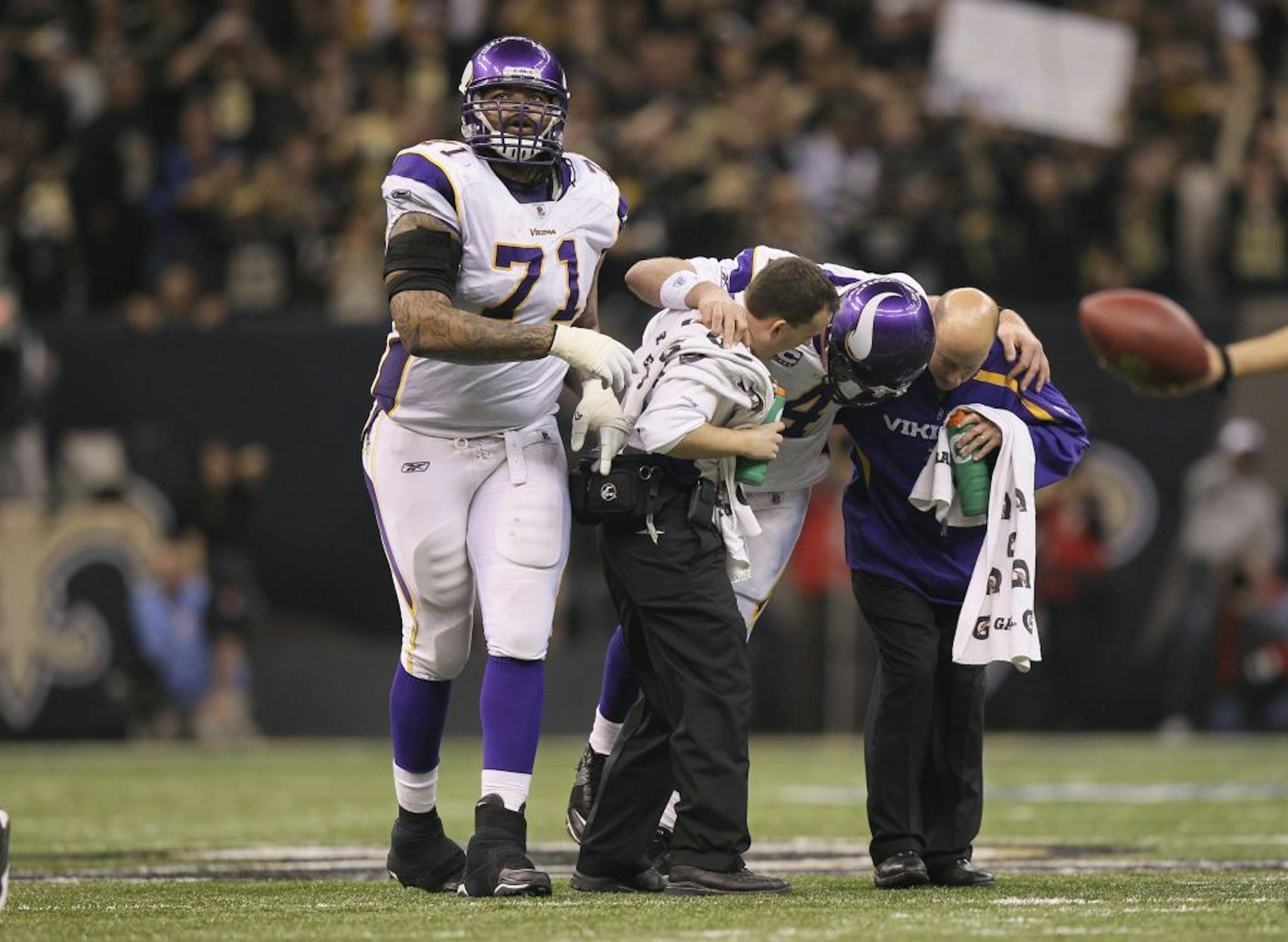
Kevin Williams wasn't surprised by revelations over the weekend that the New Orleans Saints put a bounty on Brett Favre in the 2009 NFC Championship Game. He saw it with his own eyes.
"You hear things, but you don't know how much truth is behind it," the Vikings All-Pro defensive tackle said. "Especially after that game, you heard their game plan was to take Favre out of the game. You could pretty much tell that was what was going on."
The Saints didn't knock Favre out of the game, but their late hits and over-the-line tactics took a toll. Favre looked like a human bruise in the locker room afterward. He was a 40-year-old quarterback who moved as if he were 80.
"He was a wreck," Williams said.
Two seasons later and with the Saints' intentions now a matter of public record, NFL Commissioner Roger Goodell is poised to deliver his own form of harsh punishment to former defensive coordinator Gregg Williams and any other Saints employee who had knowledge of or participated in the bounty program that rewarded players for vicious hits and knocking opponents out of games.
What the league uncovered in its investigation of the Saints bounty program didn't necessarily engender a sense of shock. More like disgust. The NFL's popularity continues to soar because the game is emotional, physical and violent. We're fascinated that players are willing to sacrifice their bodies and long-term health in ways that normal, sane people never would dare consider. It's a brutal world, but it shouldn't be without boundaries.
Injury is an inherent part of the game. Intent to injure is a cardinal sin.
"It's a gladiator game," said former NFL player Bob Stein. "It's not something that needs additional gas on the fire for injuries. If in fact it turns out that [the Saints'] point is, 'We'll pay you for injuring other players,' to me that's way, way, way outside the lines."


