

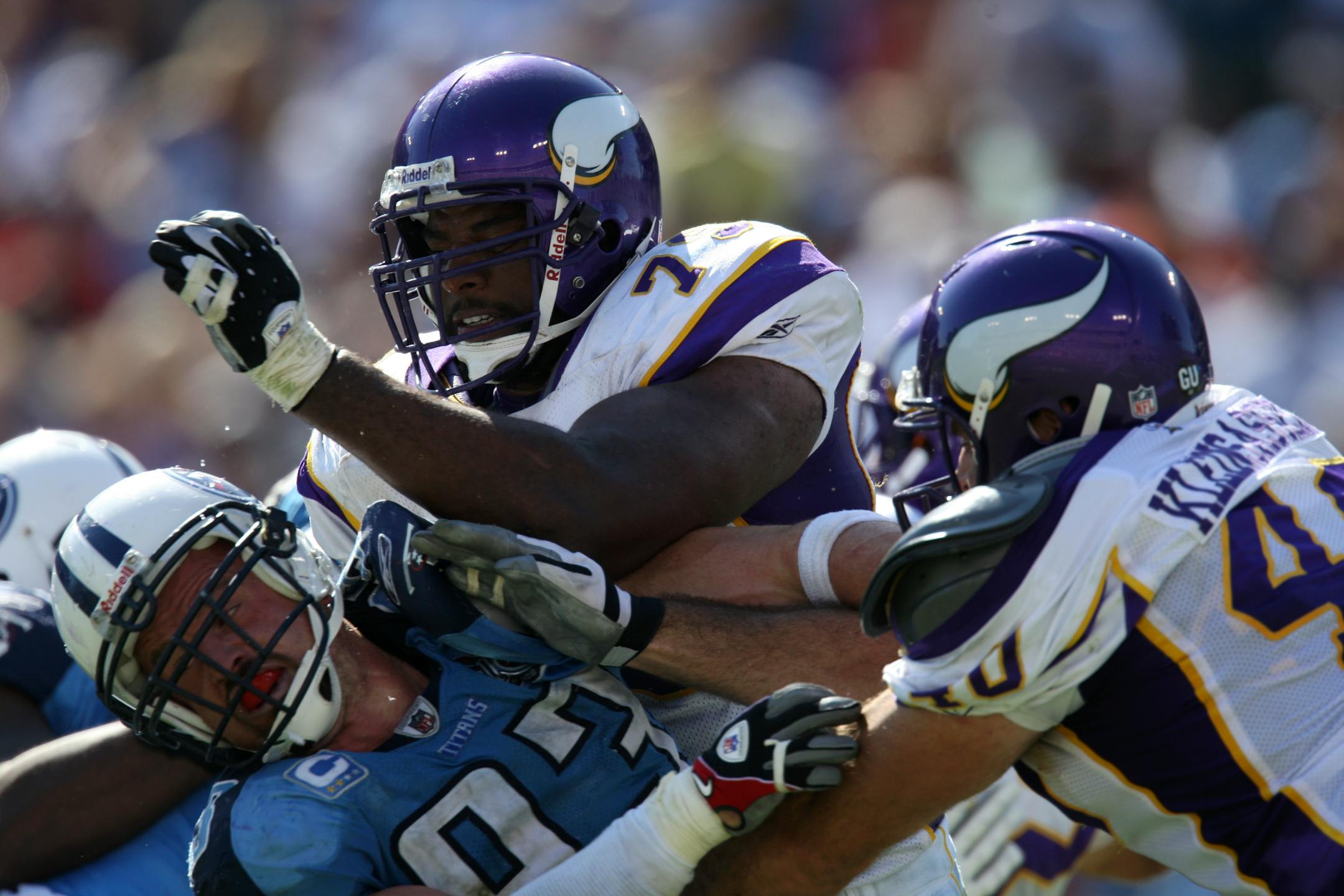
Artis Hicks played in 118 career games in 10 NFL seasons as an offensive lineman. His list of injuries reads like something out of a medical journal.
He suffered partially torn ligaments in both knees, a cervical spine injury, a herniated disk in his lower back, separated shoulders, dislocated fingers, multiple high-ankle sprains.
Hicks tore a triceps in the Vikings' 2008 season-opener but elected to put off surgery until after the season, his pain tolerance aided by prescription narcotics.
Painkillers and anti-inflammatory injections became part of his regular routine. As a veteran, he refused to play without a Sunday morning shot of Toradol in his rear.
"Toradol is the best thing — as far as my career. It's the best medicine that kept guys on the field," he said. "I've seen guys tear ligaments, tear muscles, break bones and play through it and not even realize it until a couple days after because of Toradol."
So why, then, did Hicks join a lawsuit brought by 750 former players recently, accusing the NFL of illegally and unethically supplying them with drugs designed to mask pain and allow players to perform on game day?
"We put our trust in team trainers, team doctors, and when they don't inform us, then I feel like there's blatant negligence there," he said.
Hicks contends the league failed to properly inform players of potential long-term risks and side effects from routinely ingesting painkillers and anti-inflammatories.


