
Scientists find evidence that souring Pacific Ocean eats away snails

NOAA said it can pinpoint the cause: Atmospheric CO₂.

May 17, 2014 at 9:12PM
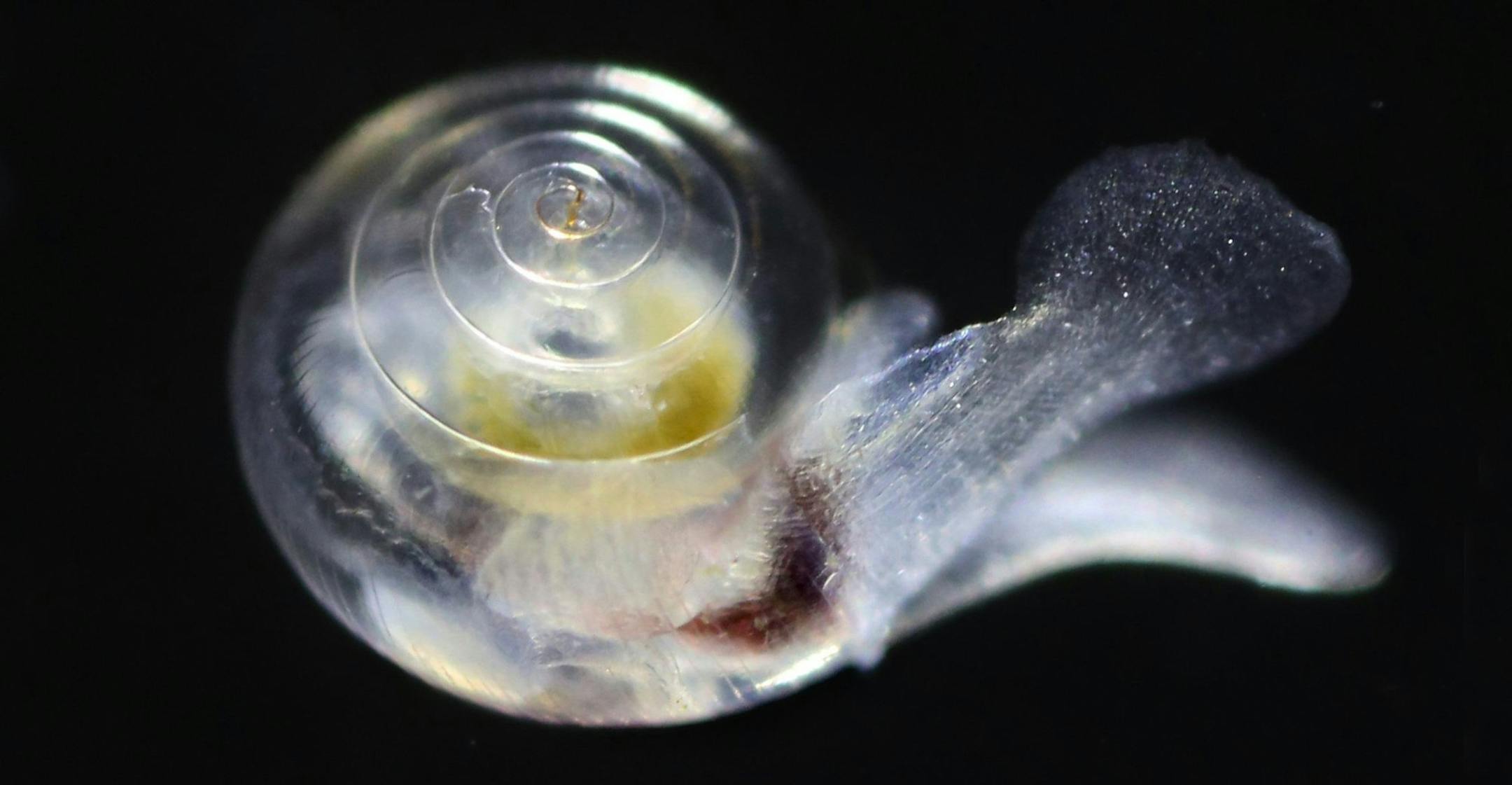
Tiny, translucent snails, also known as sea butterflies, provide food for salmon, herring and other fish. Seen under a microscope, this one's shell is smooth. (Steve Ringman/Seattle Times/MCT)
Ttranslucent snails, also known as sea butterflies, provide a key link in the marine food web. Seen under a microscope, the surface is smooth. (The Minnesota Star Tribune)

SEATTLE – It didn't take long for researchers examining the tiny sea snails to see something amiss. The surface of some of their thin outer shells looked as if they had been etched by a solvent. Others were deeply pitted and pocked.

These translucent sea butterflies known as pteropods, which provide food for salmon, herring and other fish, hadn't been burned in some horrific lab accident. They were being eaten away by the Pacific Ocean.

For the first time, scientists have documented that souring seas caused by carbon-dioxide emissions are dissolving pteropods in the wild right now along the U.S. West Coast. That is damaging a potentially important link in the marine food web far sooner than expected.

"What we found was just amazing to us," said Richard Feely, a scientist with the National Oceanic and Atmospheric Administration's Pacific Marine Environmental Laboratory. "We did the most thorough analysis that's ever been done and found extensive impacts on marine life in the field from ocean acidification."

This is the broadest and most detailed indication ever that acidification is already damaging native creatures in the wild. It raises many new questions about whether other sea life, too, might already be harmed — directly by acidifying seas, or by subtle shifts in parts of the food chain.

"These changes are happening years earlier than we had projected," said Nina Bednarsek, a research fellow with NOAA who inspected the pteropods to identify shell scarring. "It is really a first indication of what is going on in our ecosystem."

Feely and others already had documented that sea chemistry in many areas off the West Coast was changing far faster than initially expected as oceans absorb ever more carbon dioxide from fossil fuels.

Now, they've found severe shell damage on more than half of the pteropods they collected from waters near shore between Central California and the Canadian border. The findings were published in the British Journal "Proceedings of the Royal Society B."
The shell damage corresponds so precisely to where chemical changes have hit the marine world hardest — specific coastal hot spots in Washington and Oregon, where water wells up from the deep on windy days — that NOAA scientists said they could clearly pinpoint the cause: Atmospheric CO².

As human activity emits more CO² from cars and power plants, about a quarter of it gets absorbed by the oceans, which lowers the pH of marine water. That change reduces the availability of carbonate ions, which creatures such as oysters, mussels and pteropods need to build their shells.

These changes have struck particularly hard in the Northwest. When heavy winds blow in the right direction, deep, cold water wells up from the bottom and gets drawn toward the beach. This water already contains high CO² from natural processes. The addition of CO² from humans helps make it some of the most corrosive water found anywhere.

Because of this upwelling phenomenon, some pteropods near shore almost certainly saw shells dissolve even before the industrial revolution, the study said. But those incidents have doubled in the past several hundred years and could triple by 2050. In fact, the amount of water in the top 300 feet of West Coast ocean that may be inhospitable to some shelled organisms has increased sixfold since the industrial revolution.

"This is a surprising result," said Mark Ohman, a zooplankton ecologist who oversees a research program examining the West Coast marine system for California's Scripps Institution of Oceanography. "Effects of this magnitude were not anticipated this early in the 21st century."

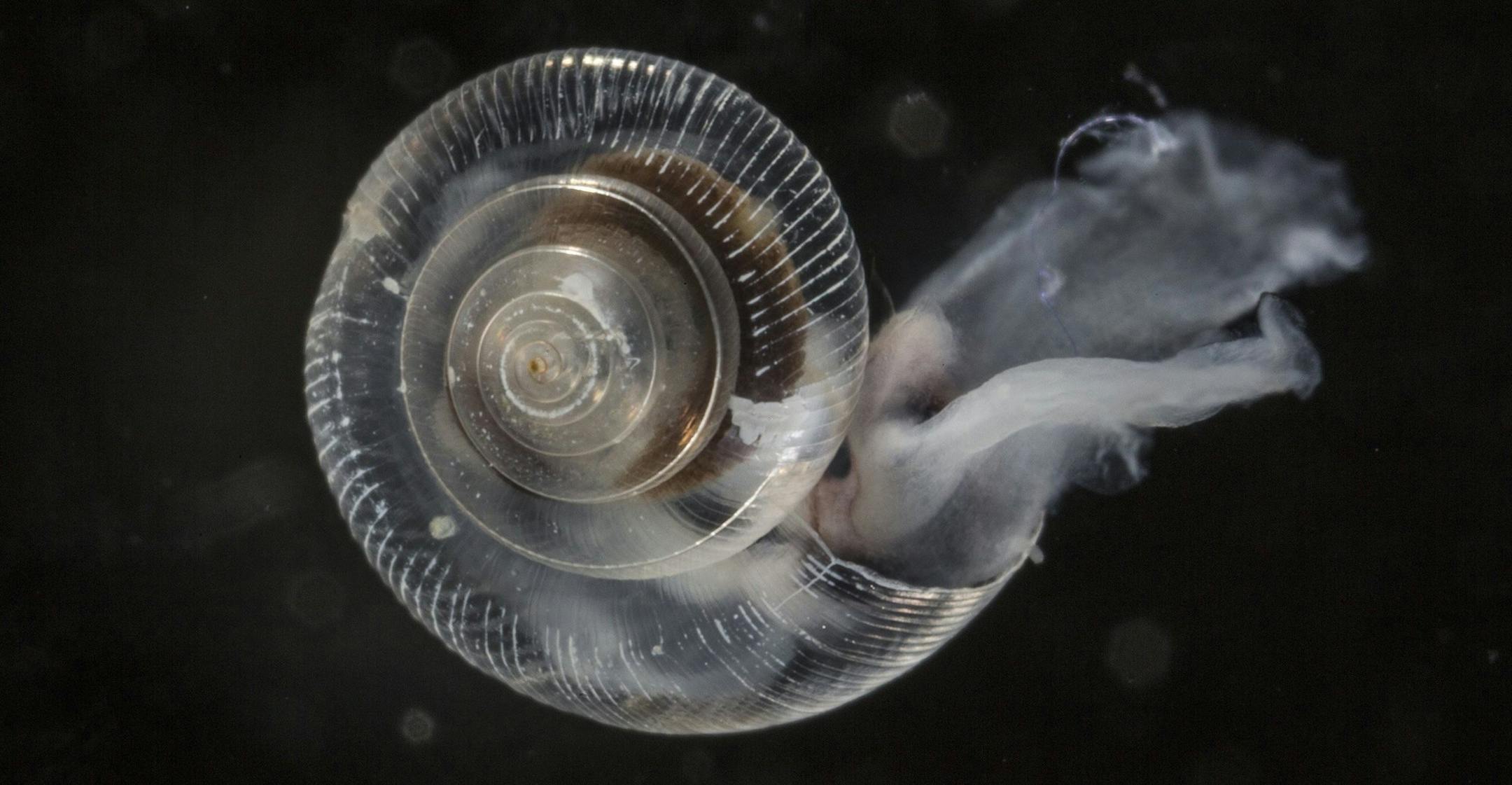
Tiny, translucent snails, also known as sea butterflies, provide food for salmon, herring and other fish. The shell of this pteropod was exposed to elevated CO2 conditions in a laboratory. (Steve Ringman/Seattle Times/MCT)
Tiny, translucent snails, also known as sea butterflies, are a key link in the marine food web. This shell was exposed to CO2 in a lab. (The Minnesota Star Tribune)
about the writer

about the writer

Craig Welch, Seattle Times

More from No Section

See More
FILE -- A rent deposit slot at an apartment complex in Tucker, Ga., on July 21, 2020. As an eviction crisis has seemed increasingly likely this summer, everyone in the housing market has made the same plea to Washington: Send money — lots of it — that would keep renters in their homes and landlords afloat. (Melissa Golden/The New York Times) ORG XMIT: XNYT58
Melissa Golden/The New York Times

It’s too soon to tell how much the immigration crackdown is to blame.