
Scientists discover evidence of frenzied dinosaur ritual

Scientists say they've discovered evidence of a frenzied mating ritual by dinosaurs: long grooves in the ground etched by the pawing of clawed feet.

The Associated Press
January 15, 2016 at 12:51AM
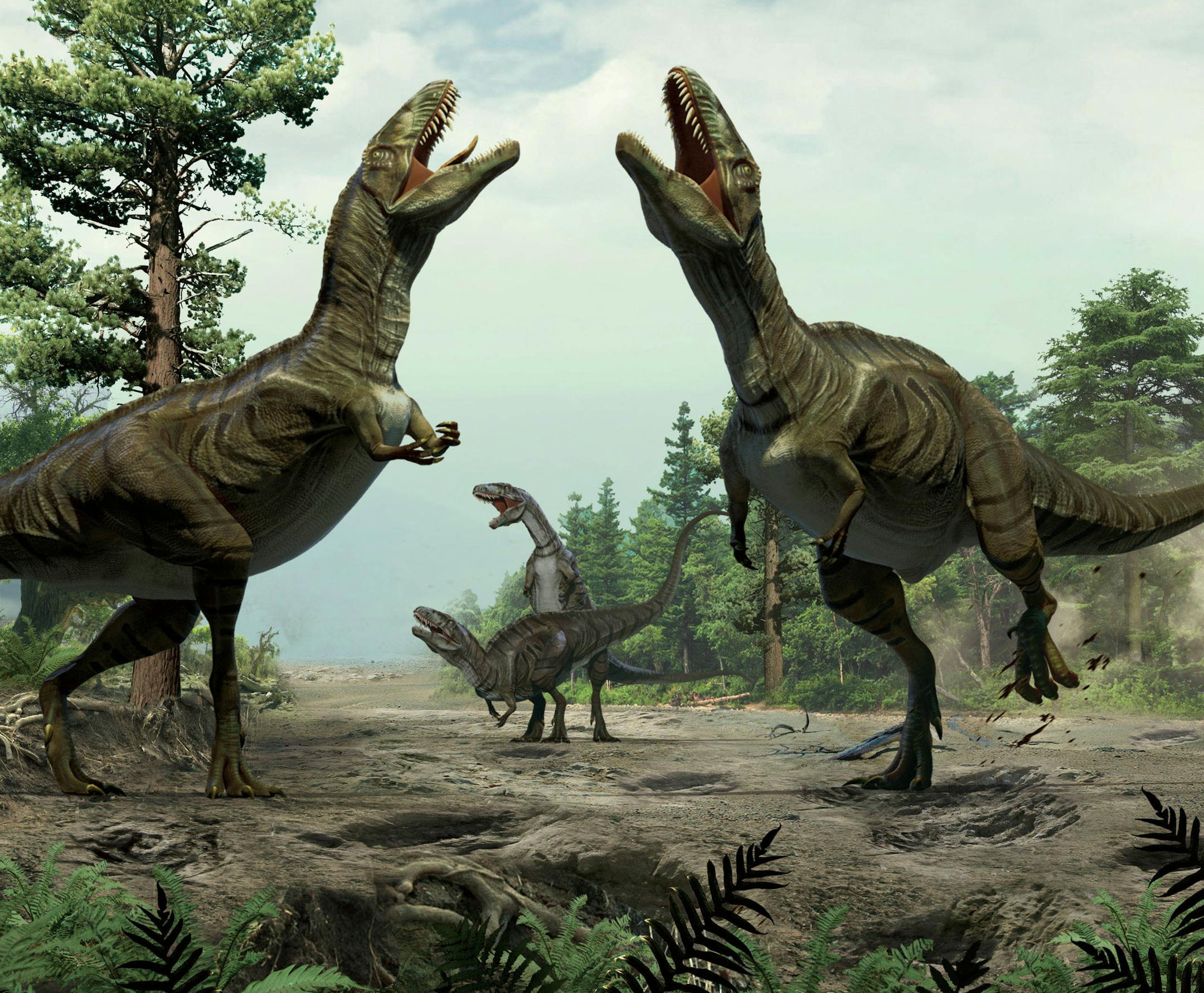
This illustration provided by Lida Xing and Yujiang Han in January 2016 shows theropods engaged in scrape ceremony display activity, based on trace fossil evidence from Colorado. The scientists who discovered the long grooves say they were dug by the feet of dinosaurs during a frenzied ritual to attract mates. Such behavior is seen nowadays in some birds, and the discovery suggests that two-legged, meat-eating dinosaurs called theropods did it about 100 million years ago, the researchers said in
This illustration provided by Lida Xing and Yujiang Han in January 2016 shows theropods engaged in scrape ceremony display activity, based on trace fossil evidence from Colorado. The scientists who discovered the long grooves say they were dug by the feet of dinosaurs during a frenzied ritual to attract mates. Such behavior is seen nowadays in some birds, and the discovery suggests that two-legged, meat-eating dinosaurs called theropods did it about 100 million years ago, the researchers said in the report. (The Minnesota Star Tribune)

NEW YORK — Scientists say they've discovered evidence of a frenzied mating ritual by dinosaurs: long grooves in the ground etched by the pawing of clawed feet.

Such behavior is seen nowadays in some birds, and the discovery suggests that two-legged, meat-eating dinosaurs called theropods did it about 100 million years ago, the researchers said.

Martin Lockley of the University of Colorado Denver said the dinosaurs, probably males, apparently gathered in groups and "went crazy scraping" with their clawed, three-toed feet to attract mates. The beasts were built roughly like smaller versions of a T. rex. Footprints near the grooves suggest a variety of body lengths, up to about 16 feet from snout to tip of the tail.

The grooves they carved are up to 6 feet long.

The ritual would have been entertaining to watch, Lockley said in an interview. "These animals would have been really frenzied."

Lockley, an emeritus professor of geology, is an author of a paper on the discovery released Thursday by the journal Scientific Reports. The grooves were found at three sites in western Colorado and another just west of Denver.

Dinosaur expert Thomas Holtz Jr. of the University of Maryland, who didn't participate in the work, said it's reasonable to think that theropods created the grooves. But was it for mating?

Holtz said he wasn't convinced that the new paper had sufficiently ruled out other explanations. But he added that there's no particular evidence for rejecting the mating idea.

"Whatever behavior is being recorded here, it is an expression of the fact that dinosaurs_like all animals_did more than hunt and attack and devour and fight and all that limited set of behaviors that popular culture often portrays," Holtz wrote in an email.

about the writer

about the writer

MALCOLM RITTER

More from No Section

See More
FILE -- A rent deposit slot at an apartment complex in Tucker, Ga., on July 21, 2020. As an eviction crisis has seemed increasingly likely this summer, everyone in the housing market has made the same plea to Washington: Send money — lots of it — that would keep renters in their homes and landlords afloat. (Melissa Golden/The New York Times) ORG XMIT: XNYT58
Melissa Golden/The New York Times

It’s too soon to tell how much the immigration crackdown is to blame.