

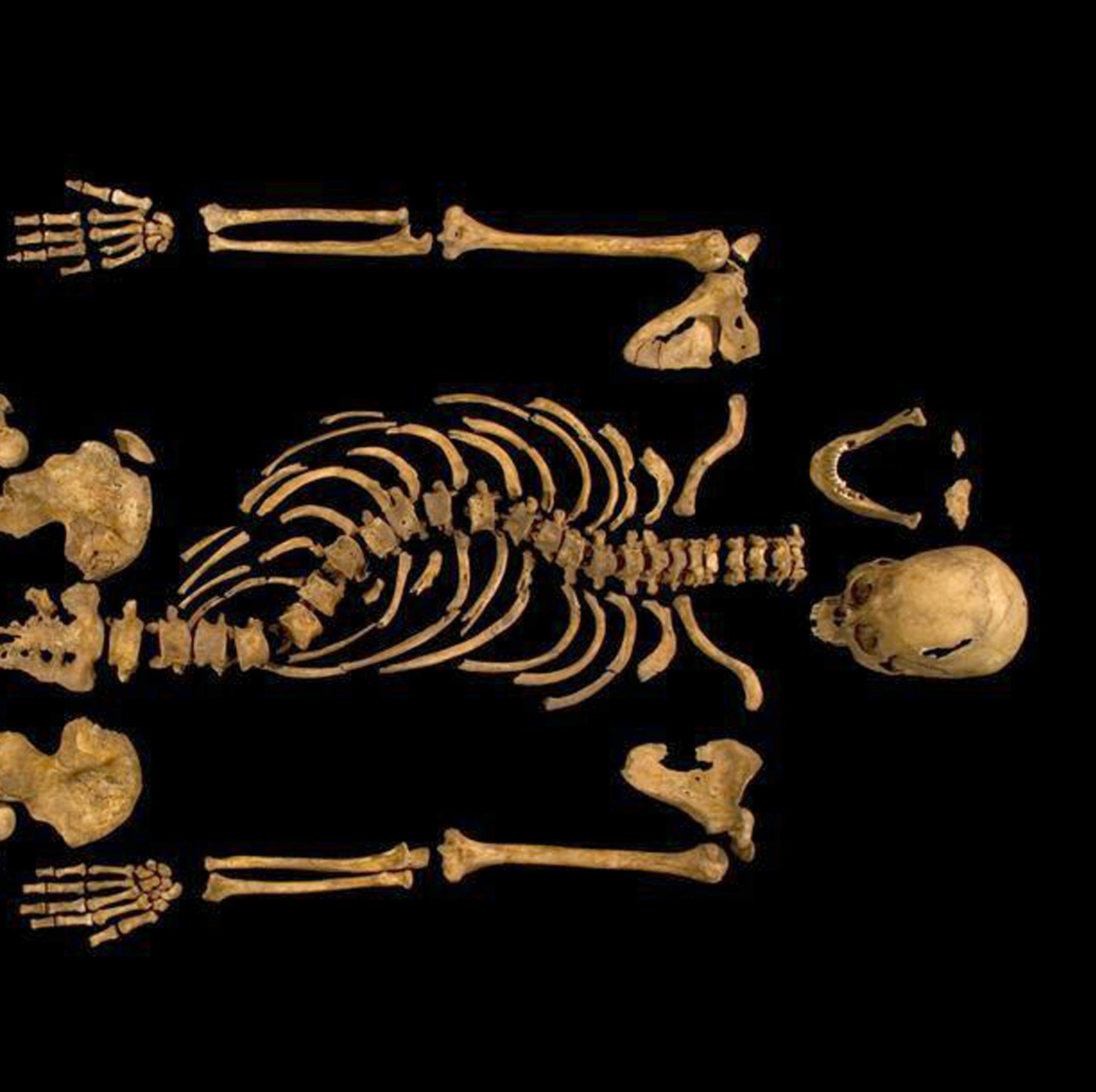
Researchers studying the skull of King Richard III say they have determined the fatal blow that killed the medieval monarch more than 500 years ago.
The alignment of a mark on the inside of the skull, a wound on a vertebra and the smaller of two wounds on the base of the neck suggest he was killed by a weapon thrust from the base of his neck into his head, researchers said.
Richard III was 32 when he died in the Battle of Bosworth Field on Aug. 22, 1485.
His remains were lost to history until 2012, when his skeleton was discovered under a parking lot in the town of Leicester where a friary once stood.
Pathologists and archaeologists who examined the skeleton found evidence of 11 wounds that had been inflicted at or near the time of death. Nine of the injuries were on the skull, one was on the rib cage and one was on the pelvis.
The researchers said the pelvis injury was most likely delivered after Richard was killed because his armor would have protected him from an attack in that area during battle.
The large number of wounds to his head suggest that he either took off his helmet or it fell off, the researchers said.
The fateful injury was discovered by Guy Rutty, a professor at the University of Leicester and a forensic pathologist. As he examined the skull, osteologist Jo Appleby looked on. Appleby led the exhumation of the skeleton from the parking lot in Leicester.


