

When a team of virologists named SARS-CoV-2, they had to move the virus to the head of a very, very long line.
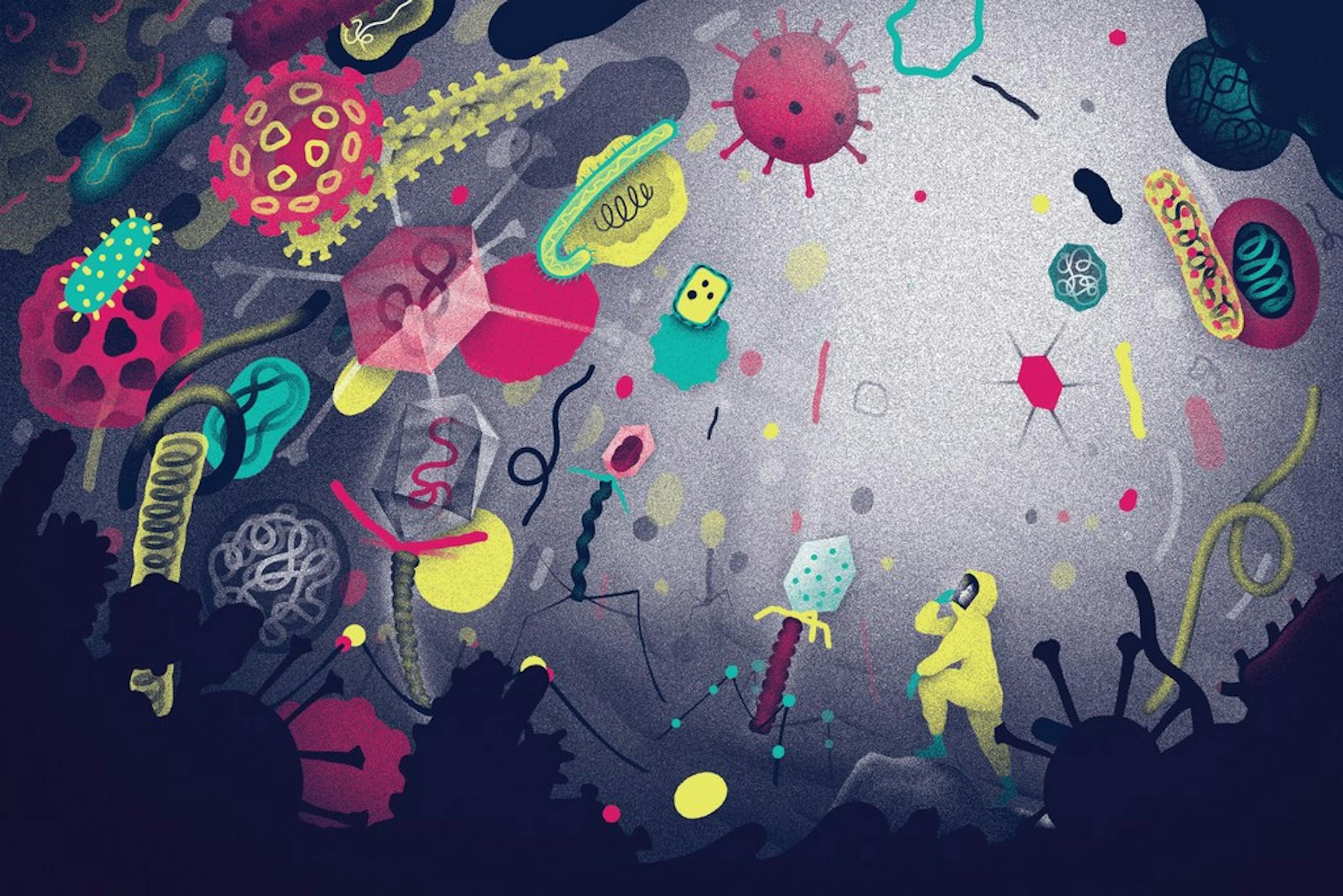
In recent years, scientists have discovered that the world of virus diversity — what they sometimes call the virosphere — is unimaginably vast. They have uncovered hundreds of thousands of new species that have yet to be named. And they suspect that there are millions, perhaps even trillions, of species waiting to be found. "Suffice to say that we have only sampled a minuscule fraction of the virosphere," said Edward Holmes of the University of Sydney in Australia.
With the discovery of viruses in the late 1800s, scientists soon recognized that different species caused different diseases — rabies and influenza, for example. Later, virologists learned how to recognize new kinds of viruses by growing them in labs, where subtler biological features emerged.
After decades of this painstaking work, virologists have officially named 6,828 species of viruses. That's a paltry count when you consider that entomologists have named 380,000 species of beetles alone.
But in recent years, virologists have changed the way they hunt. Now they look for bits of genetic material in samples — water, mud, blood — and use sophisticated computer programs to recognize viral genes.
Matthew Sullivan, a virologist at Ohio State University, has used this method to search for viruses that infect life in the ocean. He and his colleagues analyzed genetic material in seawater collected from around the world. Some genes belonged to species known to science. But many were new. In 2016, Sullivan and his colleagues reported more than 15,000 viruses, each representing a new species.
That was more than twice as many species as all the previously identified viruses. And with that, Sullivan thought he and his colleagues had pretty much finished off the diversity of viruses in the sea. But they went on collecting more water, and invented new ways to search it for the genetic material of viruses. In 2019, they reported finding a total of 200,000 species.
"I've stopped saying, 'We're done,' " Sullivan said.


