

A team of British scientists found what they believe to be the oldest human footprints in Europe, dating back at least 800,000 years. Analysis of the prints from the eastern coast of England revealed they were likely made by five early humans — men, women and children — who were walking along an estuary. In a paper in PLOS One, the researchers note that the foot sizes are similar to those of Homo antecessor, also known as "Pioneer Man." The species appears to have gone extinct 600,000 years ago.
Breakthrough on nuclear fusion
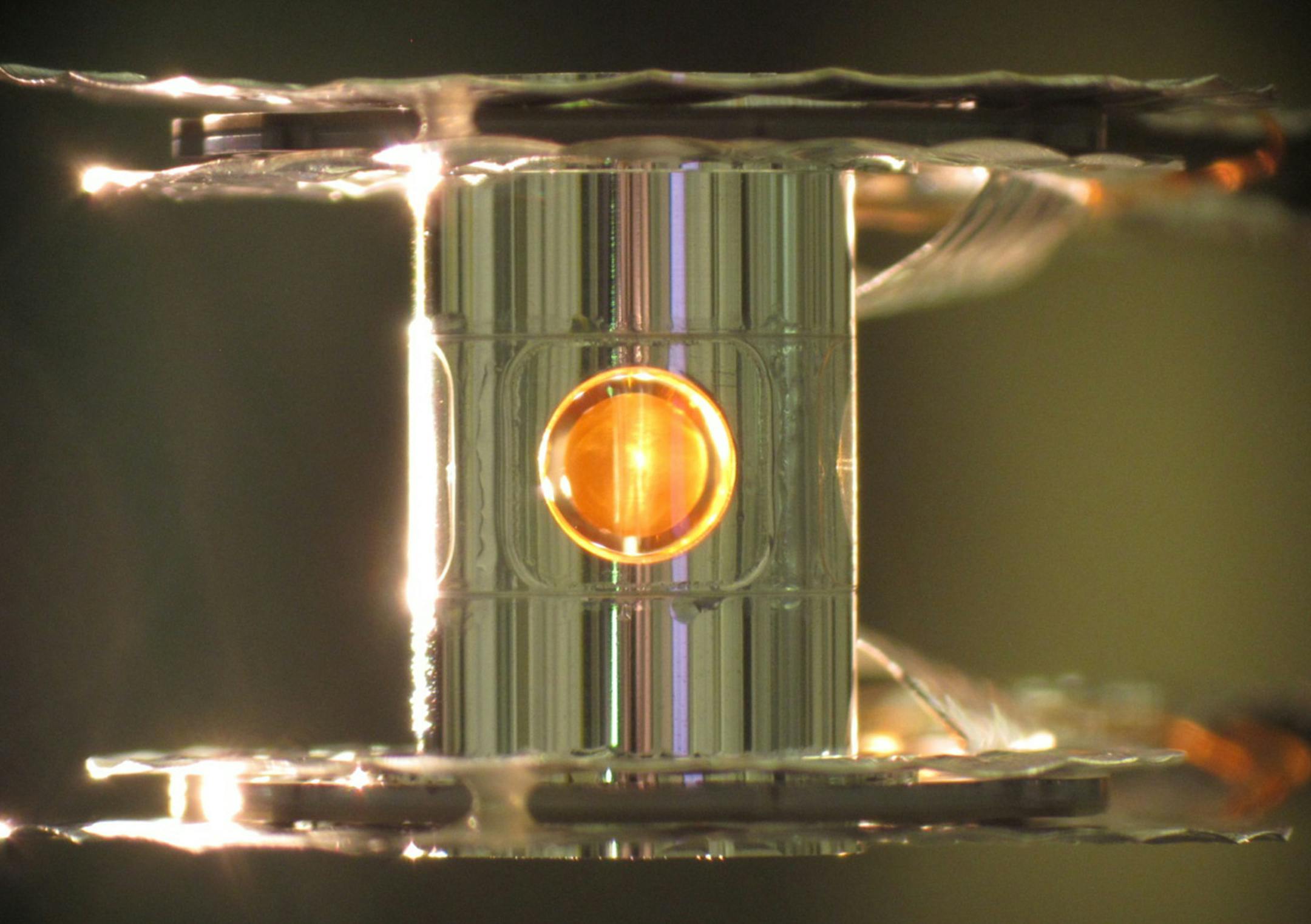
It took 192 lasers and a building big enough to contain three football fields, but physicists have finally produced a pair of nuclear fusion reactions that created more energy than was in the fuel to start with. The reactions lasted less than a billionth of a second and released only enough joules to power a 100-watt light bulb for less than three minutes. But it marks the first time scientists have been able to harness the power of stars here on Earth. "This is really an important milestone," said Warren Mori, a plasma physicist at the University of California, Los Angeles. The process has a long way to go. But the tests, described in the journal Nature, offered a sign that researchers are on the right path to reaching this goal — one that could lead to cleaner nuclear energy, safer weapons arsenals and a deeper understanding of astrophysics. "We are closer than anyone has gotten before," said study leader Omar Hurricane at Lawrence Livermore National Laboratory.
News services


