

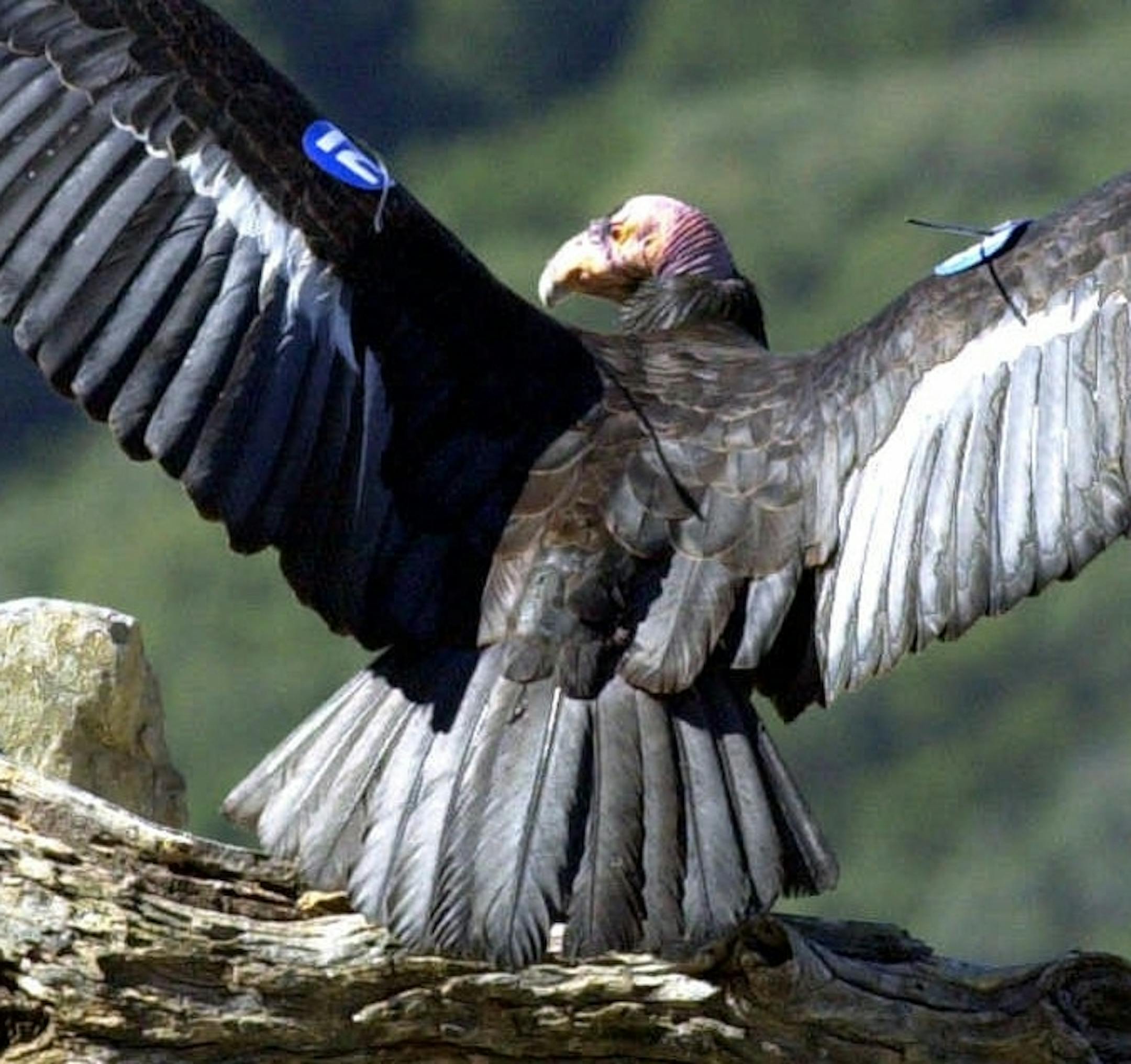
condor cams catch rare birds in the wild
For years, it's been a rare experience to see an endangered California condor in the wild. There are only 429 of North America's largest bird alive today, and half of them live in zoos.
But on Monday, with some high-tech help, the bird-watching got a lot easier. The first camera to capture live streaming video of condors in the wild was turned on in the remote hills of Big Sur.
The solar-powered "condor cam" — www.ventanaws.org — allows the public to watch the huge, vulture-like birds feeding, grooming and flying in real time, and enables scientists to monitor them more efficiently.
It's the latest example of how inexpensive video technology and high-speed Internet connections are changing how the public interacts with wildlife.
"We put the camera right on top of one of the main feeding areas so we could zoom down and get identification of each individual," said Kelly Sorenson, executive director of the Ventana Wildlife Society, a nonprofit that has worked to bring condors back from the brink of extinction.
"Over the weekend when we were testing it, we had 25 condors in front of the camera."
Biologists from the group will zoom in on the birds at key times, such as in the morning when they are most active, Sorenson said. They also plan to ask the public to send notifications on the Ventana Wildlife Society's Facebook and Twitter feeds when birds are doing something interesting.
It wasn't easy setting up the camera. The area is so rural that there is no electricity or Internet connection. The system, which cost about $15,000, Sorenson said, was funded by a donation from FedEx and help from the Oakland Zoo. Crews installed a high-speed T1 Internet connection at a home 12 miles north of the site, then set up antennas to get the signal to the solar-powered camera.


