
Schools in Nigerian state close to avoid attacks after Islamic militants kill 55

The Associated Press
July 8, 2013 at 12:14PM
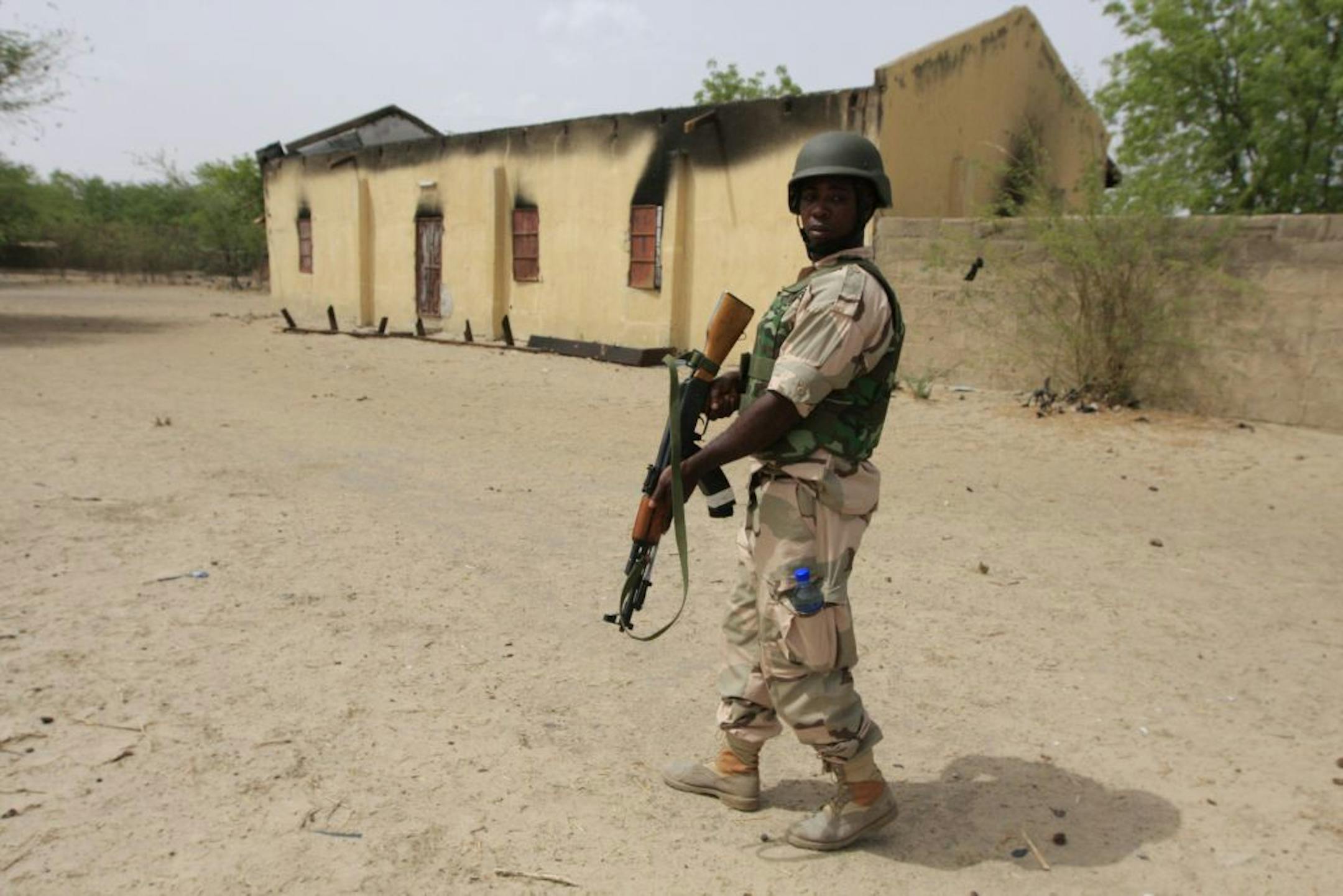
A soldier stands guard outside of a church that Islamic extremists burned in an earlier attack in Marte, Nigeria, on Wednesday, June 5, 2013.
A soldier stands guard outside of a church that Islamic extremists burned in an earlier attack in Marte, Nigeria, on Wednesday, June 5, 2013. (Associated Press - Ap/The Minnesota Star Tribune)

MAIDUGURI, Nigeria — The governor of Nigeria's northeast Yobe state is ordering all schools closed to avoid attacks by Islamic militants who have killed dozens of students and teachers.

The U.N. children's agency, meanwhile, said Monday that 48 students and seven teachers have been slain since June in northeast Nigeria.

"There can be no justification for the deliberate targeting of children and those looking after them," said UNICEF regional director Manuel Fontaine.

Gov. Ibrahim Gaidam issued the order after visiting students with burn and gunshot wounds from Saturday's attack on a boarding school outside Potiskum, the state's second largest town. Extremists set a dormitory ablaze, burning some students alive. At least 29 students and one teacher were killed.

Last month Islamic fighters attacked at least two schools, killing 16 students and two teachers.

Gaidam said such attacks could be averted if the military would resume cell phone service cut to three northeastern states since the government declared a state of emergency May 14. He said residents could have alerted the military by cell phone.

Authorities have blamed the spate of recent attacks on Boko Haram, a terrorist group whose name means "Western education is sacrilege." The group and its offshoots have killed more than 1,600 civilians in a series of suicide bombings and other attacks since 2010, according to an Associated Press count.

The group's stronghold is Maiduguri, the capital of neighboring Borno state, which is 230 kilometers (about 145 miles) from Yobe. It is also believed to have a strong network in Adamawa state, prompting President Goodluck Jonathan to deploy thousands of troops to regain control of the region.
The ongoing violence has become the biggest security threat in years to Africa's biggest oil producer and has drawn criticism of President Jonathan's administration, who many Nigerians believe did not respond quickly to the growing threat of terrorism in the country.

Soldiers say they have killed and arrested hundreds of fighters. But the crackdown, including attacks with fighter jets and helicopter gunships on militant camps, appears to have driven the extremists into rocky mountains with caves, and shifted their focus to schools and markets.

Recent attacks by suspected Boko Haram militants aimed at schools or school officials in the region indicate a strategic target on unsuspecting students and school officials who are unable to fight back.

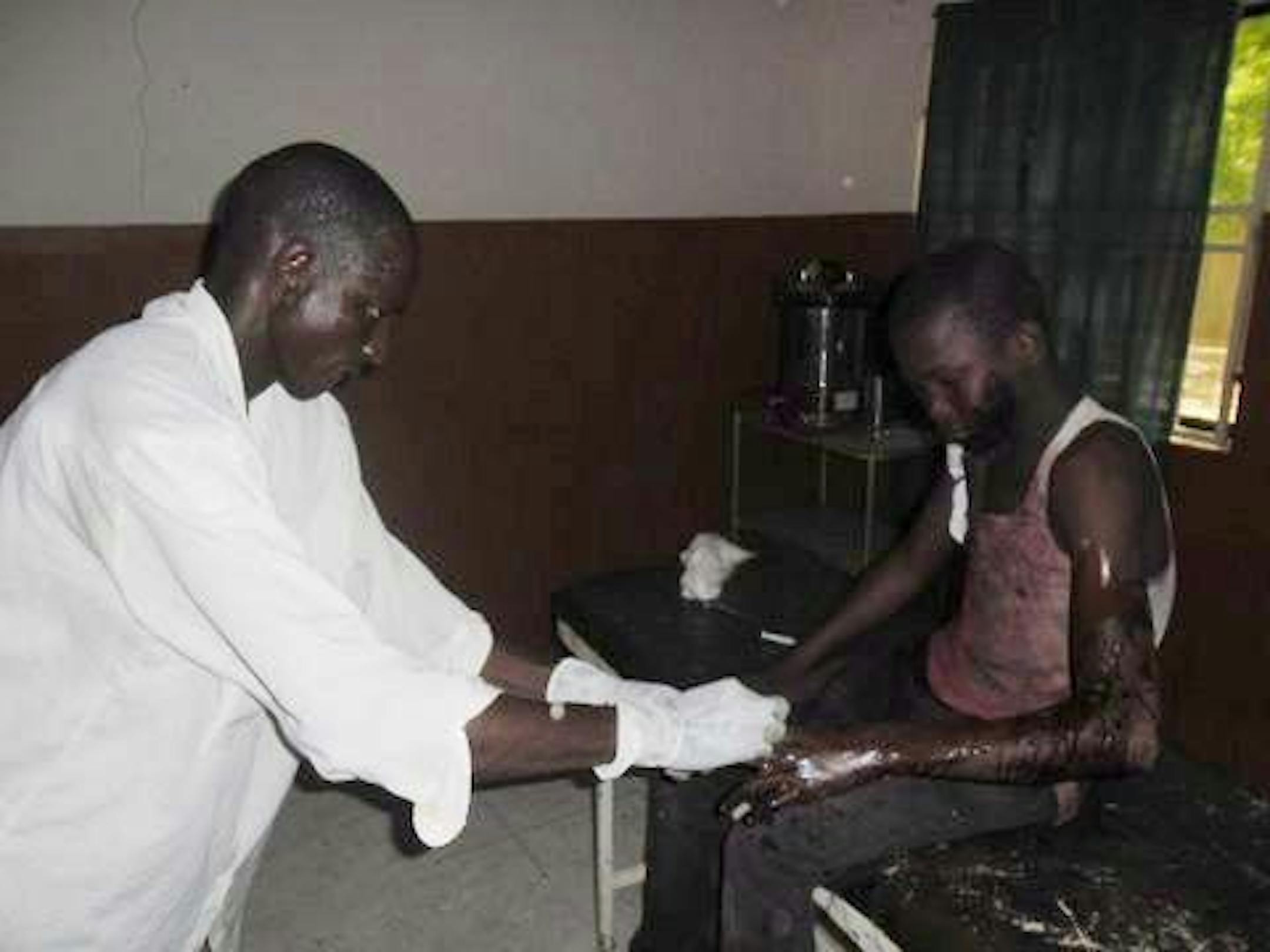
In this photo taken with a mobile phone a doctor attends to a student from Government Secondary School in Mamudo, at the Potiskum General Hospital, Nigeria, following an attack by gunmen on Saturday July 6, 2013. Islamic militants attacked a boarding school before dawn Saturday, dousing a dormitory in fuel and lighting it ablaze as students slept, survivors said. At least 30 people were killed in the deadliest attack yet on schools in Nigeria's embattled northeast.
In this photo taken with a mobile phone a doctor attends to a student from Government Secondary School in Mamudo, at the Potiskum General Hospital, Nigeria, following an attack by Islamic gunmen on Saturday July 6, 2013. (Associated Press - Ap/The Minnesota Star Tribune)
about the writer

about the writer

HARUNA UMAR

More from No Section

See More
FILE -- A rent deposit slot at an apartment complex in Tucker, Ga., on July 21, 2020. As an eviction crisis has seemed increasingly likely this summer, everyone in the housing market has made the same plea to Washington: Send money — lots of it — that would keep renters in their homes and landlords afloat. (Melissa Golden/The New York Times) ORG XMIT: XNYT58
Melissa Golden/The New York Times

It’s too soon to tell how much the immigration crackdown is to blame.