

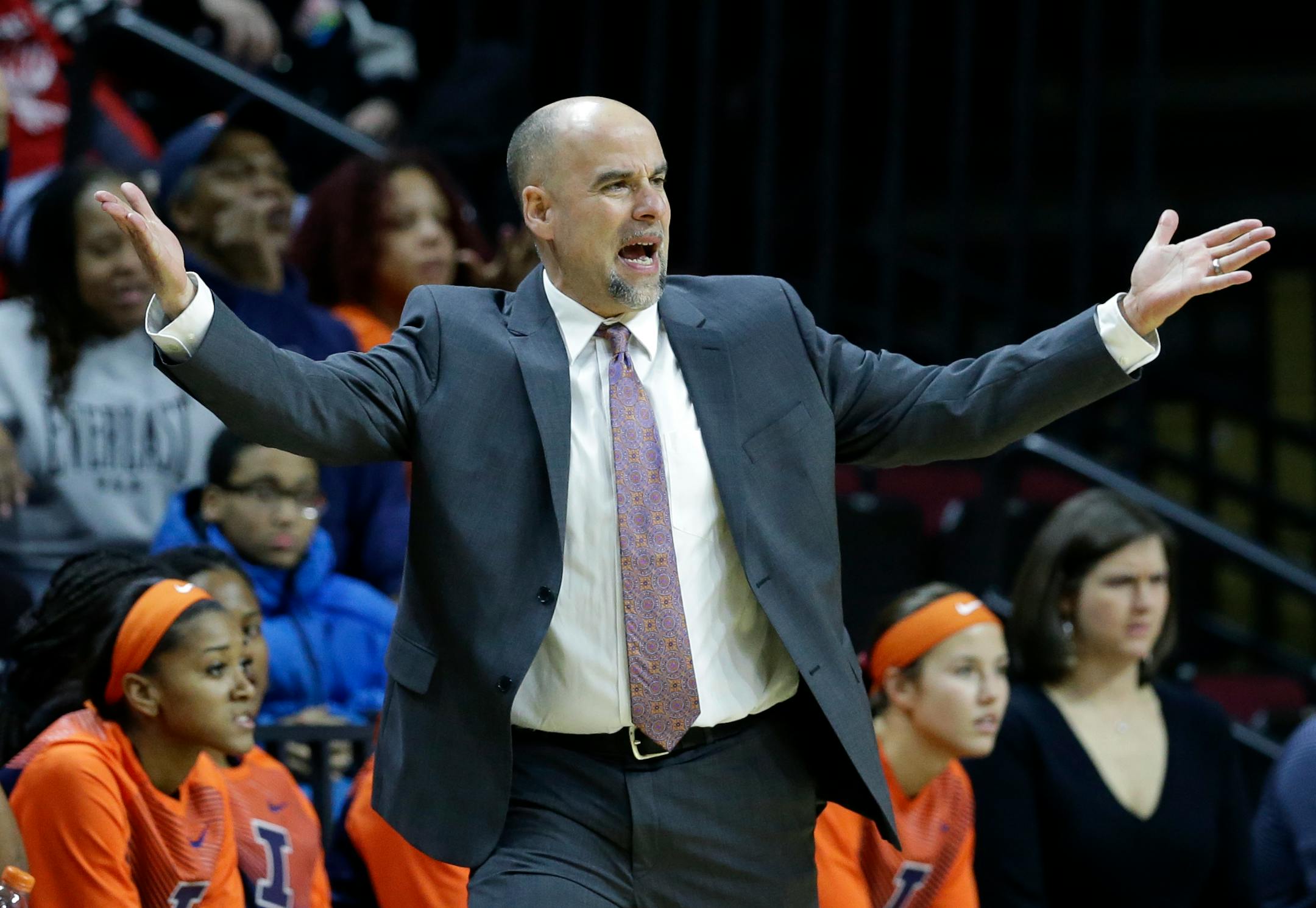
CHAMPAIGN, Ill. – Former University of Illinois women's basketball players' allegations of racially motivated mistreatment were unfounded, investigators hired by the school concluded in a report released Monday that also found that one former assistant coach "treated players harshly."
Seven former players sued the university, coach Matt Bollant, athletic director Mike Thomas and others on July 1, alleging Bollant and some other coaches used race to divide the team and drive players out. The players are seeking at least $10 million in damages.
The report from Pugh, Jones & Johnson law firm in Chicago concluded complaints from players and parents started after a string of seven losses late in the 2014-15 season and included no real evidence of a racial divide. However, the report acknowledged former assistant coach Mike Divilbiss' treatment of players was judged as harsh by some and recommended changes such as a code of conduct for coaches.
"Some athletes and their parents obviously disagreed with the coaches' judgments about which players most effectively executed their new style of play, but there is no evidence that the coaches did not honestly believe they put the best team on the floor, without consideration of players' race," the report concluded.
The players' attorney, Terry Ekl, said in an e-mail that he wasn't surprised university-paid investigators would issue a report favorable to the school.
"This is precisely why we did not wait until the conclusion of the university-funded investigation to be completed before we file suit," Ekl said.
Chancellor Phyllis Wise, the top administrator on the Urbana-Champaign campus, said in an interview that she's "relieved" the law firm "found no evidence of racially based abuse" but that she takes the recommendations for changes "really seriously."
Thomas said a code of conduct had already been in the works and he plans to release it in the coming days. He said he's taking other recommended steps such as making it easier for players to voice concerns. But he noted that even players interviewed for the report interpreted coaches' behavior differently.


