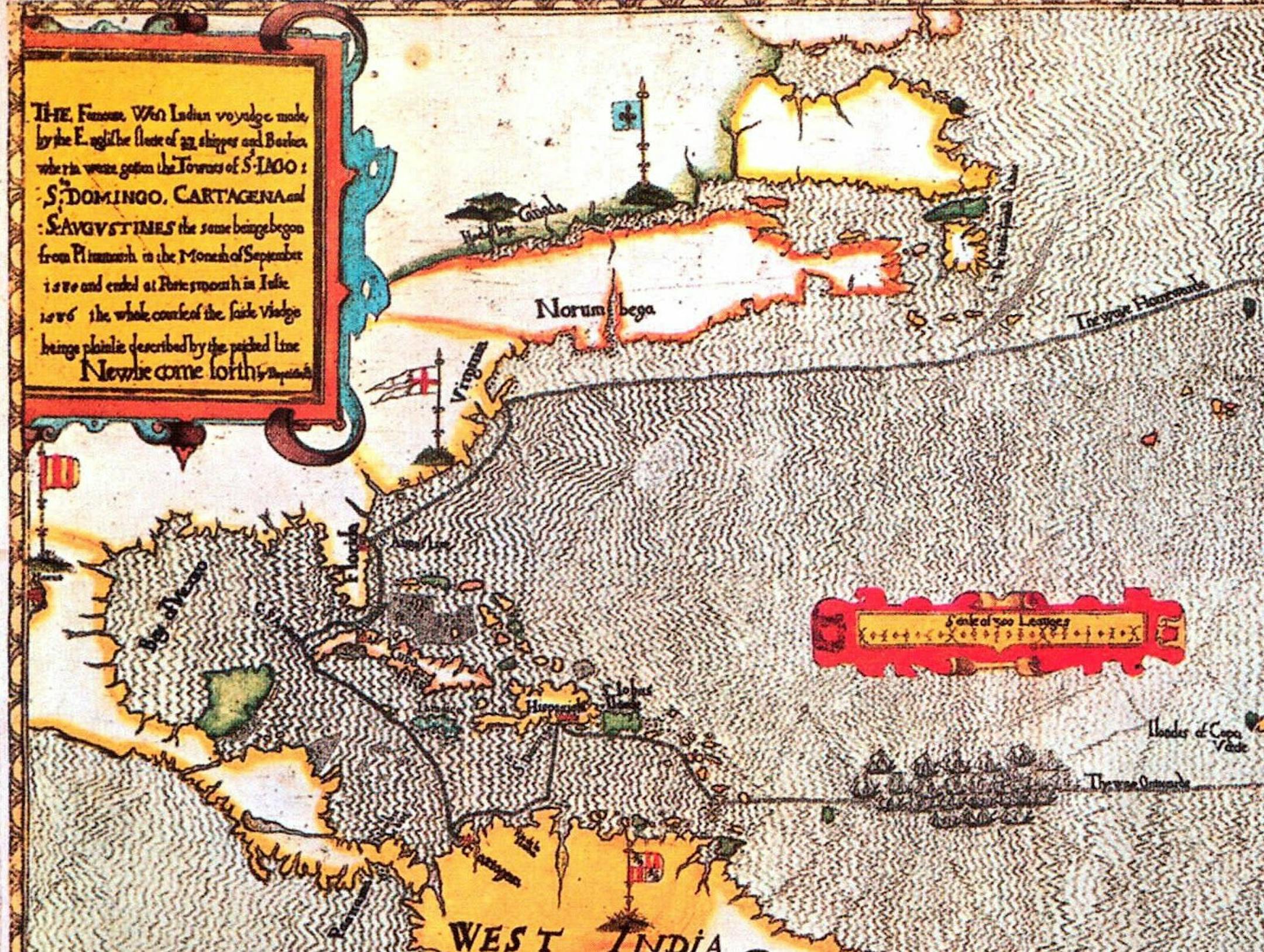
Doubts crept in around Greenland, which looked so good it was frankly suspicious, and questions soon spread all over the map: about the wormholes, the handwriting and, most important, the weirdly crumbling ink.
For over half a century, scholars have fought over the authenticity of the Vinland Map, which Yale University unveiled to the world in 1965, calling it at the time evidence of Viking explorations in the western Atlantic, the first European depiction of North America and a precious medieval treasure.
Yale now says someone duped a lot of people.
"The Vinland Map is a fake," Raymond Clemens, the curator of early books and manuscripts at the Beinecke Rare Book and Manuscript Library at Yale, said in a statement this month. "There is no reasonable doubt here. This new analysis should put the matter to rest."
The university said that a team of conservators and scientists, analyzing the elements in the map's lines and text, found high levels of a titanium compound used in inks that were first produced in the 1920s. Clemens said the team hoped to publish an article in a scientific journal. Ars Technica, Smithsonian Magazine and Gizmodo, among other news outlets, reported the conclusion this month.
Elizabeth Ashman Rowe, an associate professor of Scandinavian history at the University of Cambridge, said it was "deeply satisfying to have the strongest possible scientific confirmation of the historians' longstanding arguments that the Vinland Map had to be a forgery."
Experts in the field, she said, had long since determined that the map was a forgery along the lines of the Kensington Runestone, a carved stone on a Minnesota farm that scholars found to be a 19th-century hoax. But the debate over the map persisted, with decades of competing claims.
"It went on and on, like a tennis match over 20 years or more," said William Fitzhugh, the curator of North American archaeology at the Smithsonian National Museum of Natural History. He praised the Yale team's work as thoughtful and well done, adding, "We need to put a lid on this can."