
Scenic highway reopens five years after flood

Repairs restore washed-out passage through Jay Cooke State Park

October 9, 2017 at 3:58PM
(The Minnesota Star Tribune)

A ribbon of highway through scenic Jay Cooke State Park finally reopened to traffic last week, five years after floodwaters ripped it apart.

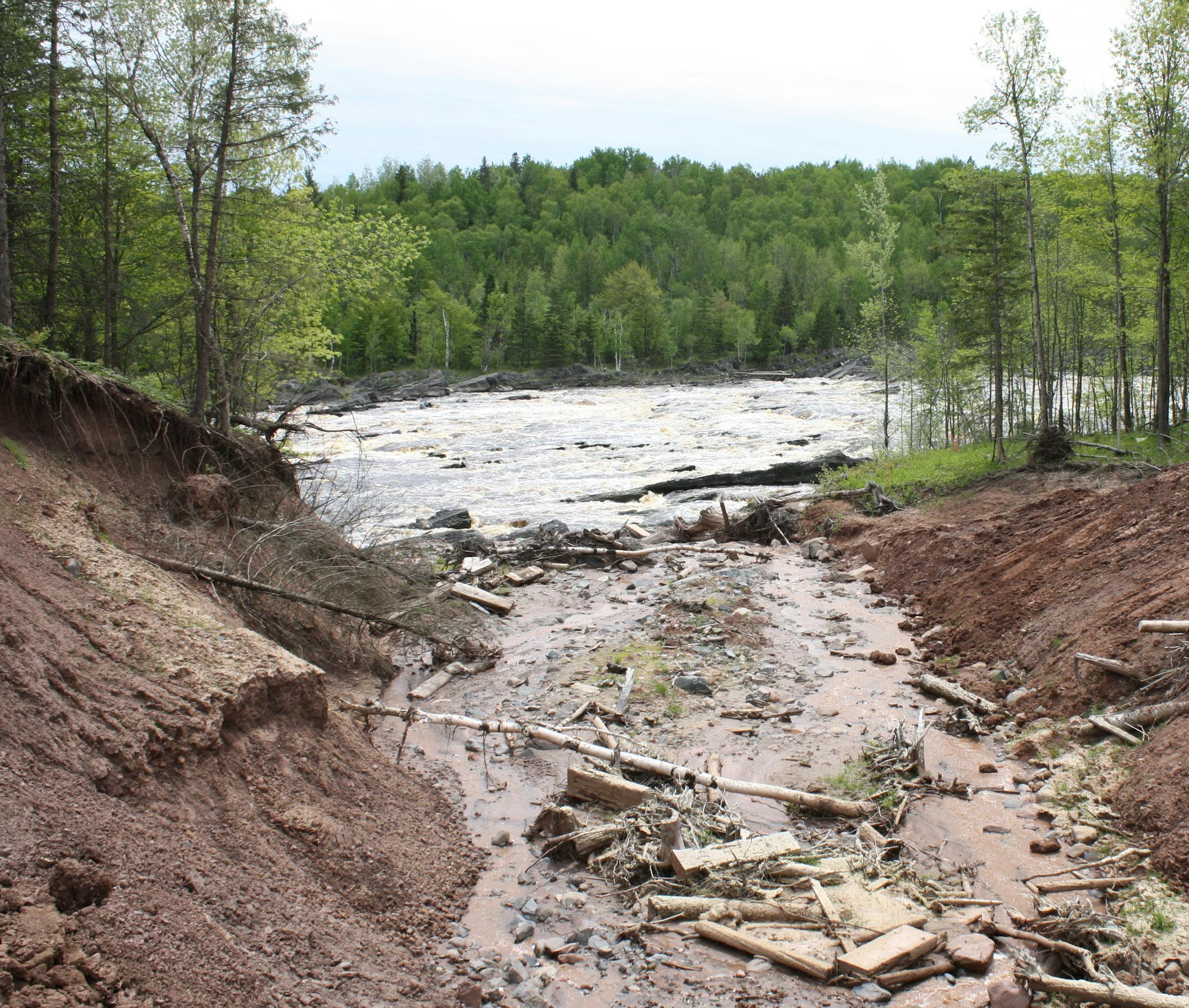
The stretch of E. Hwy. 210 was wrecked by the June 2012 flood that battered the region, with some 80 washouts and landslides along more than 3 miles of pavement. The roadway is the main east-west route through Jay Cooke.

"We've waited many years for this," said an elated Kitty Bureau, the mayor of Carlton, Minn., which sits on the western border of the state park.

The road's closure meant fewer customers for Carlton businesses, longer drives for locals who wanted to get to the Fond du Lac neighborhood on the other side of the park, and frequent questions.

"Every time I meet people, it's, 'Are they ever going to finish it? Are they ever going to get it done?' " Bureau said.

Some repairs were made immediately, but much of the destruction was left in place as the state Department of Transportation weighed its options.

A new bridge, the Forbay Bridge, was built in 2013. The floods had overwhelmed a levee within Jay Cooke, breaching a portion and sending even more water cascading through the park toward Lake Superior. A section of the roadway was so badly washed out that engineers built the new bridge to span the gully rather than fill it in.

But with much of the highway still torn up, state officials held a series of public meetings with local residents to determine their next step. Residents strongly supported reopening the road, so the state drew up a rebuilding plan.
Construction on the $21.3 million project began two years ago. Federal emergency funds covered 80 percent of the costs, with state emergency funds covering the rest.

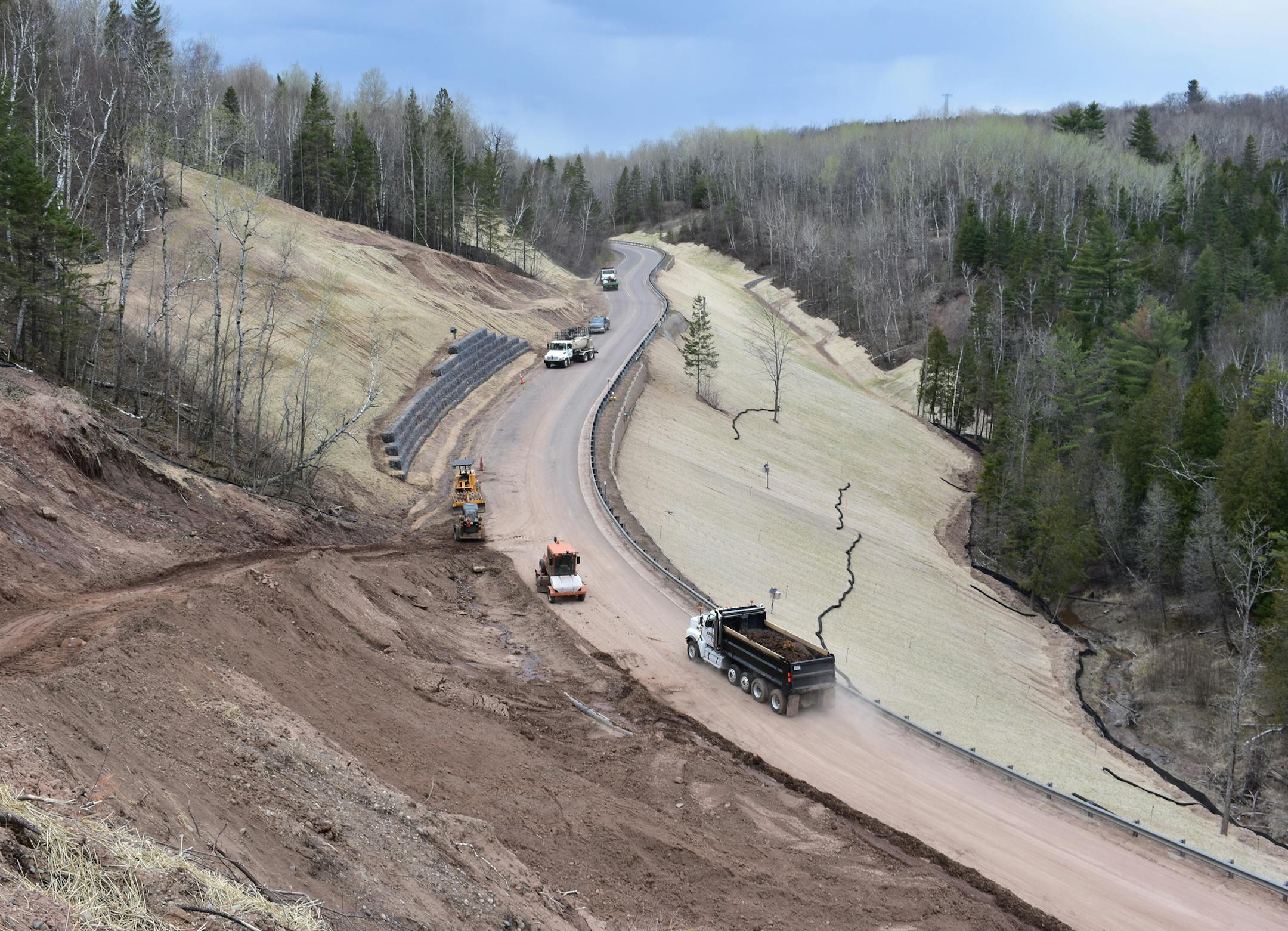
The road reconstruction took a long time in part because it included a lot of specialized work to stabilize sloping soil on either side of the highway. Crews installed multiple types of retaining walls and specialized cameras to monitor the slopes for any sign of movement. Some 74 slopes in all were upgraded during the road's reconstruction. The cameras can detect movement down to the millimeter, according to state officials.

"Everything was done to stabilize the soils as much as possible," said Beth Petrowske, a state highway department spokesperson.

The newly made highway includes overlooks of the scenic St. Louis River valley, retaining walls that resemble nearby historic structures, and larger culverts.

Bureau, the Carlton mayor, vividly recalls the flood. A local stream overran its banks and flooded the city's sewer system. That in turn sent sewage backward through the pipes and into homes throughout the city, including her own.

The house, far removed from any lake or stream, normally was so dry that she and her husband didn't have flood insurance.

They spent weeks replacing everything in the basement, including their house's mechanical systems.

"You don't ever forget how bad it was," she said.

Bureau and her husband drove to the Hwy. 210 ribbon-cutting ceremony last week, but then skipped a portion of it so that they could drive the new highway for the first time.

"We played hooky," she said.

Her verdict on the new road: "Just amazing."

"If you've had a chance to go through the park and see how gorgeous it is … it doesn't matter if it's in the winter, spring, summer," she said, "it's always beautiful."

Matt McKinney • 612-673-7329 Twitter: @_mattmckinney


Above, floods in 2012 ravaged the area. At top, rebuilding a bridge in 2013 involved complex retaining walls to hold the sloping soil. Special cameras now monitor any ground movement. (The Minnesota Star Tribune)
about the writer

about the writer

Matt McKinney

Reporter

Matt McKinney writes about his hometown of Stillwater and the rest of Washington County for the Star Tribune's suburbs team. 

See Moreicon

More from No Section

See More
FILE -- A rent deposit slot at an apartment complex in Tucker, Ga., on July 21, 2020. As an eviction crisis has seemed increasingly likely this summer, everyone in the housing market has made the same plea to Washington: Send money — lots of it — that would keep renters in their homes and landlords afloat. (Melissa Golden/The New York Times) ORG XMIT: XNYT58
Melissa Golden/The New York Times

It’s too soon to tell how much the immigration crackdown is to blame.