

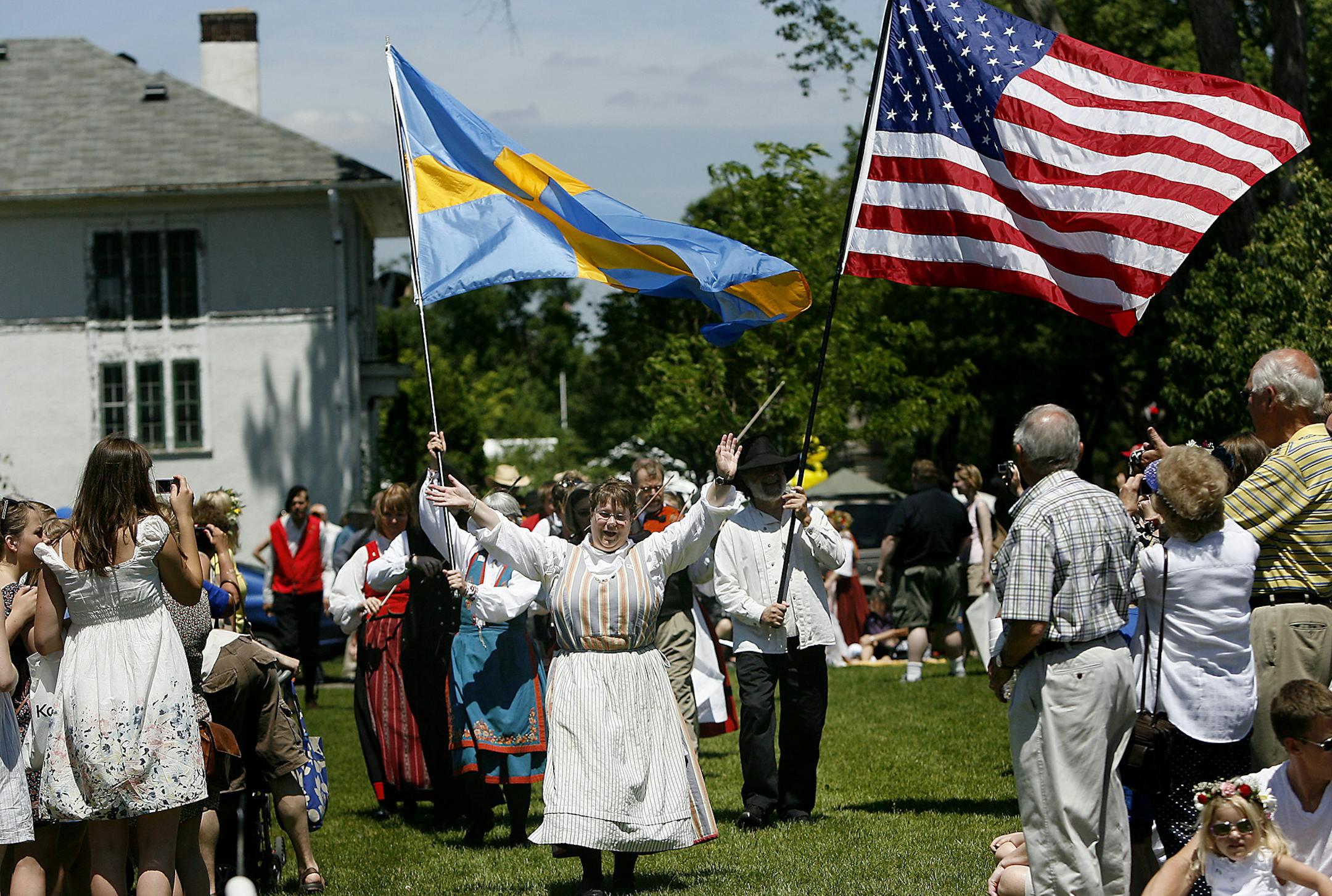
Save the date(s).
This year's Midsummer celebrations aren't falling solely on the summer solstice but will take place over the course of two weekends. That's partly because, despite the state's overwhelming Scandinaiety (we are both the nation's most Swedish and most Norwegian state), there are only so many authentic entertainers to go around.
"We've traditionally done it the week before because there's lot of crossover interest with performers and attendees," said Laura Cederberg of the American Swedish Institute, which will host festivities on Saturday. "There's sort of an informal agreement with the other organizations."
Bottom line: More maypoles.
Midsummer — or Midsommar or Midtsommer — is the day after the summer solstice on June 21, the longest day of the year. (Yes, after this, the days begin growing shorter. Don't kill the messenger.) The day is said to be endowed with mystical powers, mostly revolving around the idea of sunlight vanquishing the darkness. One pagan ritual involved a wheel or huge ball of straw being ignited and rolled down a hill into a river. Massive bonfires still crackle under the stars.
In Sweden, where Midsommar is a big deal, sleeping with flowers beneath your pillow may reveal your future spouse. In Icelandic folklore, cows speak in the night.
Midsummer actually is celebrated in cultures beyond the Scandinavian countries, yet those are the heritages most noted in Minnesota.
Perhaps one of the most traditional fests is the Gammelgården Museum's Midsommar Dag Celebration June 22 in Scandia, given that it's set in a replica of an old Swedish farm. (www.gammelgardenmuseum.org) People in traditional garb will raise the beribboned majstång around which they will dance and sing, the better to work off the smörgåsbord.


