

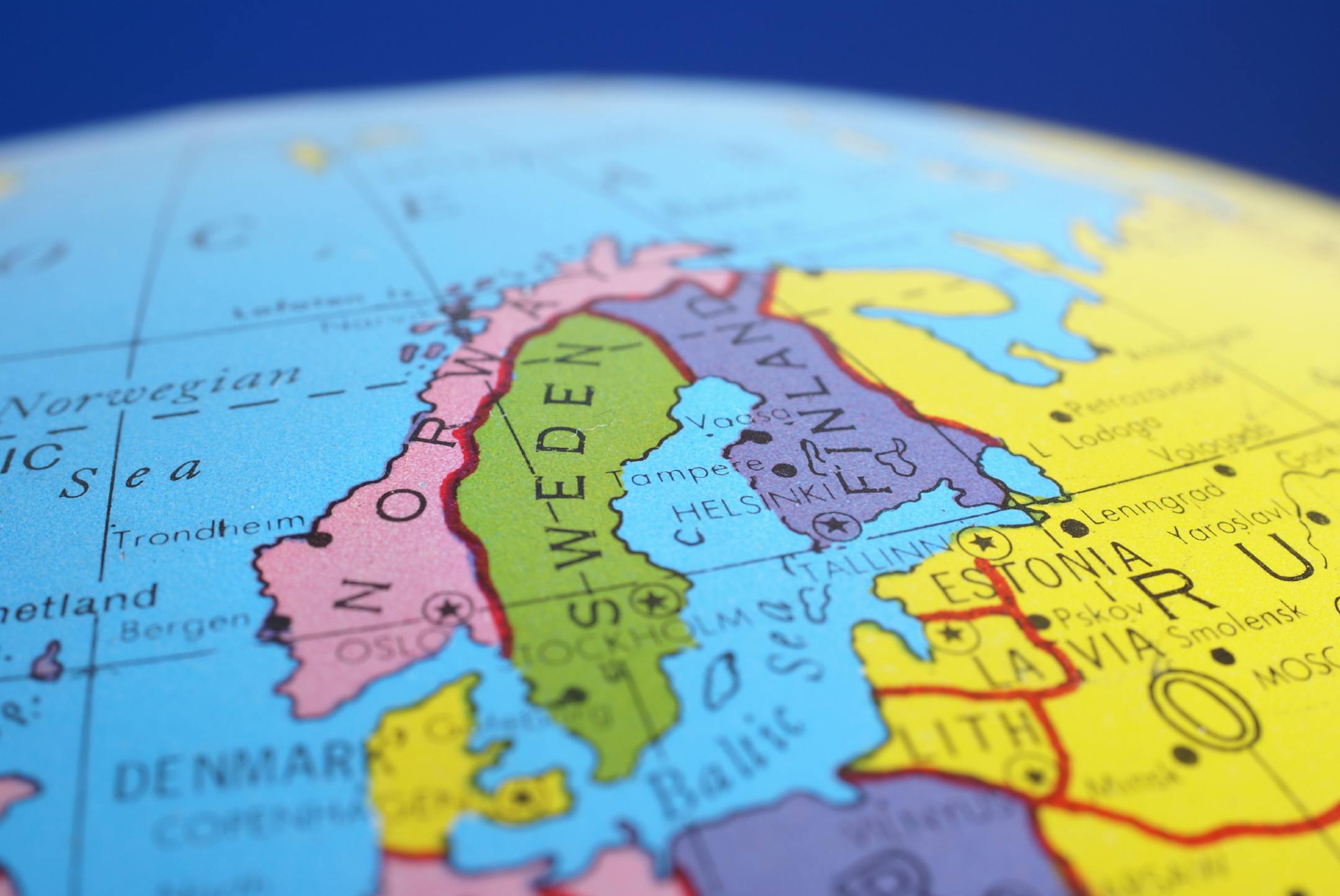
"What's there not to love?" actor Will Ferrell enthuses in the second episode of NBC's expat comedy "Welcome to Sweden." "Picking blueberries, outhouses, a year off if you have a baby — even if you don't have a baby, just a year off. Your family around constantly. Lagom — not too much, not too little. I mean, they're doing it right over here."
Ferrell is in character, but his fervor is familiar. The United States is in the midst of an episode of Scandimania, brought on in part by the habitually high placing of Sweden and its similarly prosperous, egalitarian, collectivist neighbors — Denmark, Norway, Iceland and Finland — in global rankings of everything from happiness to lack of corruption, gender equality and consumption of organic root vegetables.
It is true the old Viking tribes excel in many of these areas, but I fear that, lately, we non-Scandis have become rather blinded by the Northern Lights.
Consider the glowing reports on Finnish schools (the best in the world, says Smithsonian magazine, though the latest rankings show they are slipping), Norwegian prisons ("superior," claims the Atlantic — it helps that Norway barely has any criminals) and Swedish road safety (New York Mayor Bill de Blasio wants to borrow the model, though I suspect that speeding fines that rise with income wouldn't be popular in Manhattan).
The Washington Post is not immune to Scandinavia's charms, recently marveling at how Danish branches of McDonald's manage to pay their employees 2.5 times U.S. McDonald's workers' wages (clue: When about 75 percent of earnings disappear as income and consumption taxes, higher wages are more necessity than choice).
The New York Times also seems to have a crush on the Nordics. "Joy Is Always in Season," it gushed in a piece on Denmark (the latest Gallup polls indicate that's less true than it once was), and last month the Times assured us that "A Big Safety Net and Strong Job Market Can Coexist. Just Ask Scandinavia." (Cough — unemployment is 5.6 percent in the United States, vs. 8.1 percent in Sweden, 8.9 percent in Finland and 6.4 percent in Denmark.)
I live in Denmark, and although it appears to have been surpassed as the happiest country in the world by Panama, Costa Rica or Fiji (depending on which list you believe), it is still a pretty great country, especially in which to raise kids. But Scandinavia is not the utopia that American liberals or the 11 million Americans of Nordic descent often make it out to be, just as it is not the quasi-commie, statist gulag that those on the right would often have us believe.
And global and domestic events are conspiring to make life a little more uncertain for these former high achievers. I am not just talking first-world problems, although those are definitely a Scandi specialty — at a recent dinner party, I heard one woman complain that her son's preferred university did not offer the surfing degree he wanted. Rather, the Scandinavian model's structural fissures are coming under increasing stress.


