

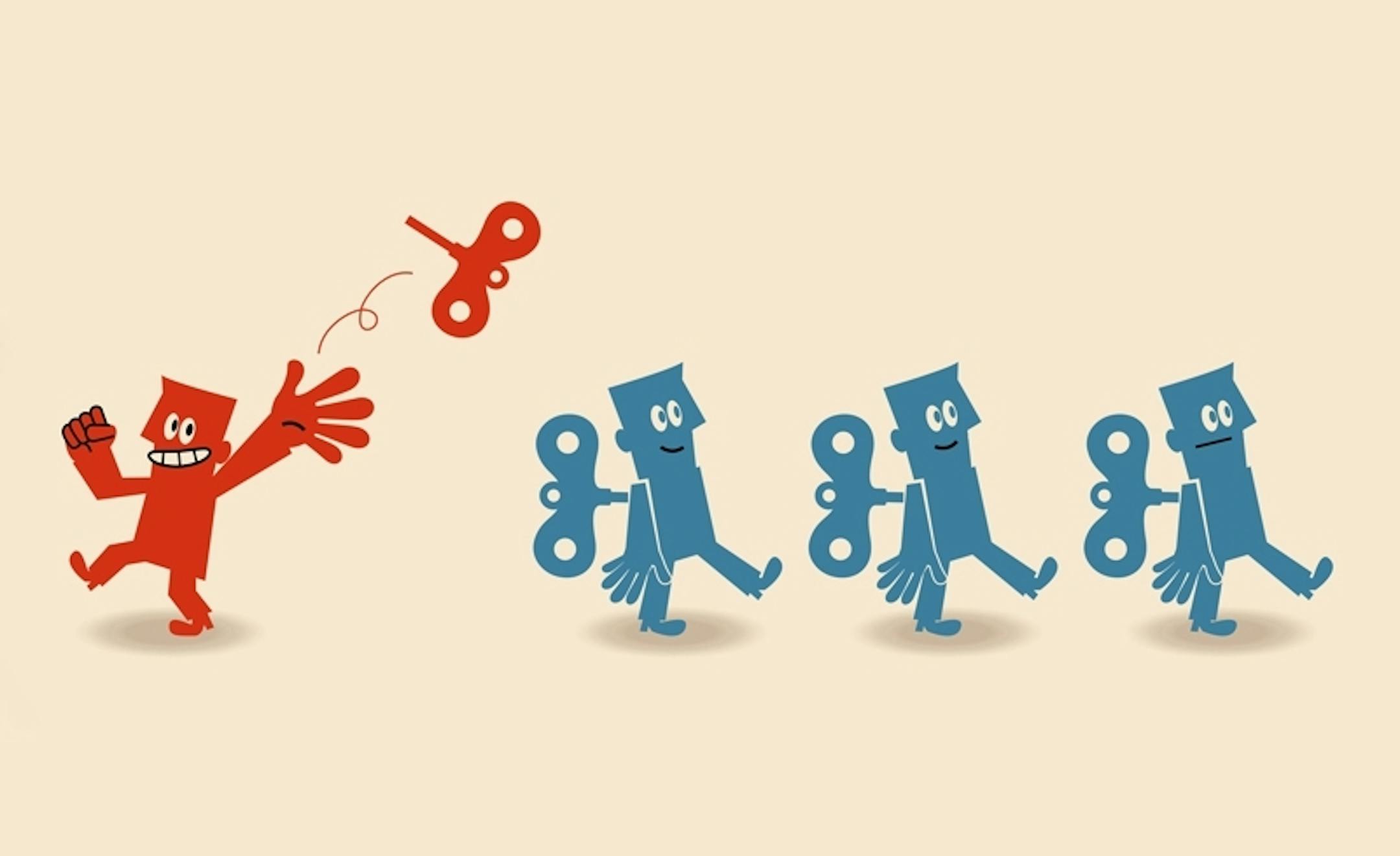
When I was 18, broke and on my own, I got a job as a nurse's aide. It was 1979; the "misery index" was high and jobs for young people were scarce. The very stern head of nursing informed me that her nurses were unionized. I was crushed to learn that union dues would be deducted from my pay along with taxes. I told her I didn't want to join; I needed every penny I earned. She told me that if I wanted the job, I had to join.If the job market had not been so tight, I would have walked out of her office, humming "take this job and ..." But I needed that job, so I joined. I kept thinking I'd hear from the union; they didn't write, they didn't call. I often thought of the union while eating ramen noodles (again!). I worked hard and got myself into college and eventually law school. But I've never forgotten how I felt that day.
Our Legislature is considering a bill that would give Minnesota an opportunity to become a "right to work" state. If the sponsors can find enough brave souls to vote for the bill (called "Employee Freedom"), voters will be asked to amend the state Constitution to give all employees the freedom to join, or not join, a labor union. It would not ban private or public labor unions. It would not ban collective bargaining. All it would do is give you the right to decide.
RTW is a proposed amendment rather than a statute for two reasons. First, supporters know that Gov. Mark Dayton would veto a RTW law, so that political exercise is pointless.
It is hard to find any daylight between Dayton's DFL Party and unions -- especially public unions. But the governor cannot veto a ballot measure.
Second and more important, supporters view this as a fundamental right that belongs in the Constitution. We should have the right to freely associate or not associate with a union. Except for taxes, we should have the right to decide who gets a cut of our paychecks. Forcing people to join unions -- or to pay a "fair share" of dues -- violates these rights. It's like taxation without representation.
It might surprise you to know that 23 out of 50 states are right-to-work states. The last three states to join were Indiana, which adopted RTW just this year, Oklahoma (2001) and Idaho (1986). Some of our neighbors adopted RTW laws years ago (Iowa in 1947, North Dakota in 1961 and South Dakota in 1973). Michigan is considering joining the RTW club. We compete with these states for employee talent, investment and jobs.
According to Rasmussen Reports, voters overwhelmingly support the idea that employees should not be forced to pay union dues (75 percent). Even 65 percent of union members agree. Why? Because people like to be asked for their money, and they want something of value in return. Forced union dues feel like a stickup.
Union agendas are often at odds with employees' agendas because unions get paid whether members think they are doing a good job or not. RTW changes this dynamic and gets unions focused on members as customers.


