
Saving the world's literary treasures

The Associated Press
February 8, 2014 at 10:37PM
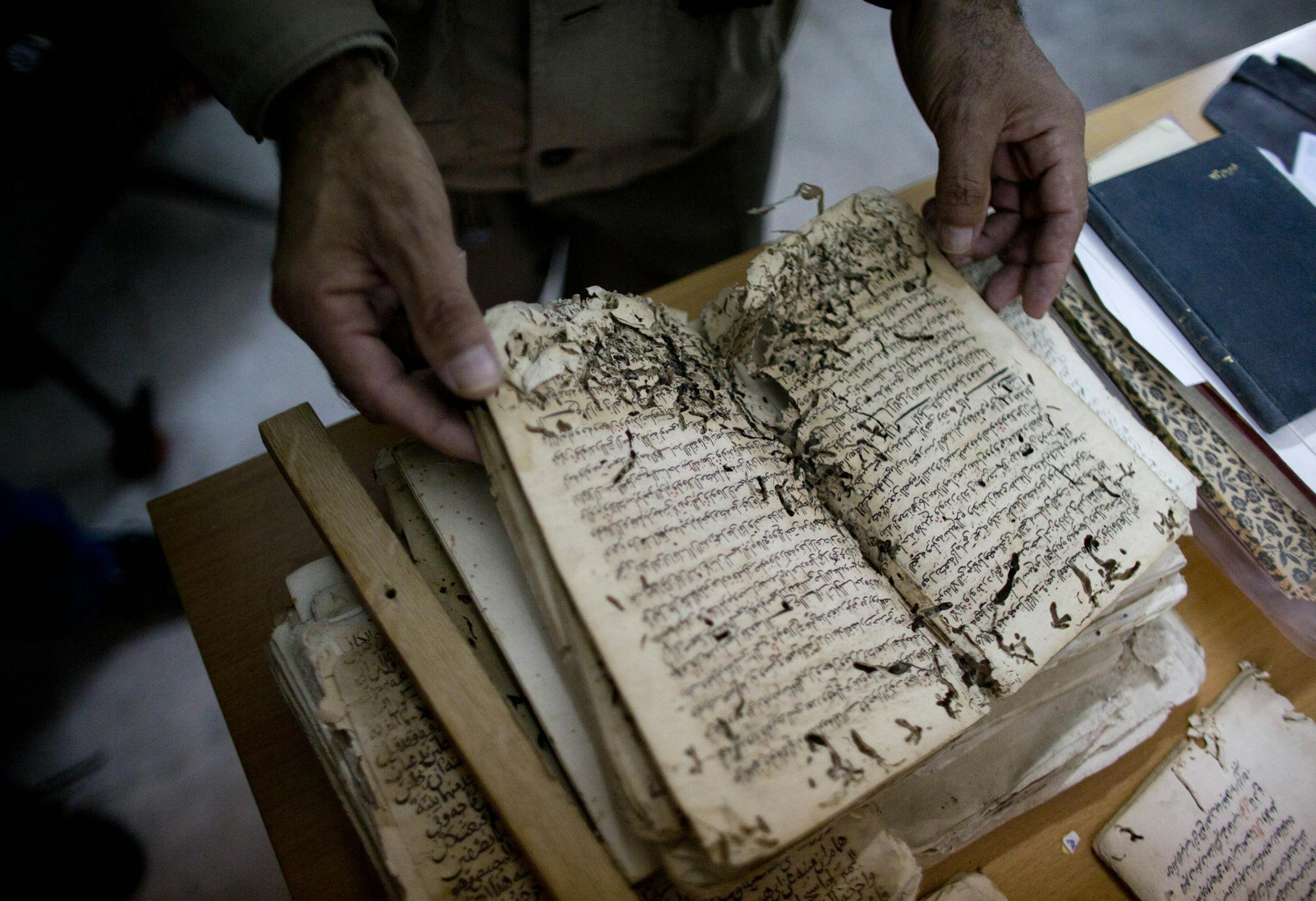
In this photo taken on Monday, Jan. 27, 2014, an employee shows an old manuscript at the al-Aqsa mosque compound library in Jerusalem. The library has a collection of some 4,000 old manuscripts with about a quarter considered in poor condition. Half of the books are already undergoing restoration funded by the Waqf, Jordanís Islamic authority which manages the holy site, and with assistance from UNESCO. (AP Photo/Dusan Vranic)
modern and ancient united: Al-Aqsa mosque library, above, and its 130,000 books are housed in two rooms in the compound, where modern steel bookshelves are affixed to ancient stone walls. The oldest book is 900 years old. With many books in tatters, authorities are working to save what remains of the texts and make them available online to scholars and researchers. Photos by DUSAN VRANIC Associated Press (The Minnesota Star Tribune)

In the 1920s, an urgent call went out to the literati across the Middle East from Arab leaders in Jerusalem: Send us your books so that we may protect them for generations in the newly minted Al-Aqsa mosque library. Decades later — after riots and the wear of time — many of those centuries-old manuscripts are in a state of decay, left in tatters with shards of paper crumbled off their pages. Now, religious authorities are restoring and digitizing the books, many of them written by hand.

They hope to make them available online to scholars and researchers who are unable to travel to Jerusalem. Hamed Abu Teir, the library's manager, called the manuscripts a "treasure and trust."

The Al-Aqsa mosque, Islam's third holiest site, is located on ground zero in the territorial and religious conflict between Israel and its Arab neighbors. Among its collection of 130,000 books are 4,000 manuscripts, mainly donations from the private collections of Jerusalem families. UNESCO, which is providing assistance for the restoration, said the library contains "one of the world's most important collections of Islamic manuscripts." Most of the texts are religious, but other subjects include geography, astronomy and medicine. Some of the pages contain personal letters about travel in the 18th century. In the six years since the project began, Radwan Amro and his 10-person team have restored 200 manuscripts — painstakingly treating every page — as well as maps, Ottoman population and trade registers and handwritten documents from the Mamluk period of the 13th to 16th centuries. Amro joked that it could take "hundreds of years" to finish the project. But he hopes to have the manuscripts online by year's end.
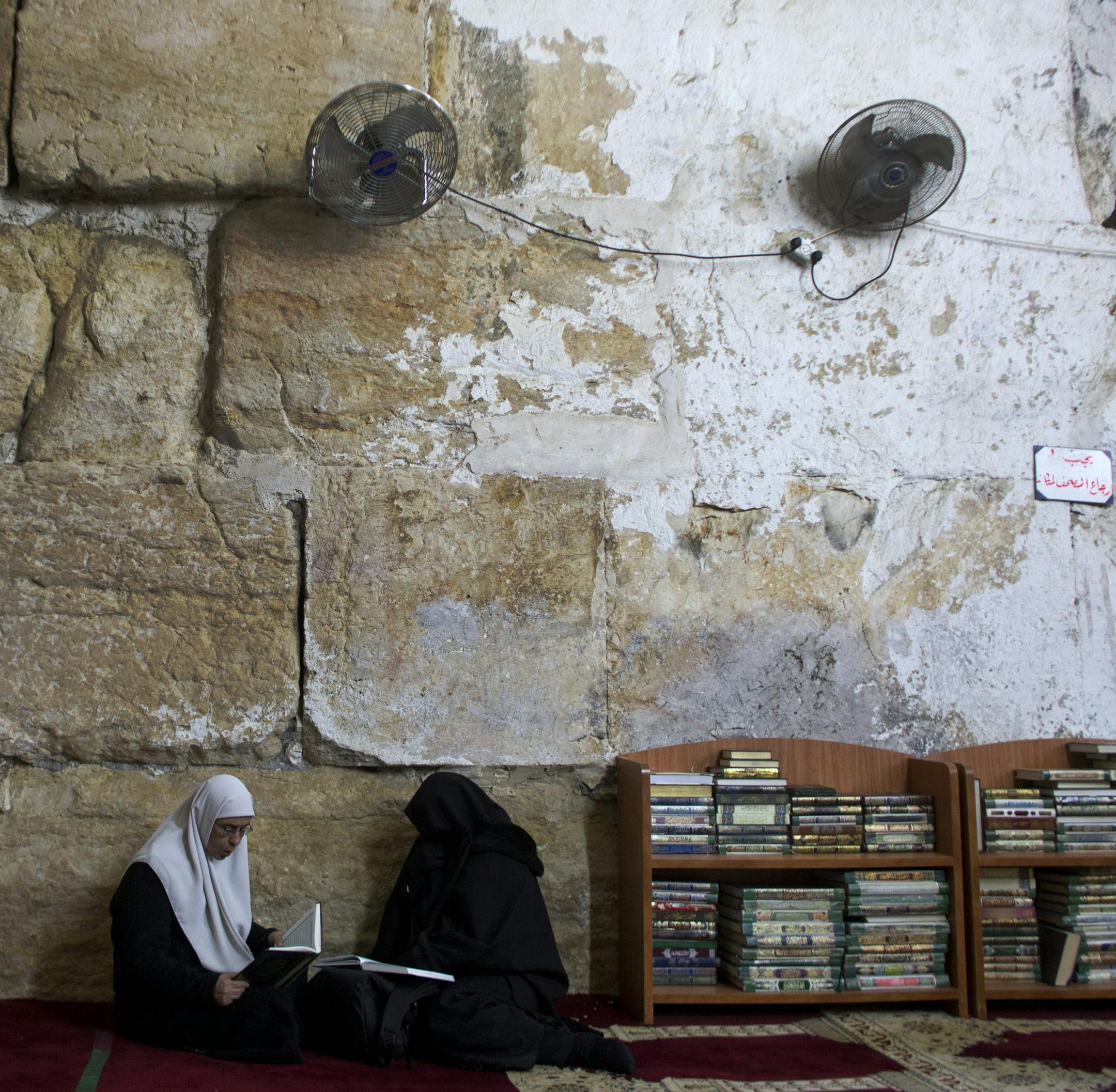
In this photo taken on Monday, Jan. 27, 2014, Palestinian women read at the al-Aqsa mosque compound library in Jerusalem. The library has a collection of some 4,000 old manuscripts with about a quarter considered in poor condition. Half of the books are already undergoing restoration funded by the Waqf, Jordanís Islamic authority which manages the holy site, and with assistance from UNESCO. (AP Photo/Dusan Vranic)
In this photo taken on Monday, Jan. 27, 2014, Palestinian women read at the al-Aqsa mosque compound library in Jerusalem. The library has a collection of some 4,000 old manuscripts with about a quarter considered in poor condition. Half of the books are already undergoing restoration funded by the Waqf, Jordanís Islamic authority which manages the holy site, and with assistance from UNESCO. (AP Photo/Dusan Vranic) (The Minnesota Star Tribune)
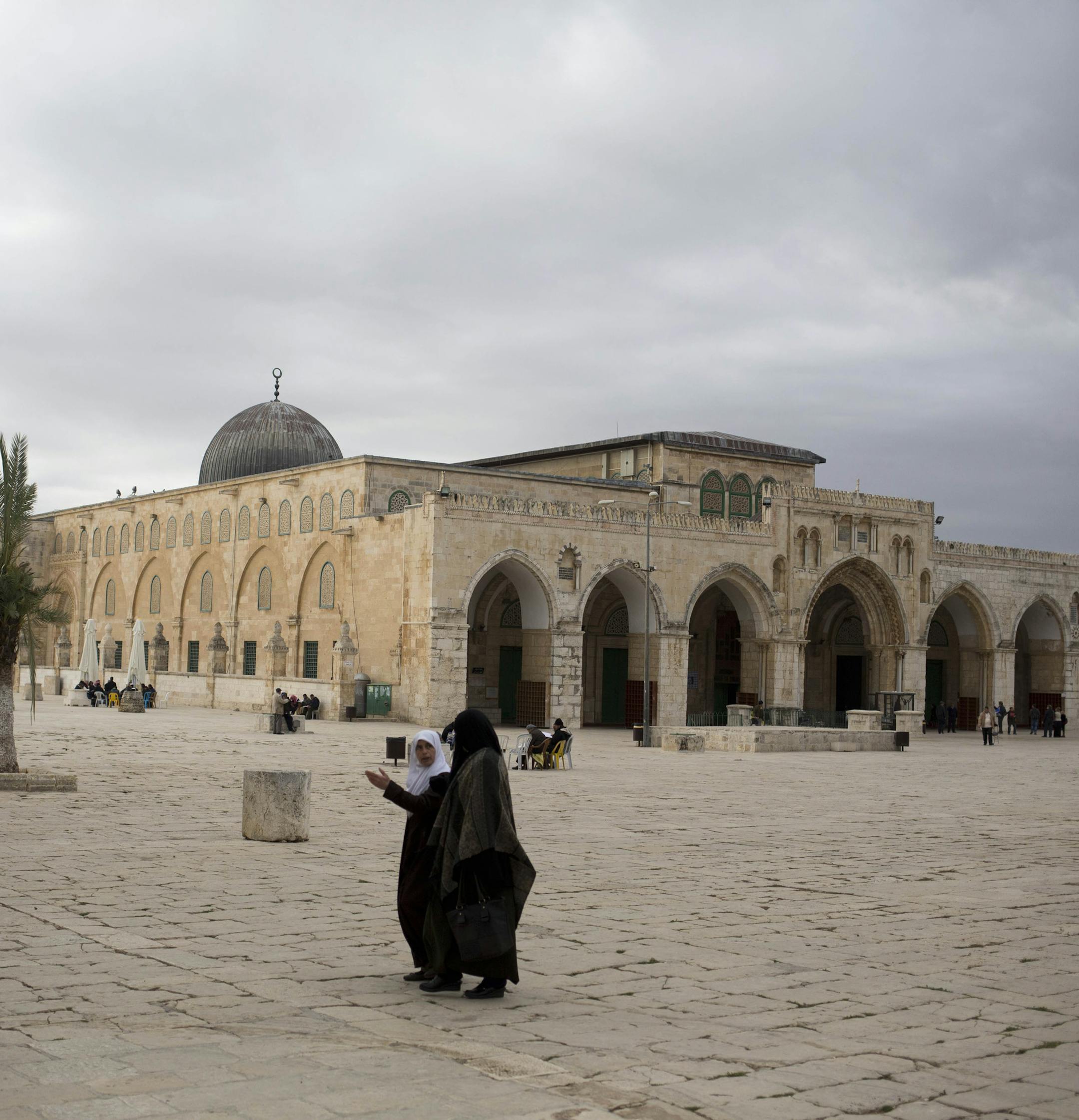
In this photo taken on Monday, Jan. 27, 2014, Palestinian women walk at the al-Aqsa mosque compound in Jerusalem. The mosque's library has a collection of some 4,000 old manuscripts with about a quarter considered in poor condition. Half of the books are already undergoing restoration funded by the Waqf, Jordanís Islamic authority which manages the holy site, and with assistance from UNESCO. (AP Photo/Dusan Vranic)
In this photo taken on Monday, Jan. 27, 2014, Palestinian women walk at the al-Aqsa mosque compound in Jerusalem. The mosque’s library has a collection of some 4,000 old manuscripts with about a quarter considered in poor condition. Half of the books are already undergoing restoration funded by the Waqf, Jordanís Islamic authority which manages the holy site, and with assistance from UNESCO. (AP Photo/Dusan Vranic) (The Minnesota Star Tribune)
about the writer

about the writer

More from No Section

See More
FILE -- A rent deposit slot at an apartment complex in Tucker, Ga., on July 21, 2020. As an eviction crisis has seemed increasingly likely this summer, everyone in the housing market has made the same plea to Washington: Send money — lots of it — that would keep renters in their homes and landlords afloat. (Melissa Golden/The New York Times) ORG XMIT: XNYT58
Melissa Golden/The New York Times

It’s too soon to tell how much the immigration crackdown is to blame.