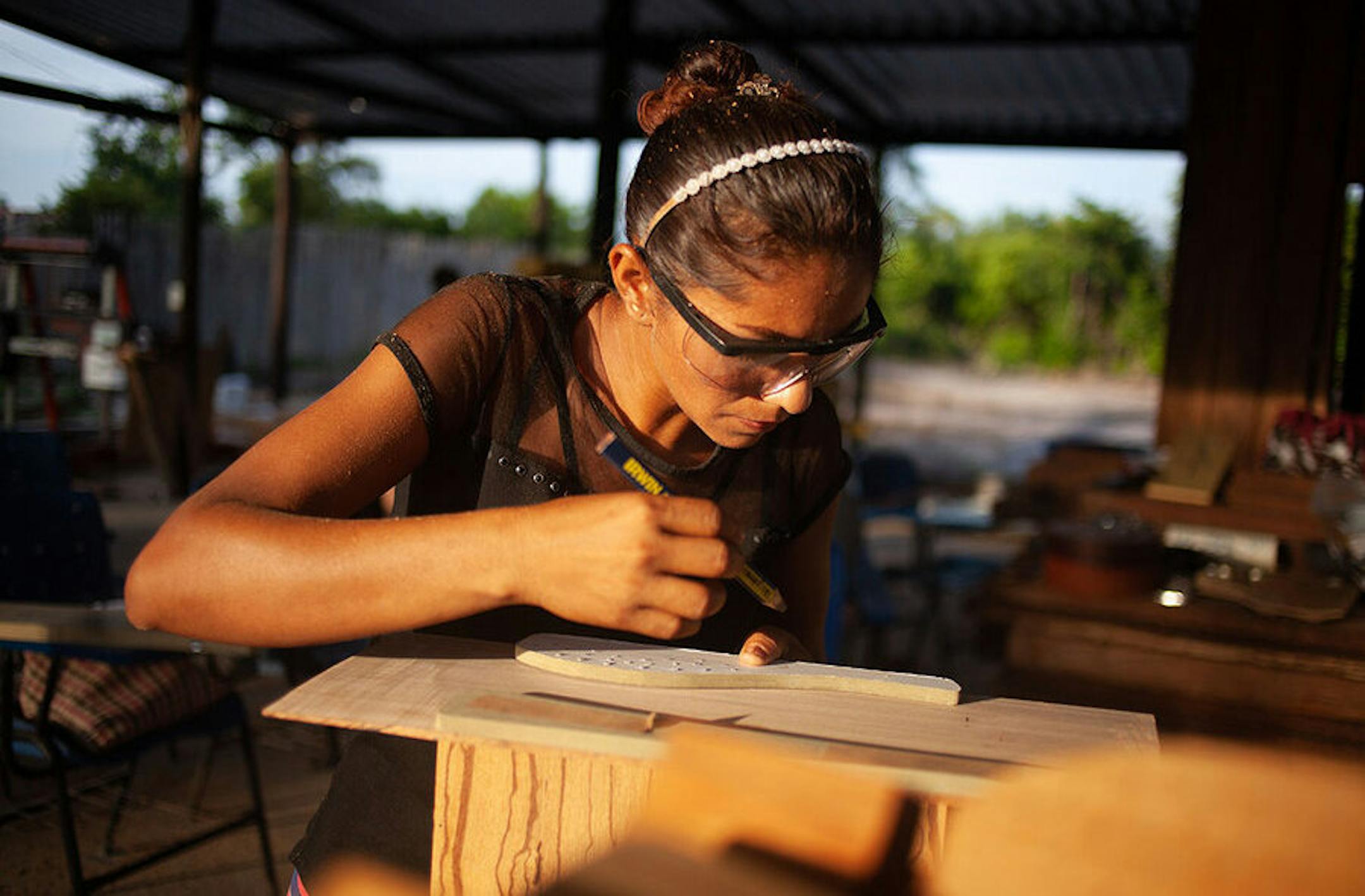
SÃO FRANCISCO DAS CHAGAS DO CARIBI, BRAZIL – Jackeane dos Santos Leite leans over a thin plank of wood, her brow furrowed above her plastic goggles. Carefully, she traces the shape of a spatula before powering up a small electric saw.
"I've only used this one a few times," she says through the cloud of sawdust, her hands unsteady as she cuts into the tauari, or Brazilian oak wood. "The shape has to be just right."
On a scorching afternoon, deep in the Brazilian Amazon, Leite is learning the art of woodcrafting from a trio of designers from Rio de Janeiro, visiting the riverside village of São Francisco das Chagas do Caribi for the occasion. Wearing hard hats and earmuffs, eight trainees busily cut, carve, sand, and polish wood under the guidance of the experts.
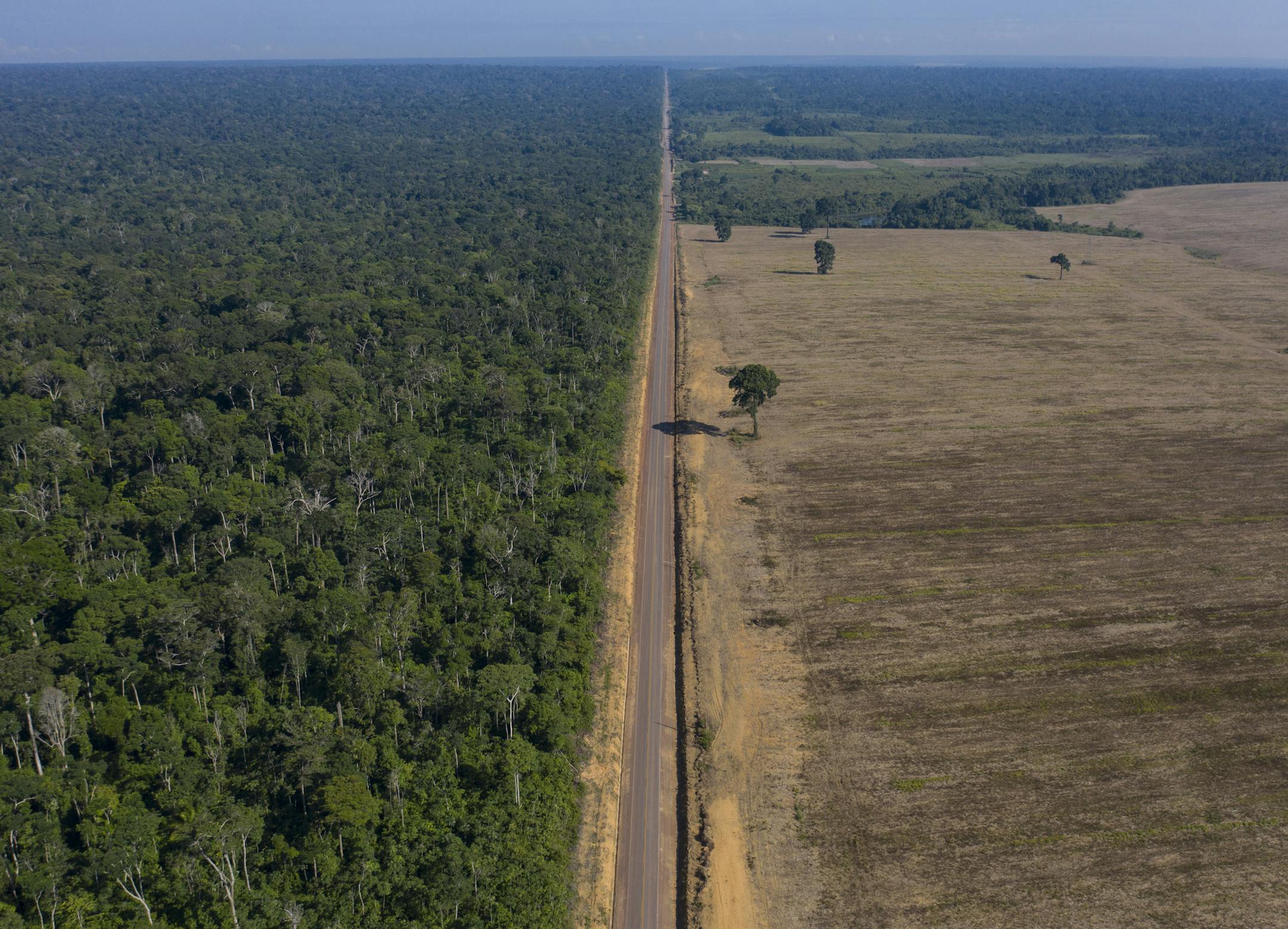
The village is an unlikely setting for a workshop like this. Once an illegal logging hub, the region lost some of its most valued tree varieties a few decades ago, before the authorities turned it into a protected reserve spanning hundreds of thousands of acres.
Now, residents hope the training will help kick-start a new woodworking venture. By making tableware such as platters and spoons from legally harvested timber, they hope to earn income from the forest without destroying it.
"This makes me think of my grandfather," Leite says over the rattle of the generator powering the tools. A longtime settler, "he made canoes; he made everything. But things are really different now. We're doing things legally."
This tiny victory, on the front lines of the battle to save the Amazon, offers a glimmer of hope as the world scrambles to slash carbon emissions and defuse the climate emergency.
World leaders meeting in Glasgow, Scotland, at the COP26 United Nations climate summit have also taken up the challenge. Last week, they pledged to halt deforestation by 2030, and to spend $19 billion on the effort, including on projects, much like the woodworking venture here, that "enhance rural livelihoods ... through ... recognition of the multiple values of forests."