

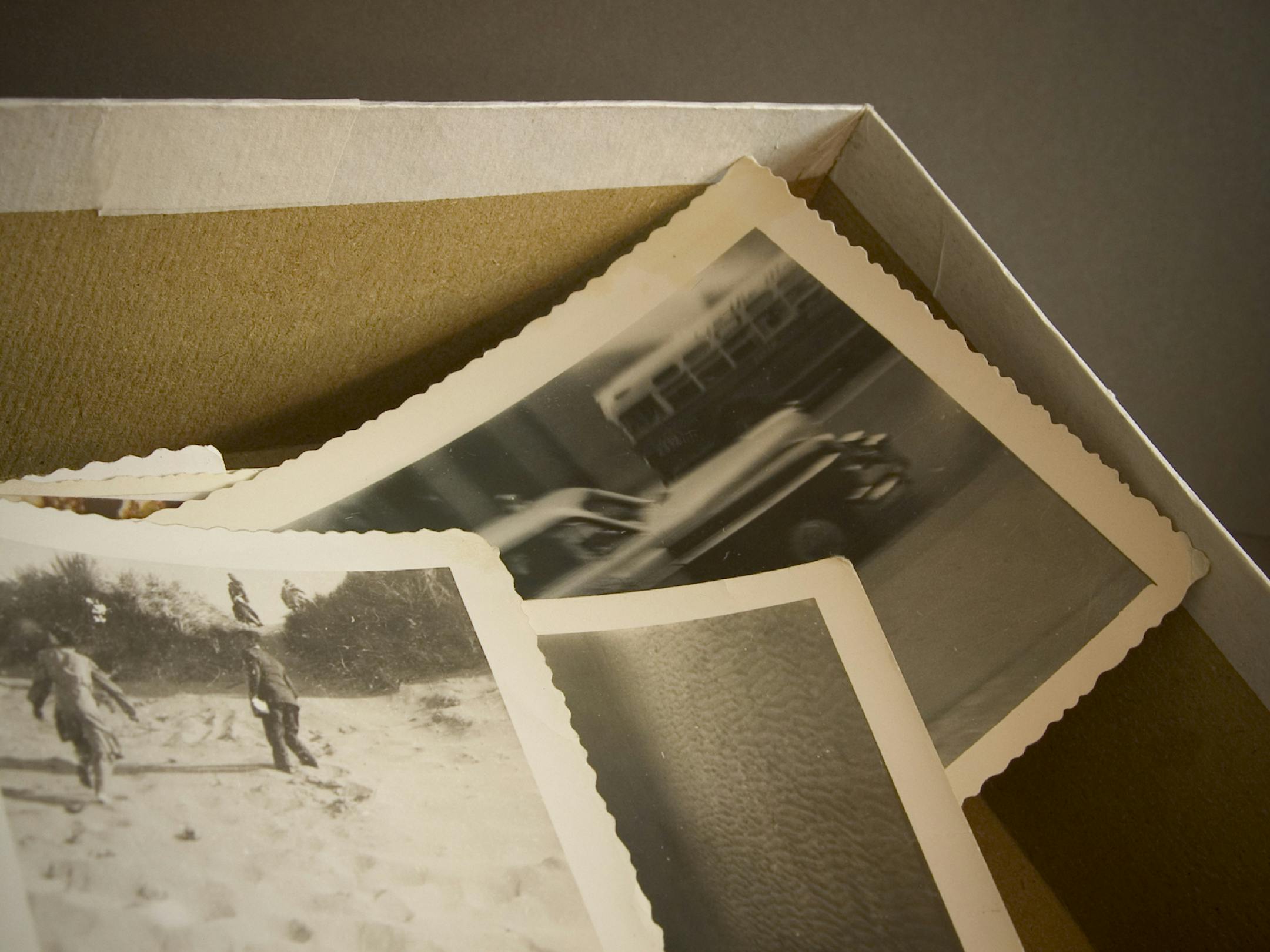
Spend time talking photo preservation with Bob Herskovitz and Joe Hoover of the Minnesota Historical Society, and you may find yourself thinking about the contents of your closets.
All those pictures of your kids or grandkids that you plan to file in albums — er, as soon as you have some time. Those yellowing Kodachromes and Polaroids from your own childhood, stashed in binders with sticky plastic pages before anyone had heard the term "archival quality." Those snapshot-packed shoe boxes, those plastic bins you bought at an after-Christmas sale — now you know they're containers that can leach gases or acids that — yikes! — could be eating away even now at those smiling images.
Relax. Herskovitz and Hoover, the Historical Society's outreach conservator and digital technology outreach specialist, respectively, certainly have high professional standards for preserving data. But luckily, they also have a way of reassuring.
"If you're saving things, that's good," Herskovitz said. "If you're being careful how you're saving them, that's better. If you're using archival materials and good storage environment, that's best."
So perfection isn't required (and archival supplies can be expensive). But the more closely you follow best practices, the more likely your photos will last so that you, and maybe your great-grandchildren, can enjoy them in the future. Here are Herskovitz's and Hoover's recommendations for optimal preservation.
Negatives
Store flat, either vertically or horizontally, inside acid-free paper or plastic sleeves labeled safe for archival photo storage (note: those supplied by the photo processor may not qualify). Make sure any plastic is free of polyvinyl chloride (PVC), which emits damaging gases. If using boxes, again make sure they're archival quality — that is, neither acidic cardboard nor gas-emitting plastic.
Store them in an environment that is cool (which eliminates most attics), dry (which eliminates most basements) and dark (which can come from a closed drawer or box.) Don't store them near a water pipe or anything else with the potential to leak.
Photo prints
Follow the same rules that apply to negatives, including using archival-quality nonacidic, non-PVC materials, whether envelopes, folders, boxes or albums. Even a product sold as a "photo album" may not be safe.


