

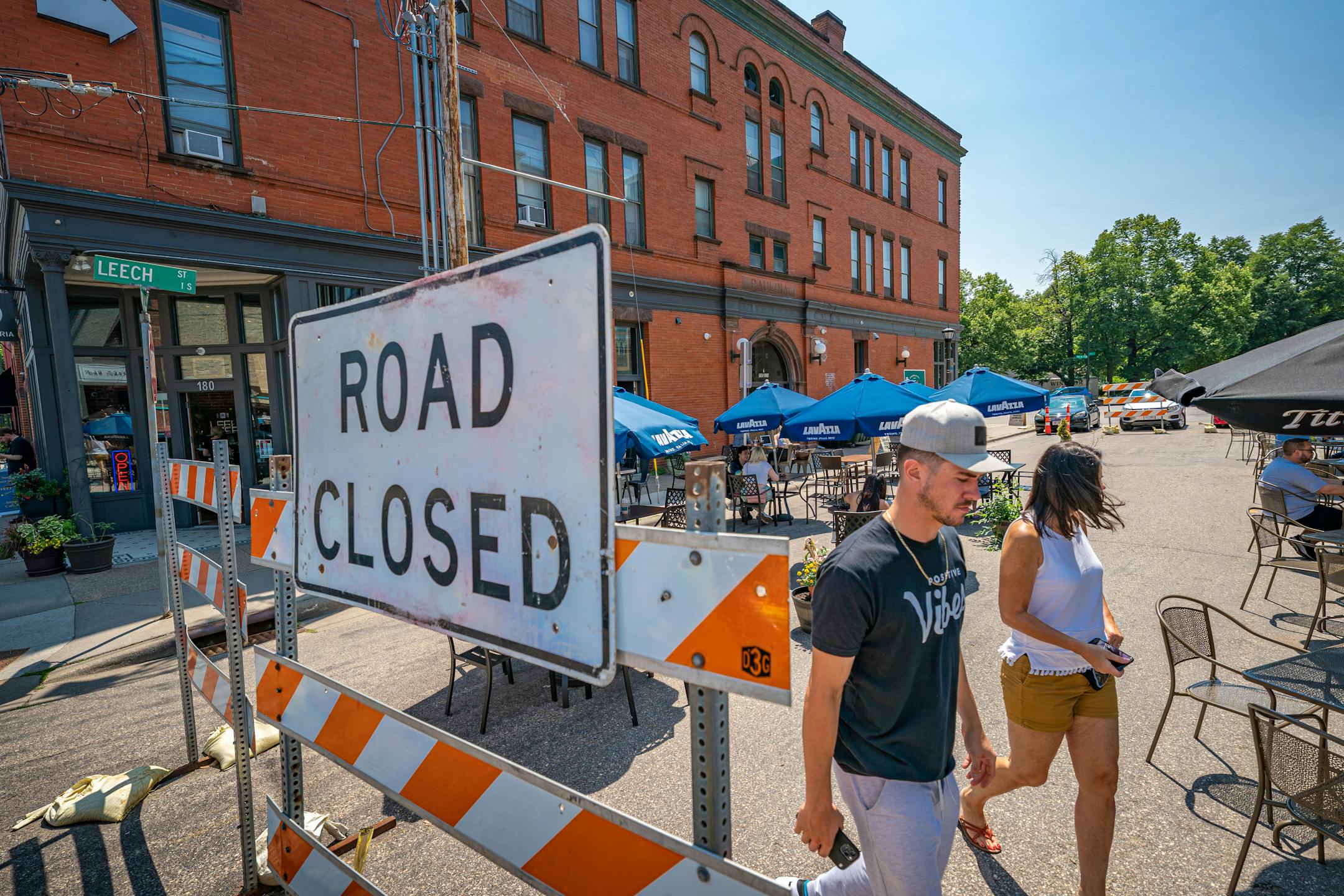
There is an undeniable romance to sidewalk cafes. And all the better when the cafes spill over the curb and into the street, sacrificing a lane of traffic or some parking spaces to the greater value of human conversation and connection. A warm summer's evening spent outdoors with friends is one of life's pleasures.
The proliferation of sidewalk cafes was a welcome side effect of the pandemic. Around Minnesota and around the country, outdoor dining options sprang up as a means to expand restaurant seating capacity while respecting the rules of social distance. Authorities agreeably cut restaurateurs some slack, giving them a bit of leeway in navigating the thicket of regulations that come with serving food and drink in a public right of way.
Those regulations create an ambience all their own: "A minimum of four (4) feet of clear, unobstructed pedestrian walkway shall be maintained between all obstructions and the proposed edge of cafe when the existing sidewalk is twelve (12) feet or less and will not extend more than thirty (30) feet where it shall widen to six (6) feet for a minimum of six (6) feet and provide ample room for two or more wheelchairs, strollers, pedestrians, etc., to pass," reads one part of the Minneapolis code.
A little regulatory flexibility was welcome, and important as a means to help restaurants recoup some of the losses they suffered during the interminable pandemic-related shutdowns.
Now that those shutdowns have come to an end, restrictions on indoor dining are being lifted, and the natural instinct of some municipal regulators is to reassert control, while at least some of the restaurants are asking to be allowed to hang onto their expanded streetside operations.
While Minneapolis and St. Paul are studying their options, other cities — among them St. Louis Park and Maple Grove — have stated their intention to cut patio dining options to pre-pandemic levels.
We hope the cities will take a moment, order an espresso and think carefully.
It may be that some pop-up patios are too inconvenient to remain permanently — those that might interfere with emergency vehicles' access, for instance, or with the accessibility standards mandated by the Americans with Disabilities Act.


