

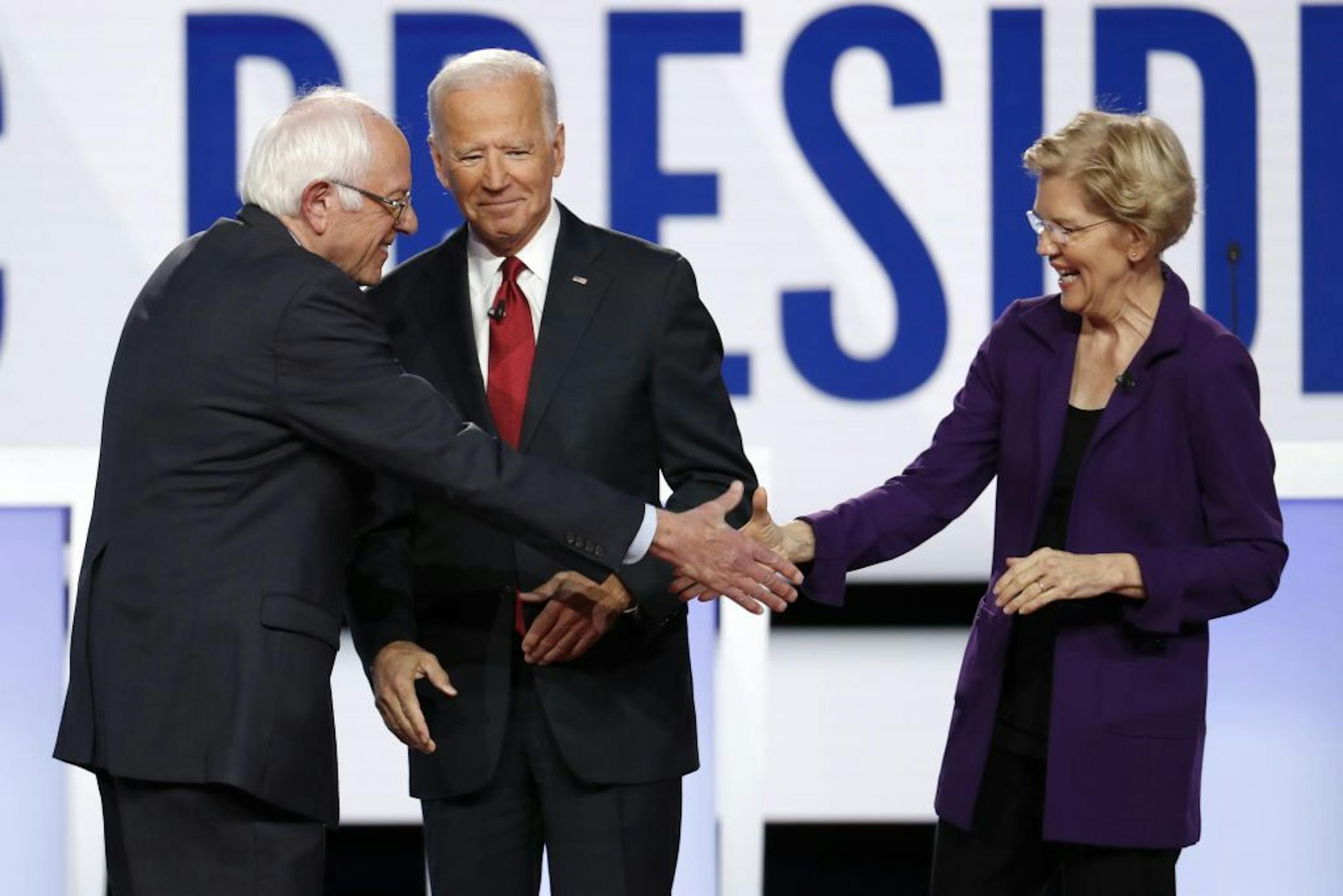
Only a few months from now, populist Democratic progressives around the country hoping to elect one of their own to the White House will need to choose between Sen. Bernie Sanders of Vermont and Sen. Elizabeth Warren of Massachusetts.
Do they back the angry Democratic socialist, or the feisty, anti-corporate populist who wants to break up the banks and big tech companies? One says he is trying to lead a revolution. The other calls for dramatic change, often dismissing critics in her own party for regurgitating Republican talking points.
Only one of those hopefuls is now is one of the front-runners for the Democratic presidential nomination. That would be Warren.
Sanders is passionate and intent on becoming the Democratic standard-bearer, and he is still running well in key state and national polls. But it's still very difficult to see the 78-year-old Vermonter becoming the Democratic nominee next year.
This is Sanders' second presidential rodeo, but unlike four years ago, he isn't a quirky novelty this time. He now shares his lane with another top-tier hopeful who echoes his populism. That alternative, Warren, is a woman, is eight years younger than Sanders and is a strong enough speaker to have moved from near obscurity in the race to the top tier.
And unlike Sanders, Warren hasn't embraced socialism.
But the Vermonter's campaign, which has plenty of money, shows no signs of stopping after a relatively brief medical scare. Sanders is a man on a mission, and people like that don't quit easily. He took on Hillary Clinton (and the Democratic National Committee), after all, when nobody else was willing to do so. It's hard to believe that he could be scared out of the presidential race by Warren.
And that is a problem for the Massachusetts Democrat. For as long as Sanders remains in the contest, Warren will have a hard time consolidating support among the party's left.


