I visited the St. Croix Watershed Research Station last week — a Science Museum facility near Marine on St. Croix which hosts 20 or so scientists studying how land use affects rivers around the world.
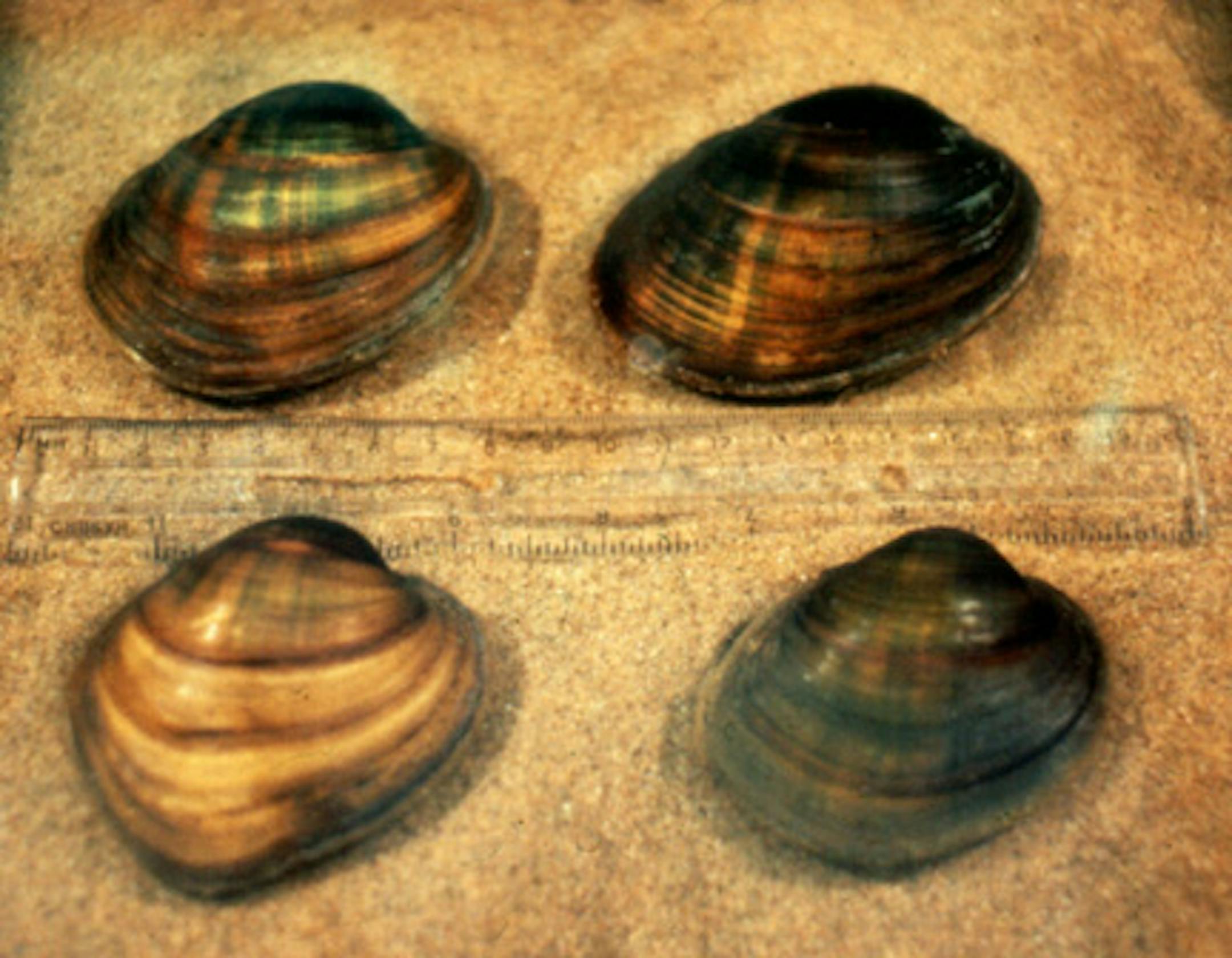
At the entrance to the main building is a display of the couple dozen kinds of mussels that were once found in the Minnesota River. The Minnesota used to be home to more species of mussels than the St. Croix, although it's now the St. Croix that is known for mussels, including some of which are rare and endangered.
The Minnesota River flows through primarily agricultural land, and it is nearly devoid of mussels now, largely due to excessive sediment. Some of the species of mussels displayed on the research station's wall are extinct, others have disappeared from the river but can still be found in other rivers.
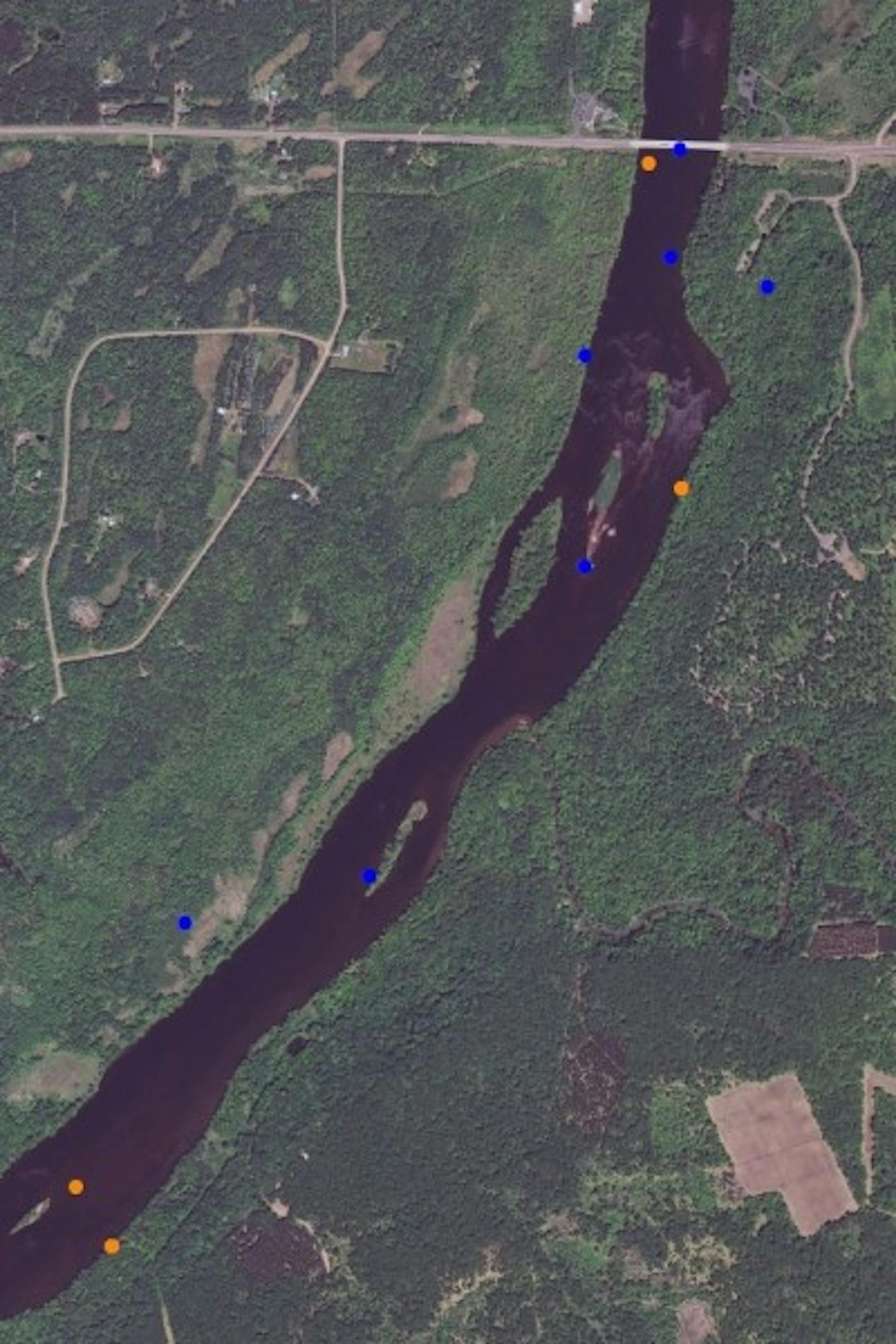
The health of the St. Croix's mussels has been on many people's minds recently because of the incident in April when a containment berm burst at a sand mine along the river near Grantsburg, WI. The mine spilled fine sediment into the river for five days before a hiker noticed it and alerted authorities. (The ultra-fine sand mined at the site is used in hydraulic fracturing, or "fracking.")
What's the harm of a little more sand?
The impacts to the river from the sand mine spill are still being analyzed, but this is not just a matter of a little more sand in the river. The Wisconsin DNR has acknowledged that the type of ultra-fine sand which got into the river is not "native" to the river.
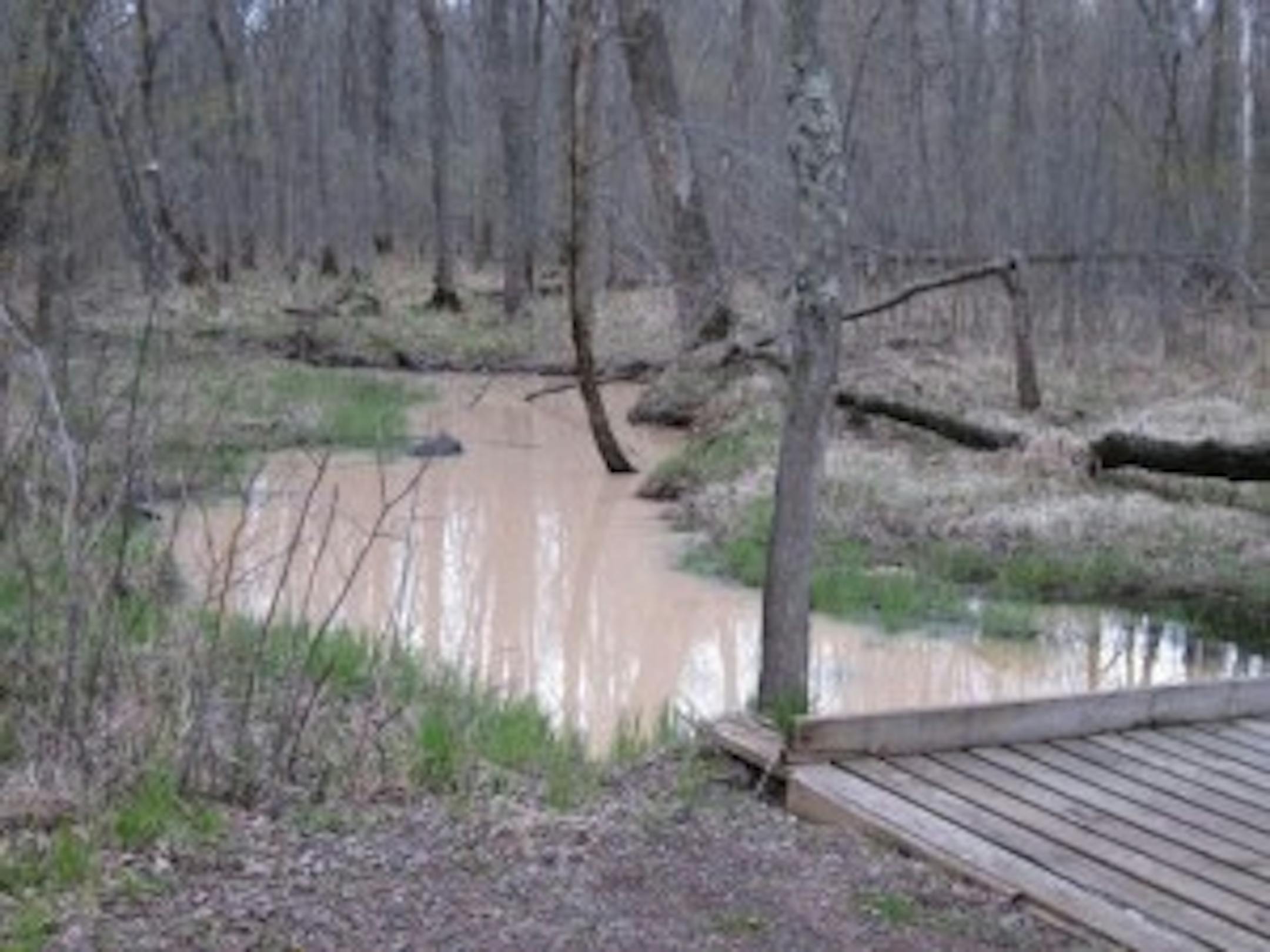
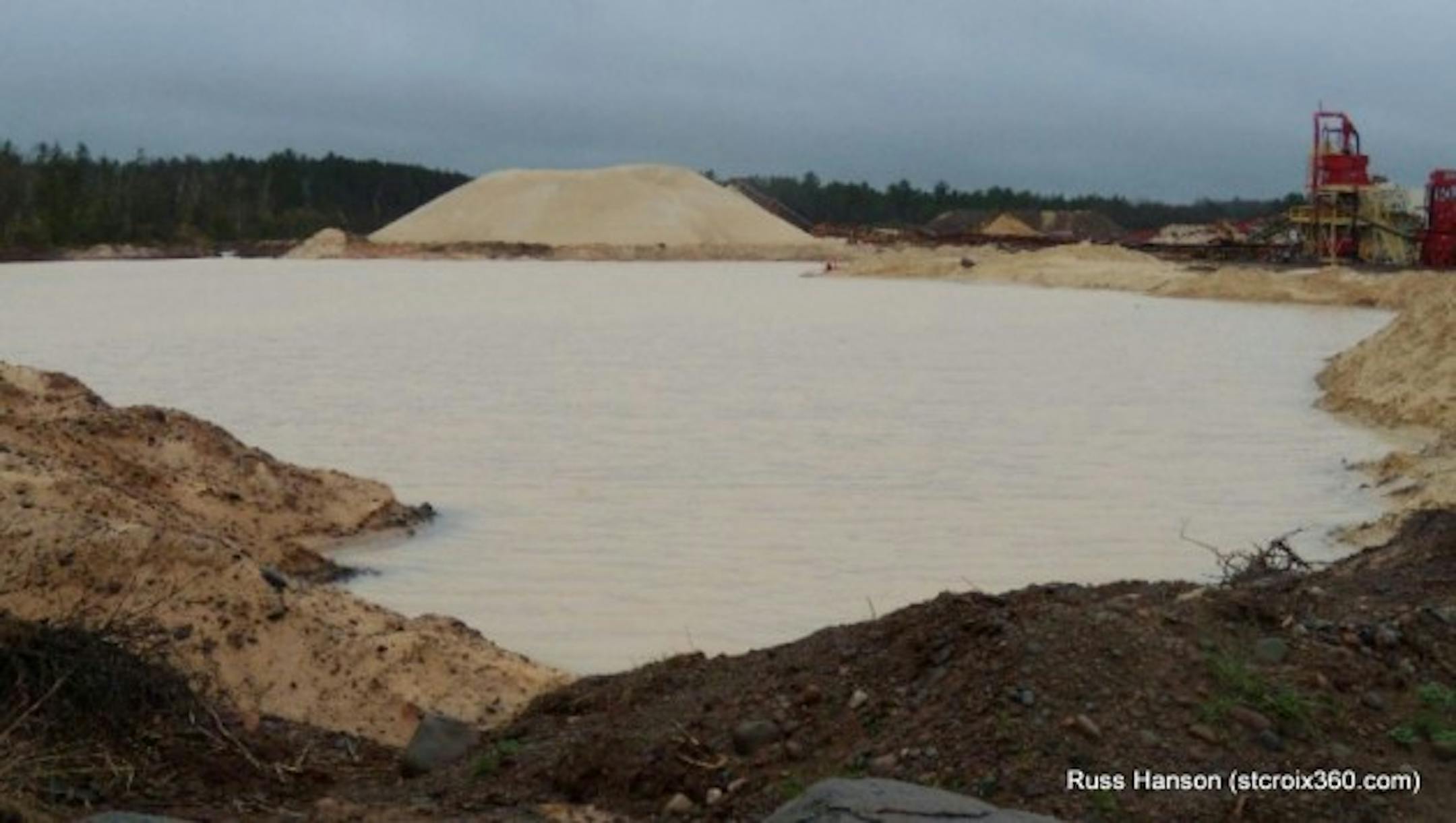
Photo of contaminated stream taken by hiker who reported the issue.
Suspended in the creek which flowed from the mine to the river, the water gave the appearance of "coffee with a lot of cream."
That is bad news for the St. Croix's native mussels. These highly-specialized creatures depend on clean, fast-moving water and firm river bottoms to survive. The U.S. Fish and Wildlife Service reports that as little as a quarter-inch of sediment covering a stream bottom can kill 90 percent of the mussels in an area.