

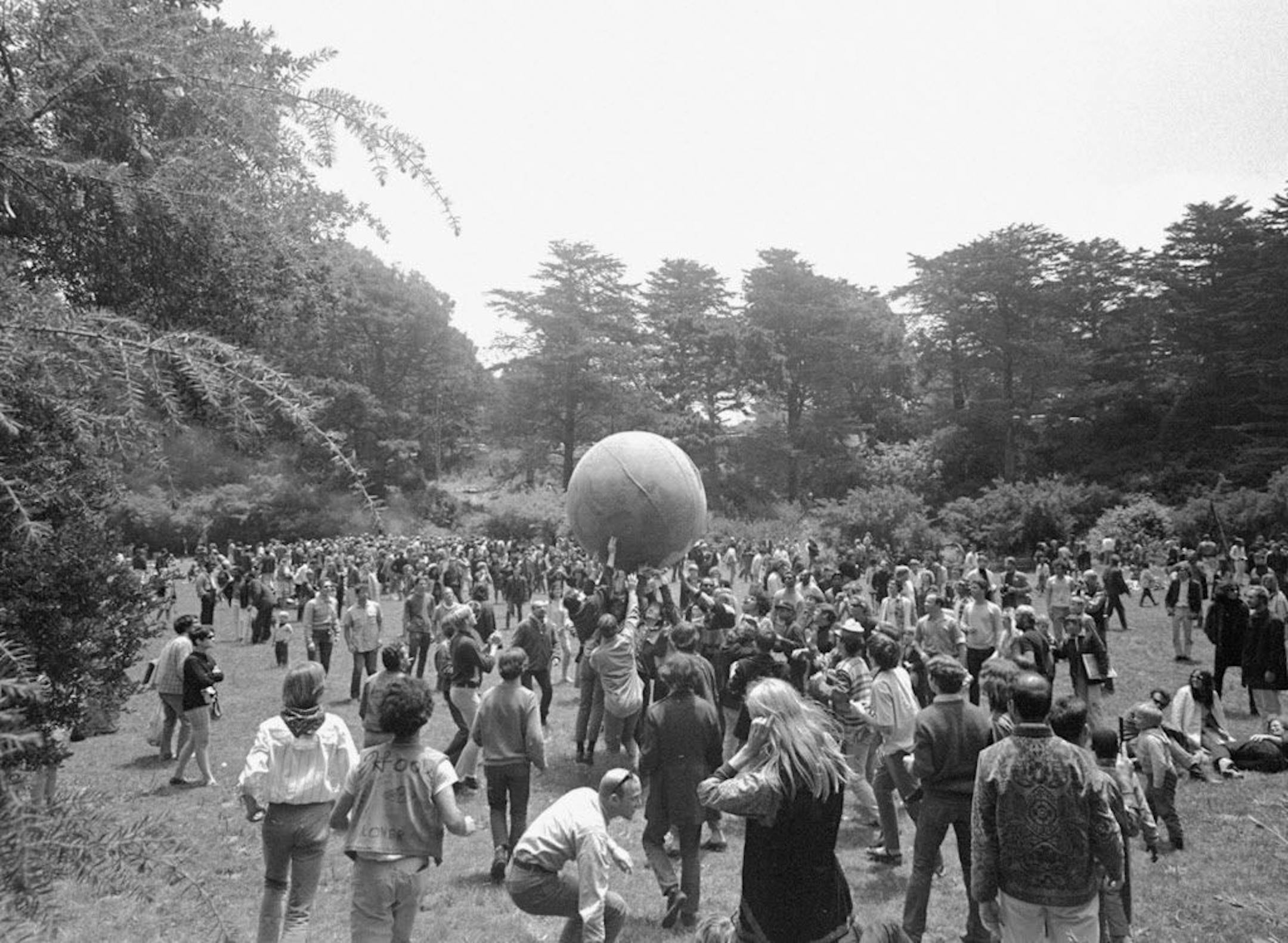
SAN FRANCISCO — They came for the music, the mind-bending drugs, to resist the Vietnam War and 1960s American orthodoxy, or simply to escape summer boredom. And they left an enduring legacy.
This season marks the 50th anniversary of that legendary "Summer of Love," when throngs of American youth descended on San Francisco to join a cultural revolution.
Thinking back on 1967, Bob Weir of the Grateful Dead recalls a creative explosion that sprouted from fissures in American society. That summer marked a pivot point in rock-and-roll history, he says, but it was about much more than the music.
"There was a spirit in the air," said Weir, who dropped out of high school and then helped form the Grateful Dead in 1965. "We figured that if enough of us got together and put our hearts and minds to it, we could make anything happen."
San Francisco, now a hub of technology and unrecognizable from its grittier, more freewheeling former self, is taking the anniversary seriously. Hoping for another invasion of visitors — this time with tourist dollars — the city is celebrating with museum exhibits, music and film festivals, Summer of Love-inspired dance parties and lecture panels. Hotels are offering discount packages that include "psychedelic cocktails," "Love Bus" tours, tie-dyed tote bags and bubble wands.
The city's travel bureau, which is coordinating the effort, calls it an "exhilarating celebration of the most iconic cultural event in San Francisco history."
One thing the anniversary makes clear is that what happened here in the 1960s could never happen in San Francisco today, simply because struggling artists can't afford the city anymore. In the Haight-Ashbury neighborhood, which was ground zero for the counterculture, two-bedroom apartments now rent for $5,000 a month. San Francisco remains a magnet for young people, but even those earning six-figure Silicon Valley salaries complain about the cost of living.
In the mid-1960s, rent in Haight-Ashbury was extremely cheap, Weir, now 69, told The Associated Press.


