

Court decisions sometimes spark dramatic political backlashes.
Brown vs. Board of Education, which struck down school segregation laws in 1954, temporarily retarded progressive racial reform in the South and advanced the political careers of racial extremists.
Furman vs. Georgia (1972), which strictly limited capital punishment, increased support for the death penalty, and Roe vs. Wade (1973) catalyzed a powerful right-to-life movement. The Massachusetts Supreme Court's 2003 ruling in favor of marriage equality led 25 states to enact constitutional amendments barring it.
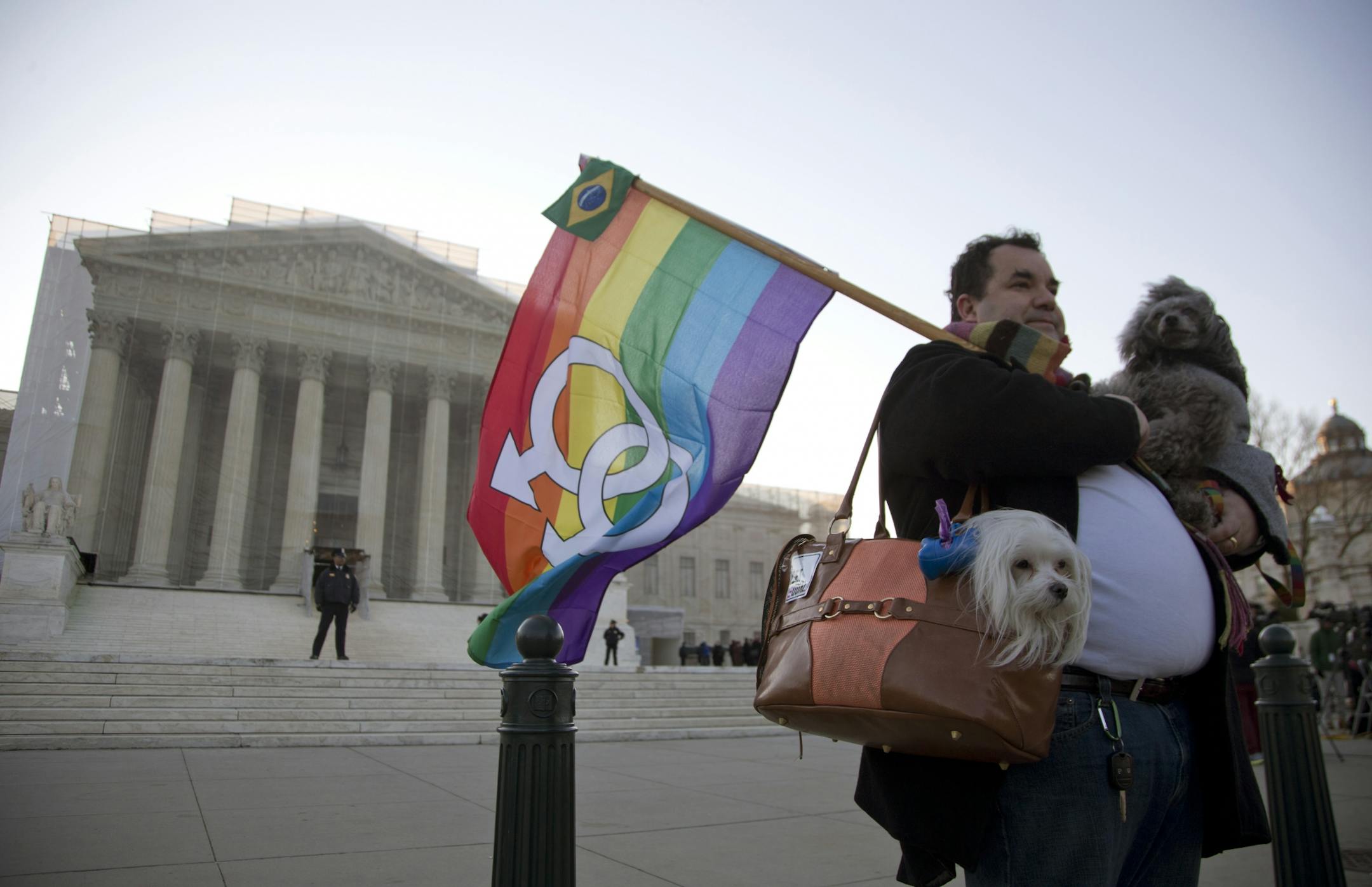
One possible outcome of the Hollingsworth vs. Perry litigation currently before the Supreme Court, which challenges California's Proposition 8, is a broad ruling in favor of marriage equality. What sort of political backlash might such a decision ignite?
This question is not simply abstract; some justices may be influenced by their views of the answer. Justice Ruth Bader Ginsburg has criticized Roe for intervening too quickly and aggressively on abortion, thereby helping to mobilize the right-to-life movement.
Justice Anthony M. Kennedy has frequently used the Constitution to suppress "exceptional" state practices, thereby implicitly endorsing judicial intervention where political backlash is unlikely.
Four factors often predict whether judicial decisions will generate backlash: public opinion, relative intensity of preference, geographical segmentation of opinion, and ease of circumvention/defiance.
Unsurprisingly, only rulings that contravene public opinion tend to generate backlash. In 2003, Americans opposed gay marriage by roughly 2 to 1. Today, supporters outnumber opponents by 5 or 10 percentage points.


