

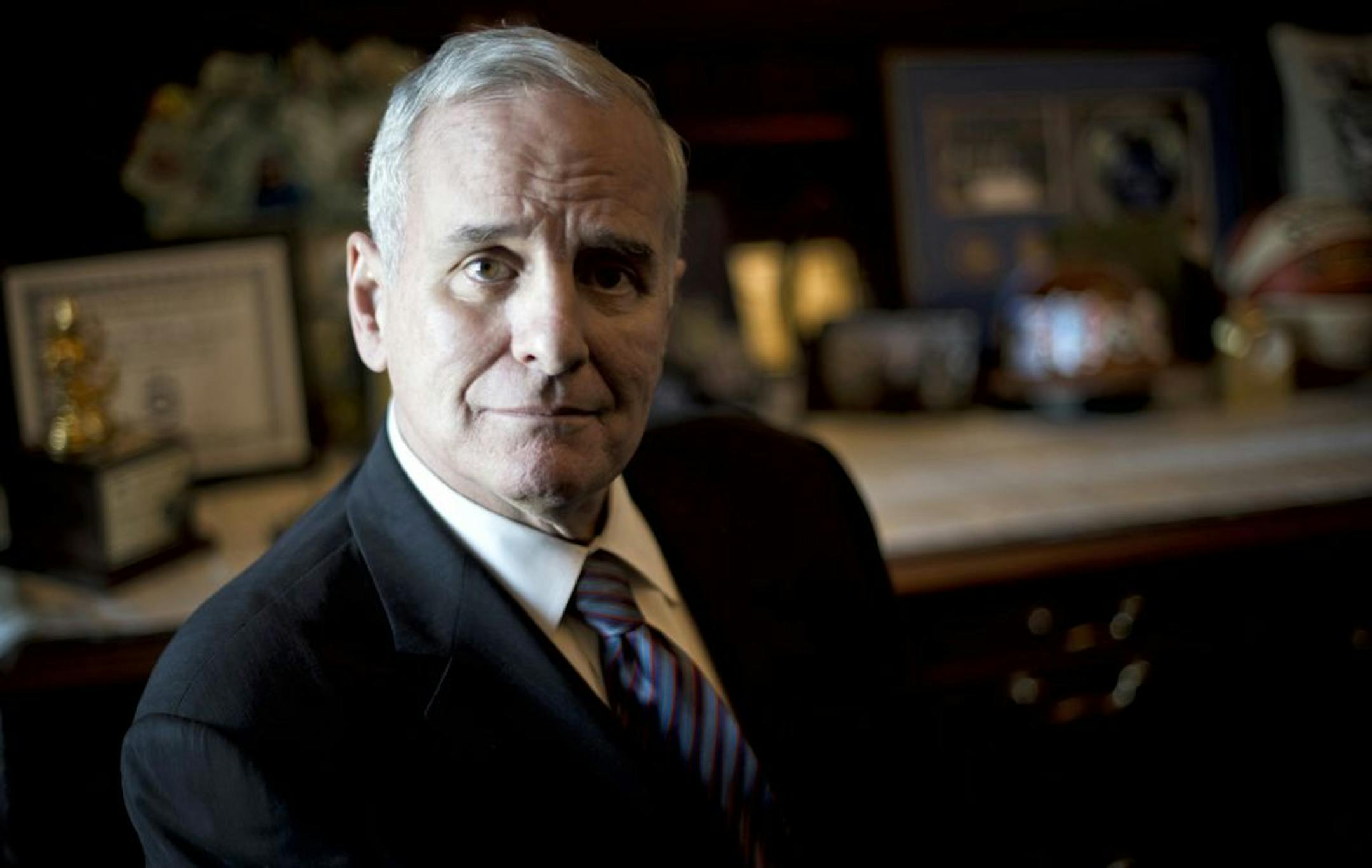
Legislators and business leaders are bracing for Gov. Mark Dayton to ask Minnesotans on Tuesday to pay sales taxes on more goods and services.
Dayton has kept his budget proposal a secret, but likely targets for new or increased sales taxes include cigarettes, some consumer services and perhaps the most politically vexing target -- a first-ever tax on clothing.
"This is a significant moment and a significant opportunity," said Dayton's chief of staff, Tina Smith. "For over a decade, the amount of money we raised and how we raised it, the amount we spent and how we spent it, was out of whack. The governor's intention is to address that big problem."
Over the weekend, Dayton's team was piecing together the final components of a proposal that could yield the most comprehensive tax overhaul in a generation. Emboldened by a DFL-controlled Legislature, the Democratic governor's budget outline proposes to wipe out a $1.1 billion projected deficit, realign the state's tax burden and boost state spending.
Making good on a campaign pledge, the governor is expected to ask Minnesota's wealthiest residents to pay higher state income taxes and to end a menu of corporate tax breaks. Dayton has also pledged to include some spending cuts and more government streamlining.
The potential payoff for Minnesotans: Dramatically lower corporate income tax rates, direct property tax relief and more money for education, a top priority for Dayton and many business leaders.
Dayton has been recuperating from back surgery and will make his first public appearance in weeks at the Capitol on Tuesday. Dayton's much-anticipated budget release will become the framework that will guide budget deliberations for the rest of the legislative session.
The new budget could stabilize historically uneven revenue streams that have caused years of budget shortfalls. But it also could open Dayton to a deluge of criticism that he is gorging on a buffet of tax increases that could damage the state's fragile economy.


