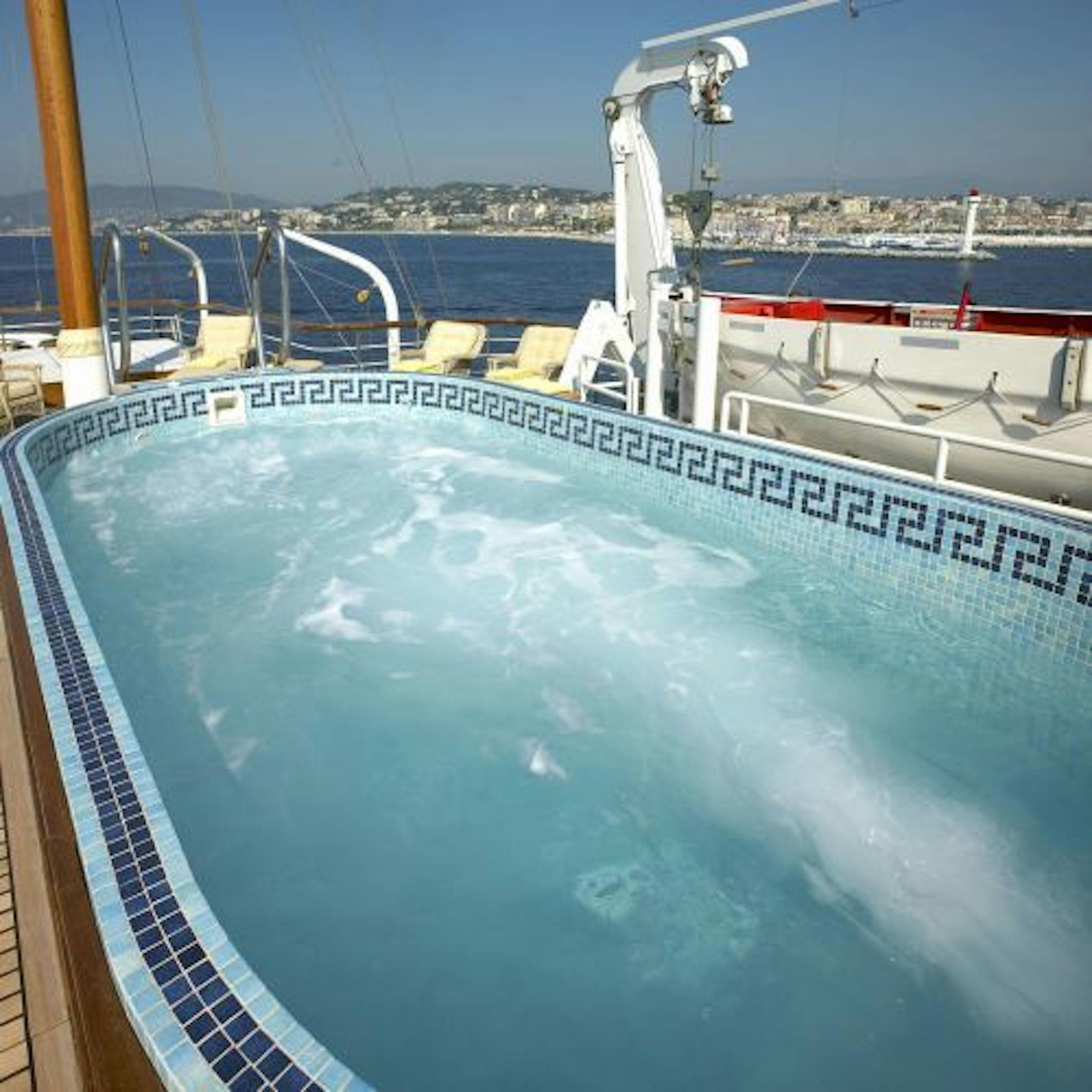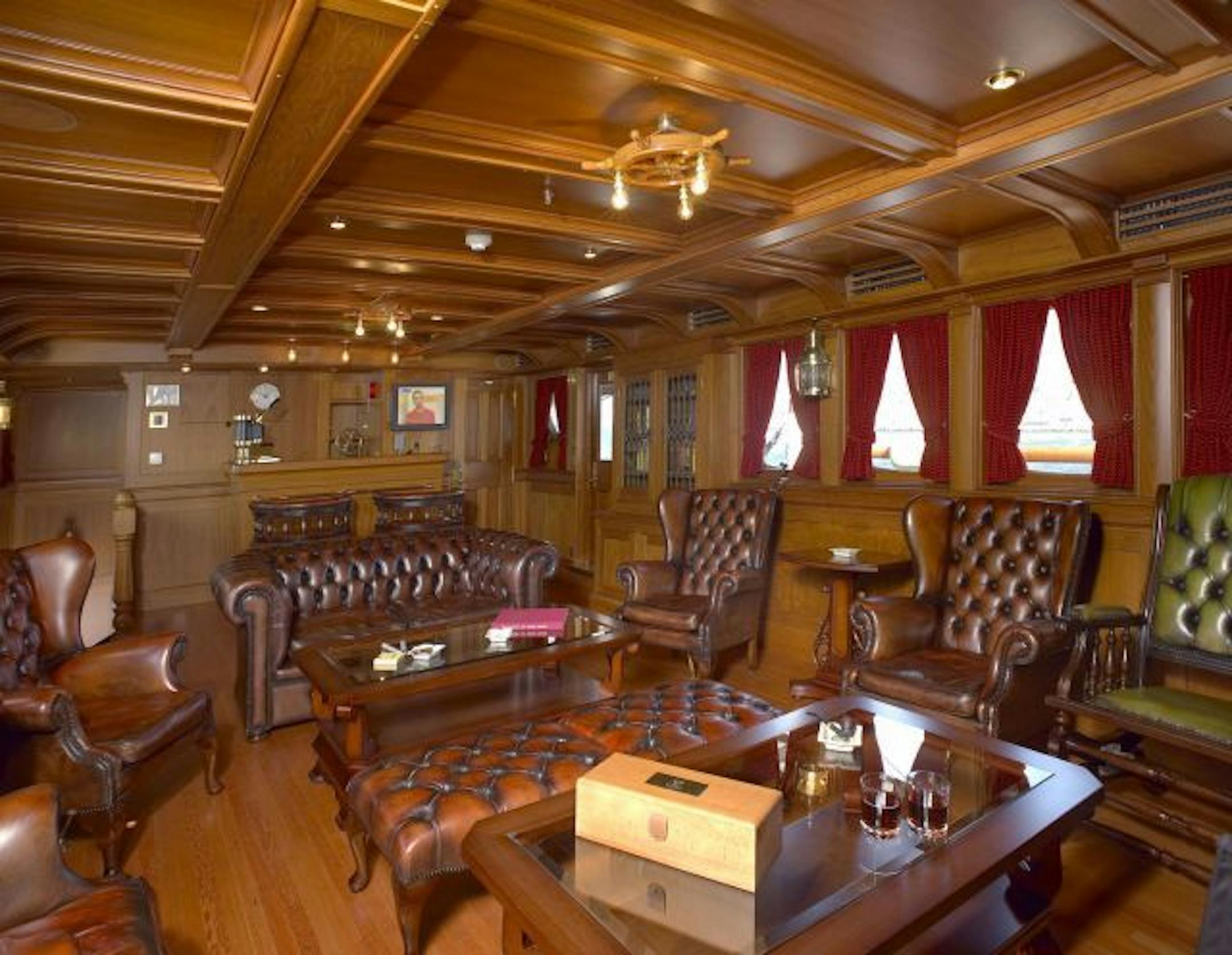
Belgian textile heiress, art historian and licensed passenger-ship captain Ineke Bruynooghe stands on a balcony overlooking about $2 billion worth of luxury yachts moored in Monaco's harbor.
The 37-year-old owner of S.S. Delphine -- the last operational steam-powered superyacht afloat -- pointed a finger through the aroma of exhaust fumes toward the world's most flamboyant single display of seafaring wealth.
"Plastic and smelly," Bruynooghe huffs at the diesel-fueled composite-fiber palaces, whose owners pay more than $30,000 a month to drop anchor in Monte Carlo's flashy waters. "Yachting is a man's world. They want plastic, the modern look, with no sense of history. What I do in that world is unheard of."
Now, after 15 years at the helm of the ship that Franklin Roosevelt, Winston Churchill and Joseph Stalin reputedly met on to prepare the Yalta Convention at the close of World War II, Bruynooghe is seeking to negotiate its sale for nearly $47 million. The vintage vessel was launched in 1921 at Detroit's Great Lakes Engineering Works by U.S. carmaker Horace Dodge for his daughter, Delphine.
Hein Velema, chief executive officer of Fraser Yachts Ltd., says it looks like a tough sell in a climate where prices of secondhand superyachts have dropped about 40 percent and this year's summer season charters are down 35 percent.
Still, Velema says, a pedigreed superyacht might have the muscle to survive the global financial storm.
"The superyacht industry is far too macho," Velema says. "Before the September 2008 crash, Russian buyers comprised 25 percent of the market and all they wanted was to spend more money on bigger, faster and more luxurious vessels. That's changed. Forty percent of all yachts more than 132 feet are now for sale, and the Russians have become rational."
Largest working U.S. yacht