

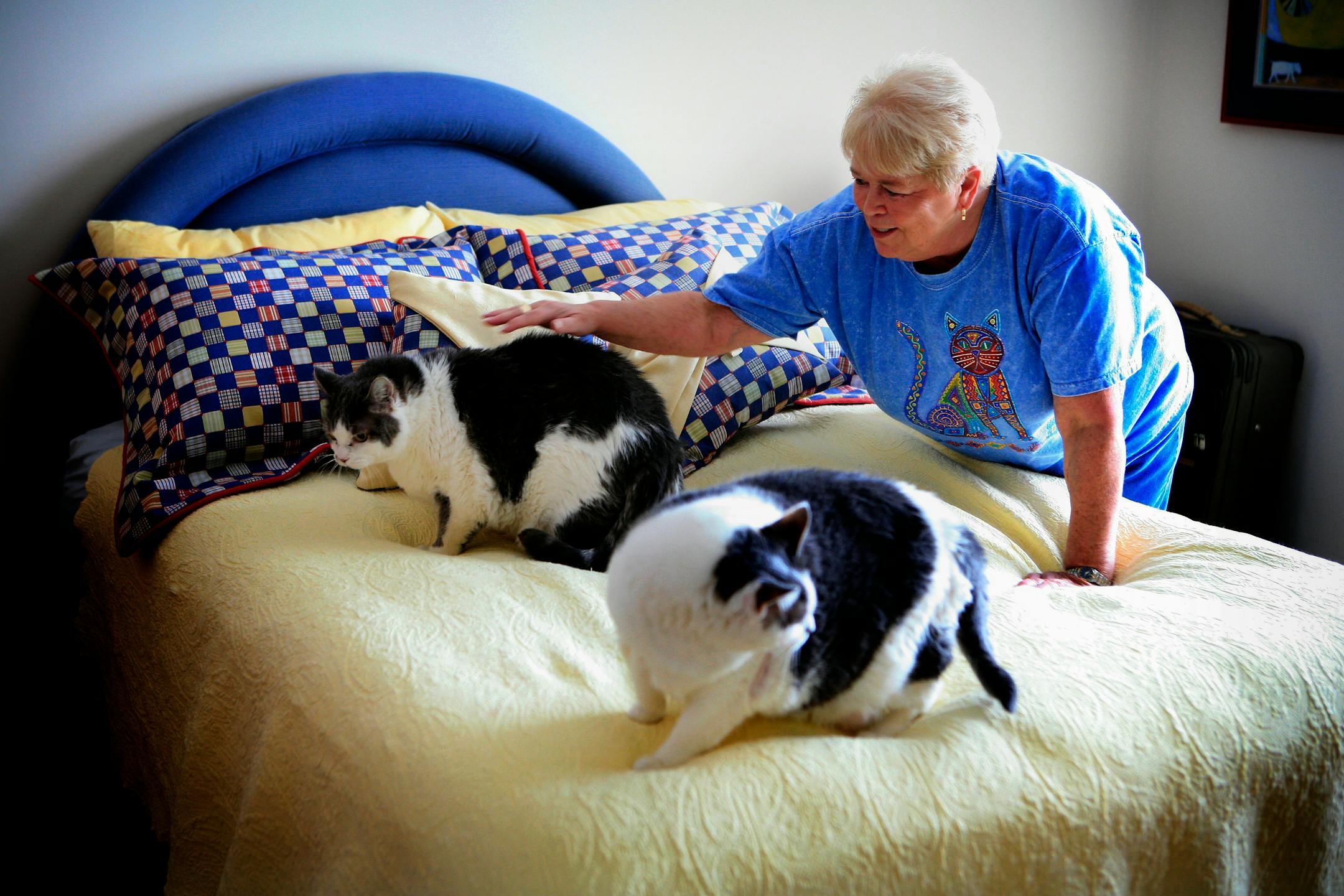
Carol Lee Hoskins of Rosemont is 65, lives alone, and used to worry about what would happen to her beloved cats, Samson and Daisy, if something happened to her. Hoskins did not have anyone to take care of them, and she did not want them to be separated, end up in a shelter or be euthanized. "Every night I prayed that God wouldn't take me before I could find out what would happen to my cats," she said.
Recently Hoskins' neighbor gave her a newsletter of the nonprofit Home for Life, a western Wisconsin animal sanctuary. Hoskins read about its Angel Care program that provides pets with a permanent place to live if their owner is unable to care for them or has died. "When I saw this I said, 'Wow. This is the answer,'" she said.
More than 500,000 pets nationwide are euthanized in shelters every year as a result of the death or disability of their owners, according to the nonprofit organization 2nd Chance 4 Pets. Home for Life's executive director and founder, Lisa LaVerdiere, started Angel Care in 1999 after receiving frantic phone calls from dying pet owners or their family members.
"It was their last wish to know that their animal was all right," LaVerdiere said.
Many people assume their friends or relatives will take care of their pets, but that doesn't always happen, LaVerdiere said. It can be hard to find homes for these pets because they are often older and have illnesses, such as diabetes, and they often end up in shelters, where they might be euthanized. Even if people put their pets in a will, LaVerdiere said, a pet can go through a "limbo period" while the estate is being resolved.
"There are a lot of problems, and the traditional way of taking care of animals wasn't working," she said. "These were a whole set of animals falling through the cracks."
Besides the pets in the Angel Care program, Home for Life takes in hard-to-place pets with special needs. LaVerdiere houses 95 dogs, 125 cats, a pony, a tortoise, 10 rabbits and 10 parrots on her 40-acre sanctuary near Star Prairie, Wis. They spend their days in the companionship of other animals and with 20 full-time and part-time staff members.
The cats live together in catteries, and most of the dogs live together in doggie apartments and townhouses -- all furnished with futons and hammocks. The dogs and cats have outdoor runs, and the dogs also have a meadow to run and play in. They are kept busy with grooming and vet appointments, as well as community outreach programs. LaVerdiere calls Home for Life the "third door," because it is a third option for such pets besides euthanasia or adoption.


