

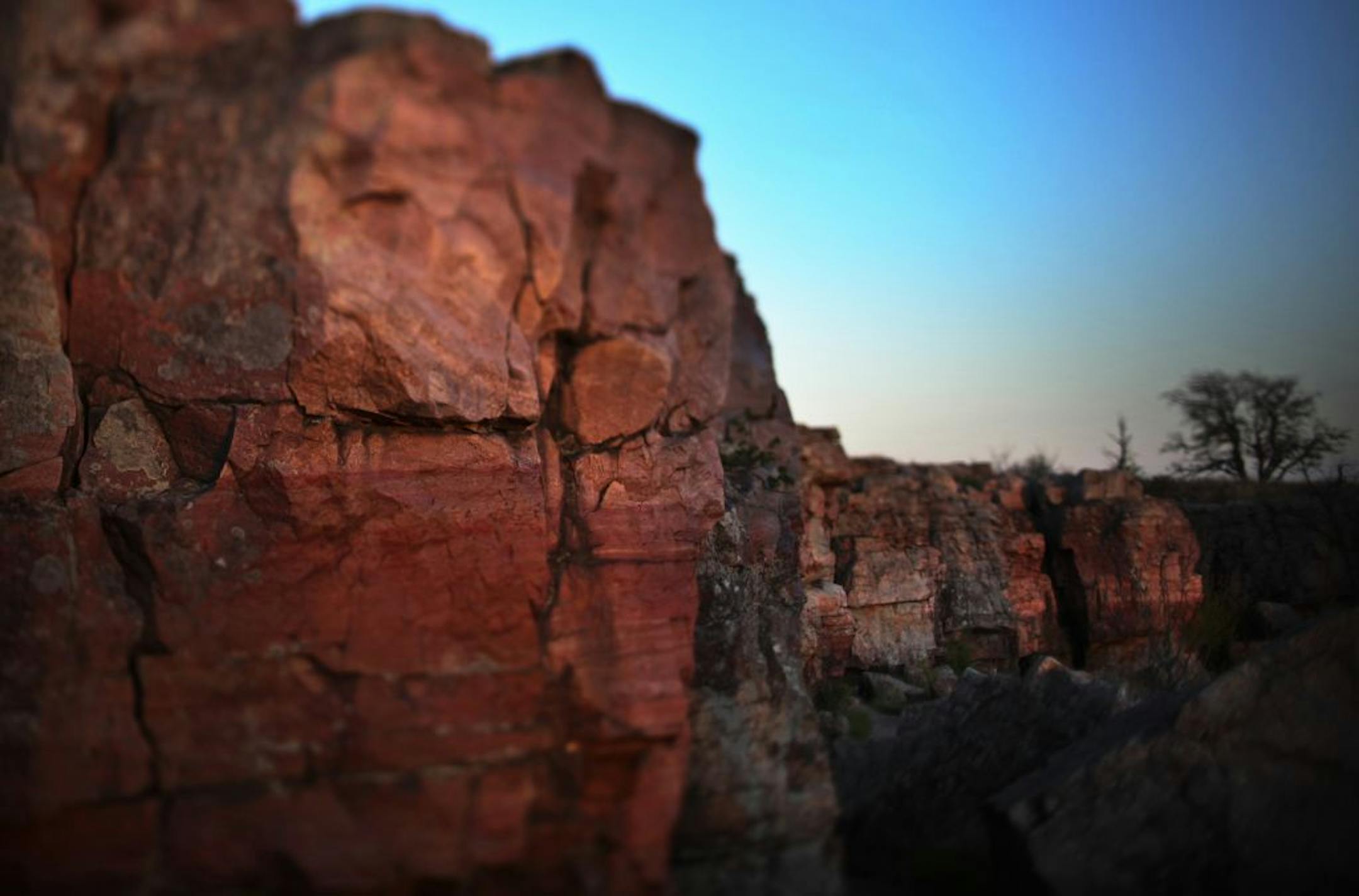
PIPESTONE, MINN. -- Billy Bryan points to a crooked slippery elm tree poking from the ground beside a quarrying pit.
"My mother would hang my cradle board on that tree right there," he says.
Bryan, who turns 70 next month, has been right here ever since -- carving pipes wrenched from a sacred layer of soft, blood-red pipestone.
President Franklin Roosevelt signed a bill 75 years ago this Saturday, designating these 300 acres in Minnesota's southwest corner as a National Monument. A day full of events is slated for Saturday to commemorate the anniversary, which is just a blip in the overall history of the red-rock deposits that make Pipestone such a unique treasure.
For 3,000 years, native people have been extracting this soft stone sandwiched between layers of quartzite. Bryan's Ojibwe father and Dakota mother, now both deceased, were among the countless quarriers.
Although the government still issues 56 quarrying permits every year, Bryan worries about the future of this spiritual tradition.
"It's a dying art," he says. "Everyone left quarrying and carving now is 40 or older -- the younger people would rather push buttons on a computer than swing a 20-pound sledgehammer."
Only hand tools -- hacksaws, hammers, wedges, files and bars -- are permitted in the quarrying pits. Sometimes, it takes six months of pounding on the quartzite before a seam of pipestone is exposed.


