

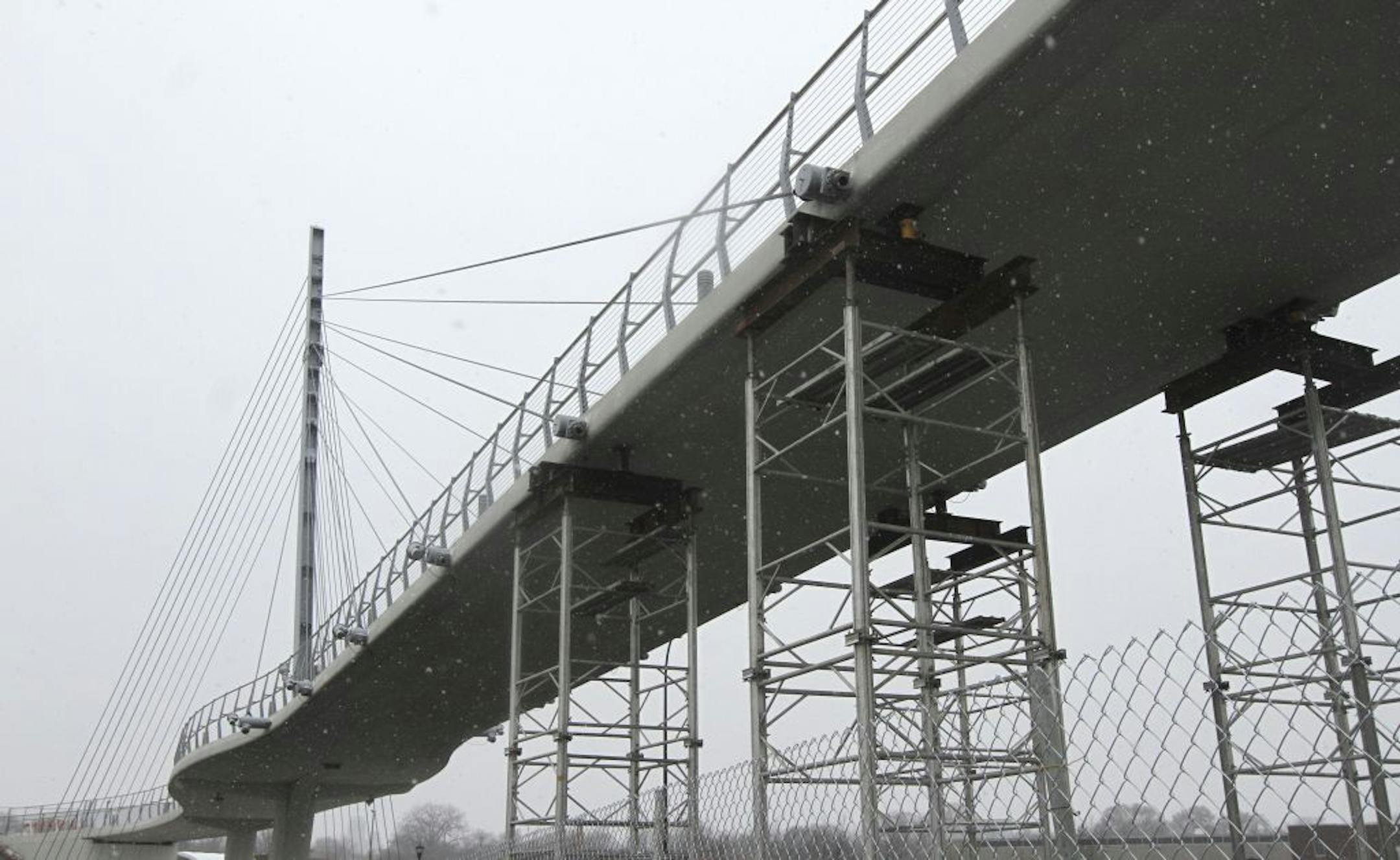
Minneapolis is striving to reopen the Martin Olav Sabo Bridge by June 4, officials said this week. The bicycle and pedestrian span over Hiawatha Avenue has been closed for three months, after the fracture of a steel anchor led the bridge's tallest set of cables to fall from the mast on Feb 19. A second set of cables was removed after inspectors discovered cracks on another anchor.The cables are not expected to be replaced by the time the bridge reopens. To make the bridge safe for public use, the city must adjust shoring structures underneath and release tension from the cables anchored to the ground, according to deputy public works director Heidi Hamilton.The engineering consulting firm Wiss, Janney, Elstner Associates is designing a proposal for the repairs, and the bridge could close again once workers begin putting up new cables, Hamilton said.The city is still awaiting an assessment of what caused the cable anchors to fail from a Lehigh University expert hired by Wiss, Janney, Elstner Associates. Expenses have already piled up. Hamilton said the city has spent $420,000 to respond to the bridge failure: $60,000 for engineering consultants, $120,000 for internal labor costs, and $250,000 for equipment to shore up and evaluate the span. Minneapolis is also paying up to an additional $150,000 for a contract with Wiss, Janney, Elstner Associates that tasks the firm with determining the cause of the failure and designing a repair. Hennepin County, which oversaw construction of the bridge, is chipping in another $150,000.
Sabo Bridge could reopen by June
City's expenses to respond to bridge failure add up
May 16, 2012 at 5:31PM

about the writer
mayarao

It’s too soon to tell how much the immigration crackdown is to blame.
