

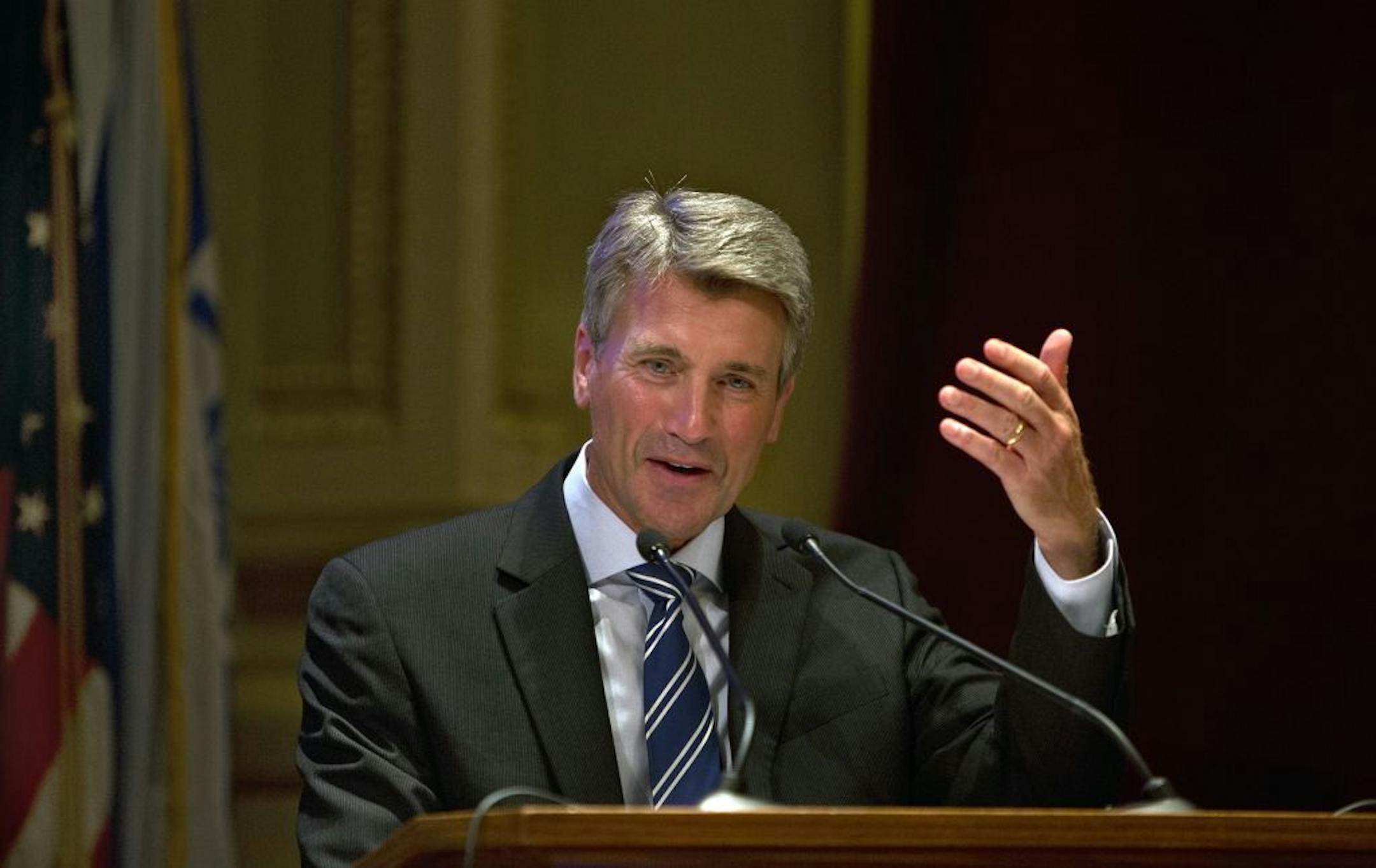
A day after the city of Minneapolis released a database containing more than 2 million license plate scans, Mayor R.T. Rybak took rare action aimed at shielding the data from the public.
The Legislature is already expected to debate legislation this session to restrict public access to license plate tracking data, which is largely derived from cameras mounted on local police squad cars across the state. But after complying with a request for Minneapolis' entire public database -- featuring dates, times and locations of all plates scanned in a 90-day period -- Rybak asked the state for a temporary reclassification that would immediately make it nonpublic.
License plate readers are commonly used by law enforcement agencies to spot wanted vehicles in real time. But the cameras also store the location of each plate, without names or other identifiable information, creating databases that are currently public under state law.
He said the reclassification request was "already in the works" before Tuesday's data release, but "it does concern me." His request will make the data nonpublic as soon as it is received by the Commissioner of Administration. That office had not received it as of Thursday afternoon.
If the commissioner approves, it would prevent the city from releasing the tracking data to members of the public. If the request is denied, the data becomes public again.
More than 80 requests have poured into the city since the Star Tribune first reported on the topic in August.
The mayor asked the city attorney to start working on the reclassification request Tuesday. Once it is sent, the commissioner has 45 days to make a decision and may decide it also applies to other government entities.
Rybak said the issue became clear to him after reading Star Tribune stories, one of which documented his own vehicle's locations throughout the city.


