


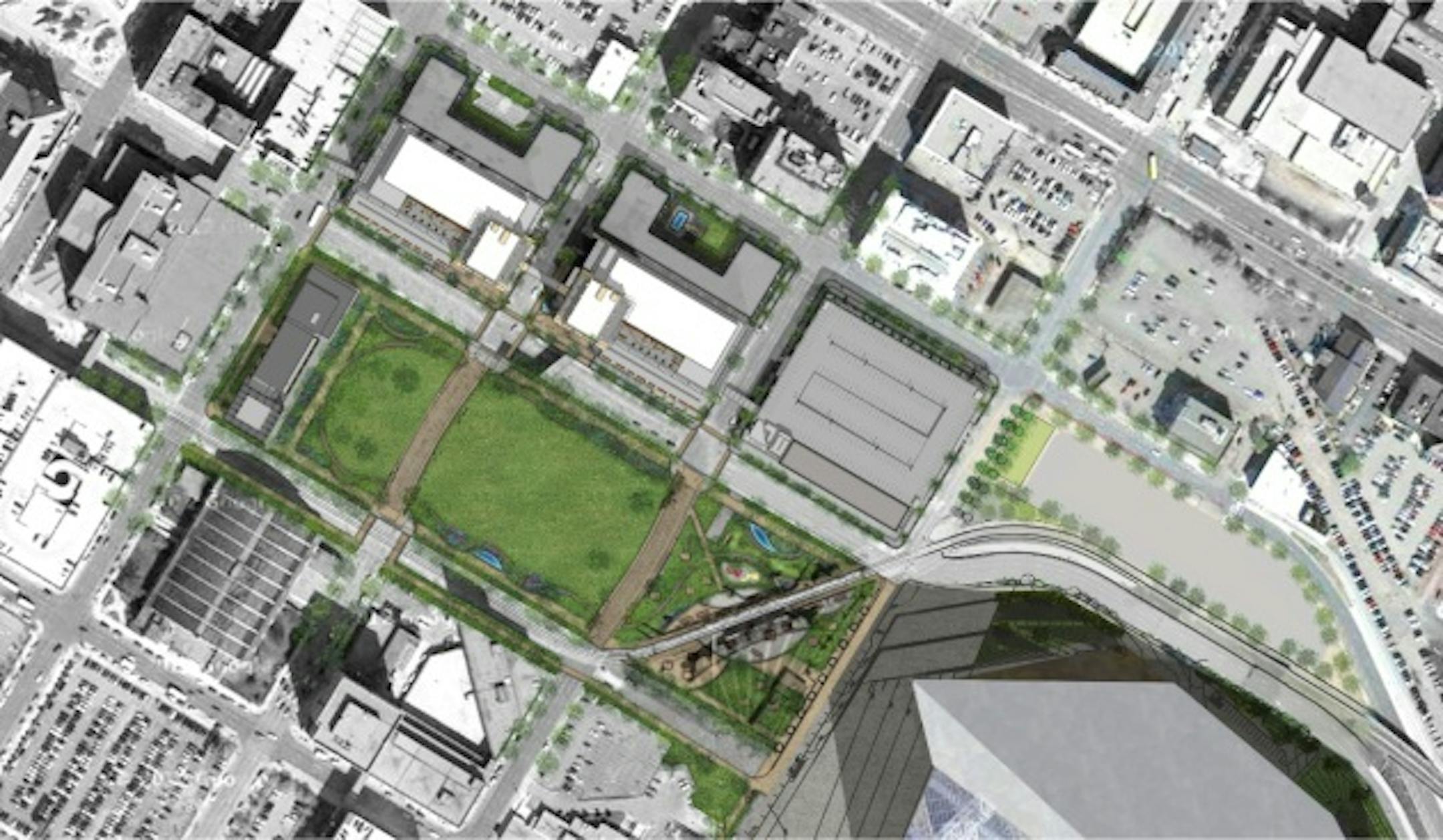
City officials unveiled more details Thursday behind the massive $400 million development project next to the new Vikings stadium, just over a week before the City Council must approve it.
The mayor and developer Ryan Cos. said the deal's 1.1 million square feet of office space represents the largest city office development in 22 years. Wells Fargo's plans to own the property is the largest corporate commitment in city history, they said. The plan also features 400 apartments and about 22,000 square feet of retail.
The city component of the package involves borrowing about $62 million to fund a public park and part of a new parking ramp, all on land currently owned by the Star Tribune. The bonds would be repaid with parking revenues from the new ramp and an existing underground one next to the Metrodome, backed by a guarantee spanning at least 10 years from Ryan.
The Minnesota Sports Facilities Authority, which is overseeing stadium construction, will pay for about 35 percent of the ramp. The authority will also pay $10.7 million to construct skyways.
The largest remaining obstacle appears to be Wells Fargo's insistence on having their bright red and yellow logo atop the office building, prohibited under city ordinance. The Vikings oppose this because of a potential detrimental effect on selling stadium naming rights. An amendment to the city's zoning code would be required for the signage, city staff said Thursday.
"It's an important issue for Wells Fargo that has to be resolved before they'll make a final commitment to moving forward," said Ryan Vice President Rick Collins on Thursday.
Rybak supports the signage proposal, but when it will be settled remains unclear. The council's final meeting of the year -- before seven new council members take office -- is next Friday. Collins said Wells Fargo could ink a deal contingent on the signage passing, which city staff said could occur in 2014.
The park will span approximately one and two-thirds blocks, with the remaining third allocated to Ryan for residential development. The city will own it and pay for its operations, a responsibility Rybak would like to see contracted to the Park Board. Fundraising will be required to support those costs, Rybak said.


