

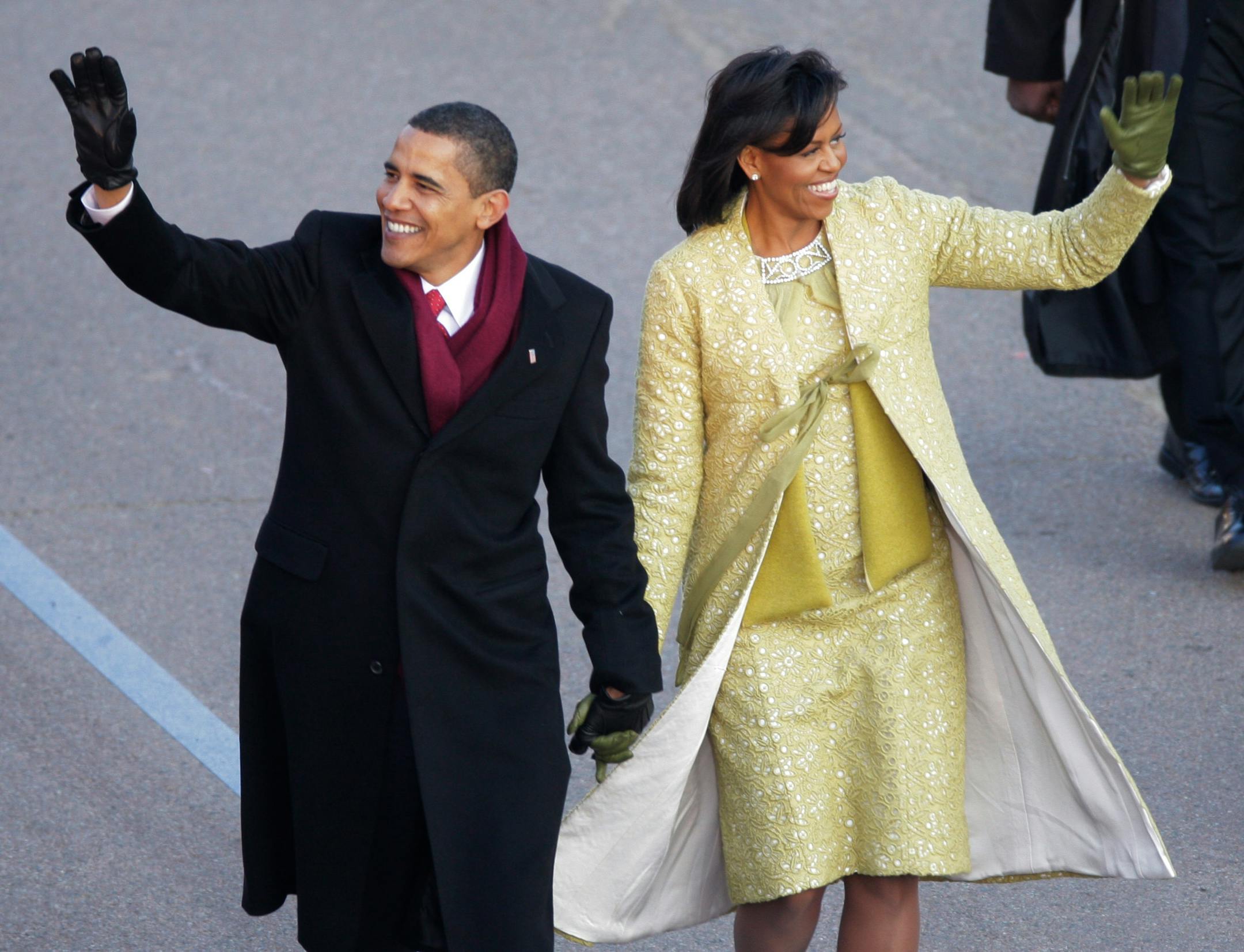
WASHINGTON – During the heat of the Democratic primaries, Hillary Clinton had no more fervent supporter than my younger daughter. But Julia, then 10, needed no prompting to grasp the importance of Barack Obama's candidacy. "Mom, it would be really great to have a woman president," she said. "But it would be a bigger deal to have an African-American president."
Forgive this bit of parental tale-telling, but her comment has been on my mind. I understood, on an intellectual plane, the significance of electing the first black president. Yet until he was sworn in, I don't think I fully absorbed its overwhelming emotional force.
A few snapshots along the way:
•It's several weeks after the election, and I have the privilege of being invited to read to Mr. Canady's third-grade class at Emery Elementary in the District of Columbia. Every child is African-American. On the wall is a glossy poster of Obama.
"It changes how black children look at themselves," Obama said when he visited the Washington Post last week. "It also changes how white children look at black children."
•I'm reading the newspaper, and the day's obituaries leap out as a symbol of the changing times. Charles Morgan, the civil rights lawyer who helped establish the principle of "one person, one vote." Cornelia Wallace, the widow of segregationist Alabama Gov. George Wallace. William Zantzinger, the privileged landowner who hit a black barmaid with his cane when she was too slow serving his drink. The barmaid later died, and the ugly episode was immortalized in Bob Dylan's ballad "The Lonesome Death of Hattie Carroll."
Could any of these three have foreseen this moment? Morgan, perhaps. "The civil rights movement is freeing the Negro from the bondage of slavery," the New York Times obituary quotes him as saying, "and the South is being freed from the bondage of the Negro, and the nation will be freed from the bondage of the South. And then you know what we're going to do? We're going to re-create America."
•We're at an inaugural party at the newly reopened Smithsonian Museum of American History. On the way, we drove by Constitution Hall, where the Daughters of the American Revolution had barred Marian Anderson from singing. Now, we stand eating our sushi and dumplings next to a gleaming lunch counter — the lunch counter, transported intact from the F.W. Woolworth store in Greensboro, N.C., where four black students sat down one day in February 1960, asked to be served, and refused to leave. Standing nearby is Eric Holder, soon to be the first African-American attorney general. Holder's late sister-in-law was one of the first two blacks to integrate the University of Alabama. Re-creating America, indeed.


