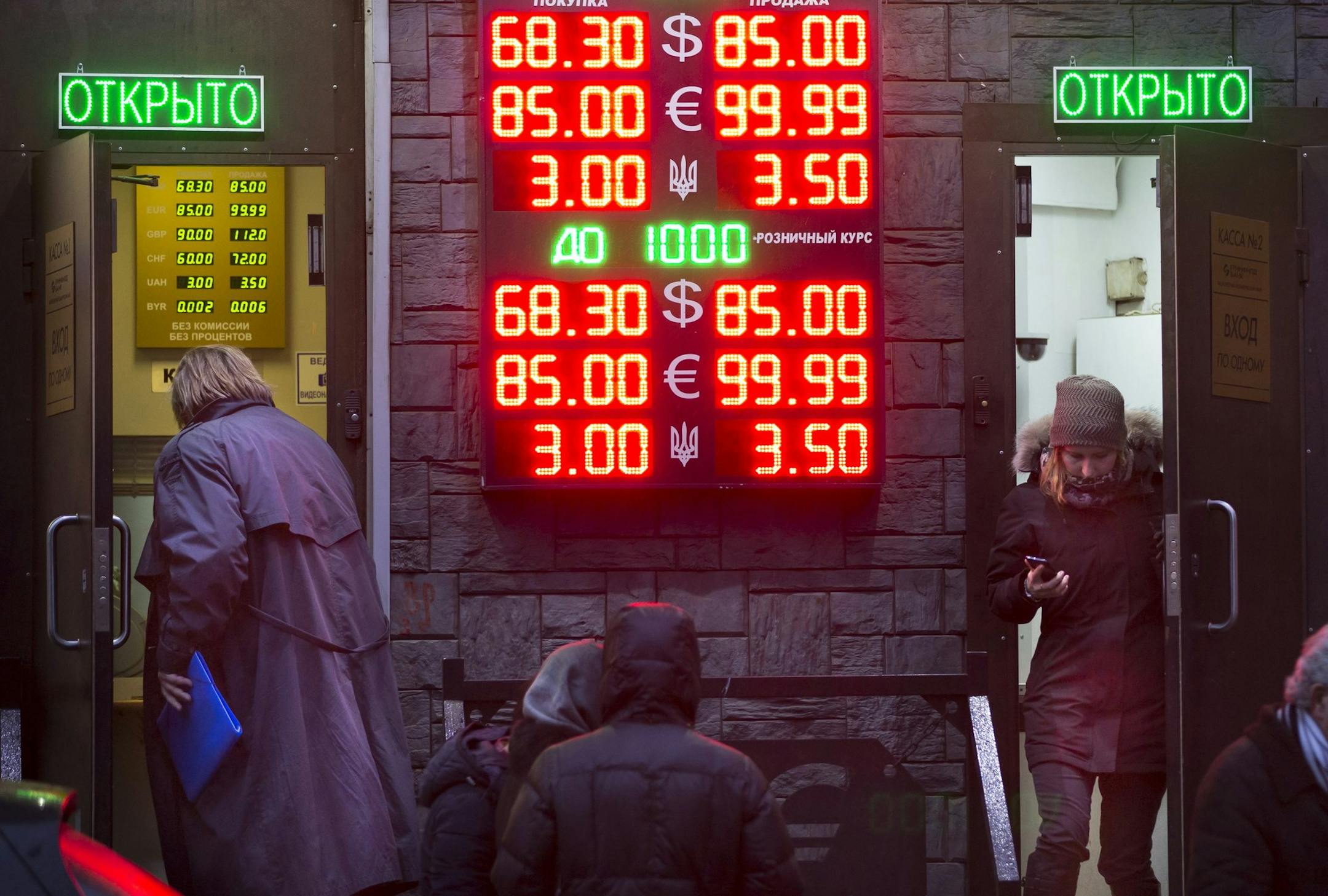
WASHINGTON — Russia's suddenly escalating financial crisis risks spilling beyond its borders and endangering parts of the global economy.
With economies in Europe, Japan, China and Latin America already ailing, fresh threats have emerged from Russia's shriveled currency, its move to dramatically boost interest rates, the damage from plummeting oil prices and Western sanctions over Russia's action in Ukraine.
The alarming 10 percent drop in the ruble over the past two days has amplified the economic turmoil in Russia. Investors fear that Russia may default on its foreign debt obligations — a move that would inflict hundreds of billions in losses on lenders abroad.
Some analysts also worry that tensions will further escalate between Russia and the United States and its European allies that imposed the sanctions. The White House upped the pressure Tuesday when President Barack Obama committed to approving additional sanctions.
Few see President Vladimir Putin as backing down.
"I do not expect him to blink," said Ian Bremmer, president of the Eurasia Group, a political risk and consulting firm.
The financial consequences for the United States could be modest because of Russia's diminished economic stature. Yet the geopolitical risk could ripple across continents.
Russia began the year as the world's eighth-largest economy, with a gross domestic product of $2.1 trillion, according to the World Bank. A single ruble is now worth less than two pennies, having lost about 50 percent of its value against the dollar since January.