

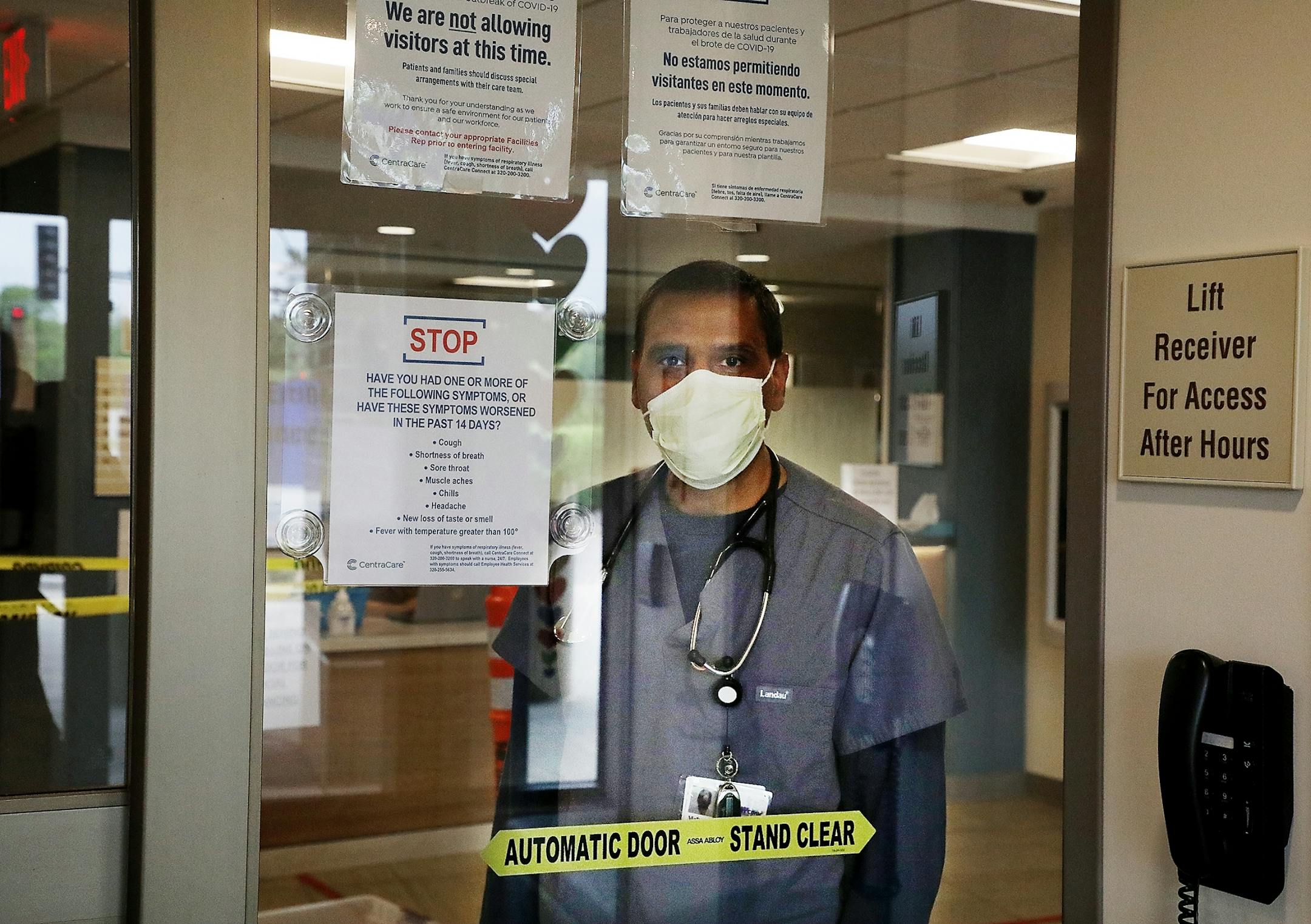
In the weeks after Minnesota's first coronavirus case was confirmed on March 6, Dr. Mohammed Imteyaz Hussain went to work at the emergency room at CentraCare's hospital in Monticello and waited.
And he waited. And waited.
"This is the calm before the storm," he said in mid-March. "When they start coming, it's going to be bad."
Traffic in his emergency room dipped to half as people largely avoided hospitals. They weren't flooded with coronavirus cases, but patients still seemed on edge. There was an influx of anxiety or alcohol-related issues. A man came in with a bloody fractured finger as a result of his gun misfiring when he was cleaning it. Hussain joked: "Were you preparing for coronavirus?" In fact, the man was. He was teaching his wife and daughter how to shoot. Just in case.
Today, nearly three months after Minnesota's first case, Hussain is still waiting for a surge that now more than ever he feels is inevitable.
His hospital is in Wright County, an exurban and rural area sandwiched between two of the biggest hot spots in the state. To the southeast is Hennepin County; with 6,918 cases and 534 deaths, it is by far the part of Minnesota most affected by the virus. To the northwest is Stearns County; with 1,923 cases (though only 12 deaths), it has the highest case count in the state outside the Twin Cities.
So far, Wright County has been relatively unscathed, as has Hussain's 12-bed emergency room. There's been 240 confirmed cases in the county, and only one death; less than a half-dozen COVID-19 positive cases have come through Hussain's emergency room and been transferred to CentraCare's main hospital in St. Cloud.
"We can't become complacent," Hussain said. "If a wave comes in one week or two weeks or three weeks, these two months have prepared us to handle it much better. The planning is all there now. We'll be prepared. But we could get overwhelmed."


