2:29
2:29IN THE BOB MARSHALL WILDERNESS, MONT.
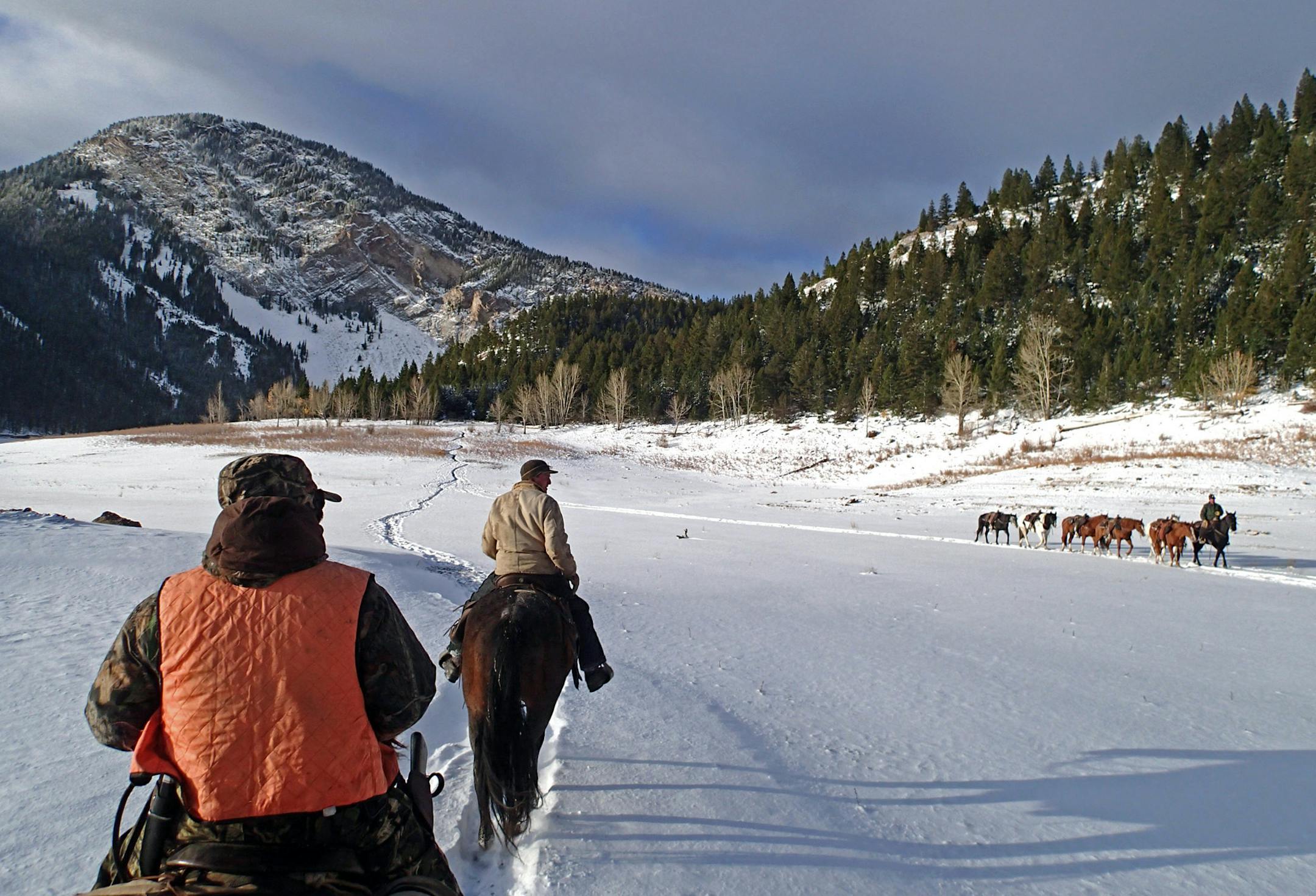
hHere along the Continental Divide on wintry mornings, the horses accepted their saddles and chilled steel bits fatalistically. But canvas tents and wood stoves were all that separated us from the snow and single-digit cold, and when we stepped outside at 5:30 to begin the day in our long underwear and wool pants and jackets and caps, we moved purposefully toward the glowing cook tent and its gas lights and hot coffee.
We had come to hunt for elk, five of us: one from Atlanta, another from Milwaukee and two guys from the Seattle area. This was on public land in the high country not far below Glacier National Park. The guides were young, or younger, and fit, and their lungs well-acclimated to the elevation and its thinner air. The joke was that hunters not only volunteered for this duty; they paid for it.
A case could be made that gatherings like these keep America's heart beating. Rugged country and overcoming it, or accommodating it, is a timeless allure. So, too, the challenge of finding animals that don't want to be found. Ultimately, the repetitious climbing of rocky slopes and declinations into steep draws might represent the need, widely felt, to unshackle oneself from ordinariness. Also, the long days of toting high-powered rifles and wondering over many months of practice whether a shot taken will be a shot made distills responsibilities, and reward, to the individual in ways uncommon in an increasingly collectivist world.
So it was on the second day in camp after breakfast that snow fell and four of us rode out into the dark. Seven strands of electric fence, solar powered, surrounded the cook tent to discourage black bears and grizzlies, and another hot wire encircled the entire camp. Leading the way, Josh Carlbom dropped the perimeter wire and ambled ahead on his horse with his headlamp switched off.
Swirling, the mountain winds enveloped us as our horses followed a narrow path upslope. Soon we were in timber with branches occasionally swatting our faces, while Josh and his horse picked their way over deadfalls and wound along and far above Biggs Creek, which rumbled steeply below like the wildest river ever. We rode an hour and more, gaining higher and higher ground, and for long moments I thought creation's doorstep might lie just ahead.
"We'll tie 'em here," Josh said finally, and we dismounted.
Thirty-six years old, wiry and light-footed, Josh has guided elk and deer hunters and also summer fishermen and pack trips in these mountains since he was 18. His parents had owned Sun Canyon Lodge, a gateway business to the Bob Marshall Wilderness, and now he and his wife, Niki, own it. Come November each year, Josh leads hunters some 20 miles by horseback from the lodge into his two wilderness tent camps, and he oversees there the guides and cooks and wranglers and other workers. But mostly he does what he is doing now: hiking with hunters. And glassing distant hillsides with binoculars, scanning for elk.