

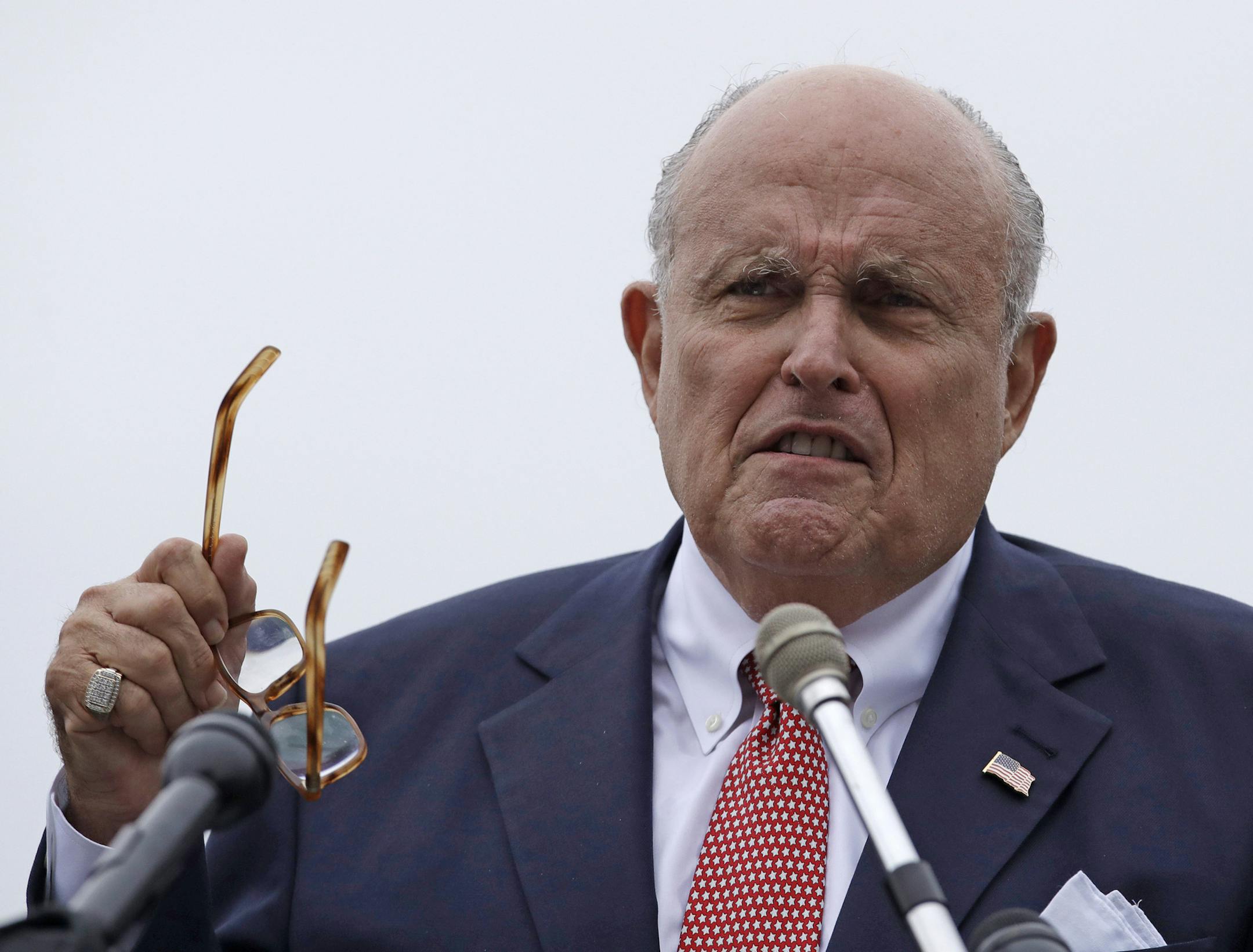
It's been 27 long years now, but I can still vividly remember where I was on Sept. 16, 1992 — at my pre-internet computer terminal in the New York Newsday newsroom, working on an innocuous story — when news started filtering back from breathless colleagues rising up from the No. 6 subway, that something wild was happening in lower Manhattan.
It sounded crazy — an outside-City Hall rally of 10,000 or so off-duty city cops and their friends protesting New York's first black mayor, David Dinkins, had turned into a beer-soaked riot, an unruly mob that carried signs like "Dump the washroom attendant" and startled my New York Newsday colleague, the late columnist Jimmy Breslin, by screaming at him about an "[N-word] mayor." But even more shocking was that at the center of the disturbance, egging on the rioters, was none other than Rudy Giuliani.
Just three years earlier, Giuliani had come within a whisper of defeating Dinkins as his Republican challenger, running on a campaign to clean out Gotham's ungodly temple of money changers and corrupt political bosses. Yet now, as the New York Times reported shortly thereafter, Giuliani and his campaign were handing out voter registration cards to this mob for a planned 1993 rematch, and then: "At Murray Street, the crowd was less hostile but more inebriated. Beer cans and broken beer bottles littered the streets as Mr. Giuliani led the crowd in chants, using an obscenity to refer to Dinkins administration policies."
Sept. 16, 1992, turned out to be a day of brutal foreboding for everything that was about to go wrong over the next generation. The lesson that Rudy Giuliani revealed in that riot-mongering, racist rant was that he now understood the way to get ahead in today's America was not to punch up at the corrupt and contented wealthy but to punch down on the poor and the underprivileged. It was the opening act of a Greek tragedy right here in the United States, an epic that spanned three decades as one man's hubris put thousands of young black men behind bars yet propelled him upward toward the melting rays of a corrupt White House and the Russian mob.
It's easy to see last weekend's news that the former two-term New York mayor and personal lawyer to President Donald Trump is under criminal investigation by federal prosecutors in the Southern District of New York for what it undeniably is — a bombshell development on the road to what increasingly seems the inevitable impeachment of the 45th president. In recent weeks, as Giuliani's efforts to meddle in the politics of Ukraine — with the goal of Trump's 2020 re-election, and in cahoots with some very bad men — have come into focus, some pundits who recall it was just a dozen years ago when polls showed the New Yorker as a presidential front-runner are asking, "What the hell has happened to Rudy?"
Maybe those pundits should take a step back and ask, "What the hell has happened to America?" — because the essence of Giuliani's downfall (youthful ideals surrendering without a fight to the lazy divide-and-conquer politics of white supremacy and the clown show of modern-TV politics, throwing away any morals at the first sighting of corrupt billionaires waving foreign currency) is the saga of America's decline, too.
I'm old enough to have had a front-row seat for far too much of this. In 1985, I moved back to the New York area after a three-year stint in Alabama and I couldn't turn on my AM car radio without hearing the latest glowing report about the dynamic federal prosecutor in Manhattan who was taking on New York's unholy trinity of sacred cows — Wall Street, the mafia and the city's corrupt cabal of Democratic bosses.
It was under Giuliani's rule that the feds tried the daring tactic of trying New York's mob bosses as a criminal conspiracy, and it worked. Incredibly, this happened at the same time that the most corrupt Democratic bosses imploded, with Giuliani playing a key role in sending Bronx boss Stanley Friedman up the river. In hindsight, some of this was simply that what was good for Rudy's ego-driven ambition was also good politics, and he often stole the credit from his underlings. But at the end of the 1980s, the idea of Giuliani marching on City Hall and cleaning out the remaining rot at the top of the food chain seemed like a good idea, even to some liberals.


