

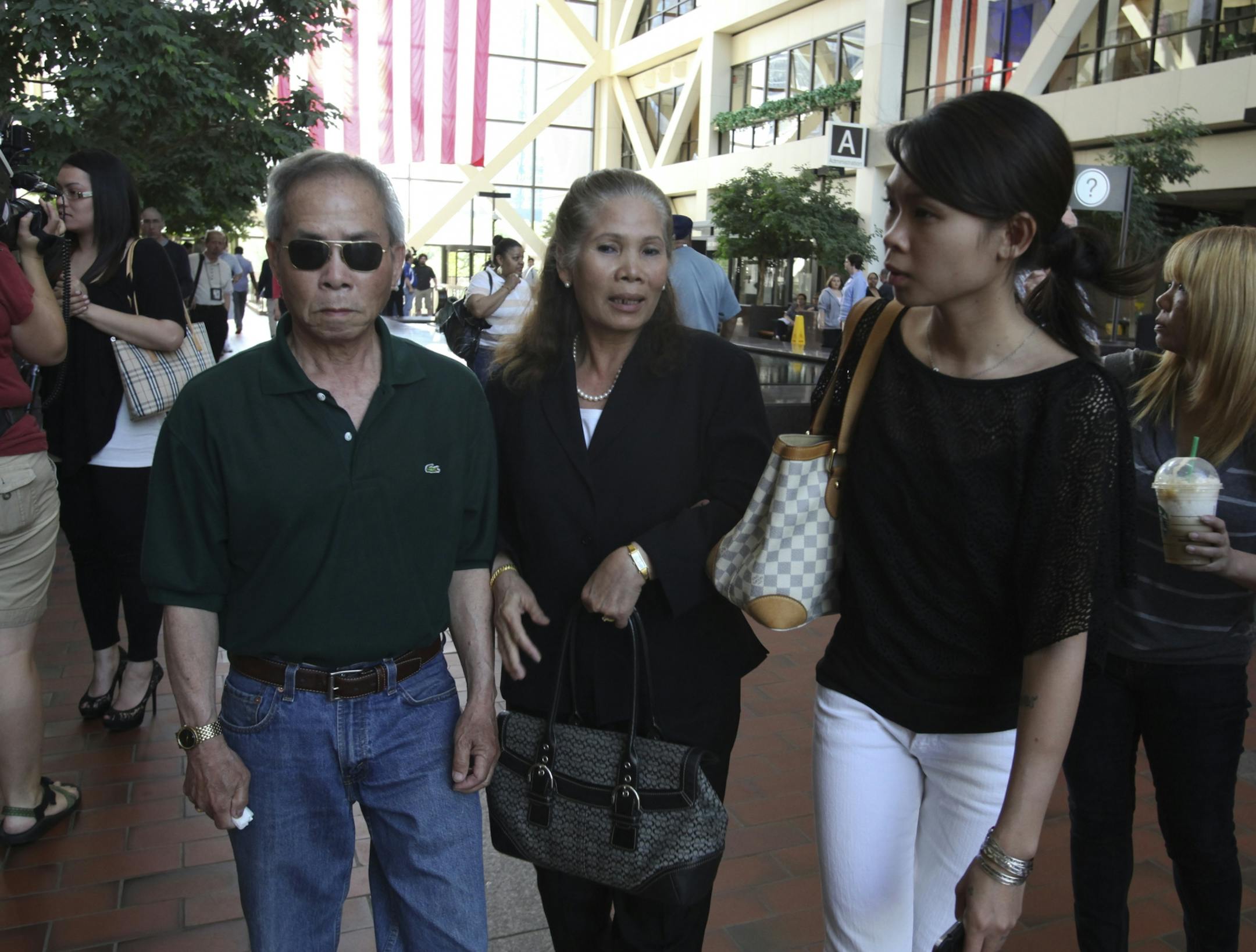
Keo and Phouxay Phanthavong have built a shrine to their deceased son, Anousone, to which Keo adds fresh flowers every day. Keo keeps in her freezer the lychee and star fruit her son gave her the day before he died. She carries photos of his Buddhist funeral in her purse.
Her husband, Phouxay, who fought in the Royal Lao Army alongside the CIA, fights this battle in his head. "Day by day," Phouxay said. "Missing him every day."
Anousone's death is no easier nearly a year after he was killed while filling his gas tank on an Interstate 94 exit ramp at Riverside Avenue in Minneapolis. His death, at 38 years old, forced the unassuming Phanthavongs to deal concurrently with the grief of losing a child and the strange burden of being thrust onto center stage in one of the most sensational hit-and-run trials in Minneapolis history.
Yet, the Phanthavongs remain gracious and steady on the eve of Monday's sentencing of Amy Senser, wife of former Vikings football player Joe Senser. She was convicted in May on two felony counts of criminal vehicular homicide. State guidelines call for 41 to 57 months in prison.
The Phanthavongs call the American justice system "fair" and are less concerned with whether Senser serves four years or four weeks. For them, longed-for closure will come in other ways: in what is said, and in what is remembered.
"We hold no grudges," Phouxay said through Lao interpreter Anna Prasomphol Fieser, Anousone's closest friend and his boss at True Thai Restaurant in Minneapolis. "We have to watch," Phouxay said, "and hear her apology."
Keo nods. "An apology," said Keo, who has lost 15 pounds from stress, "will bring comfort."
Buddhists, explained Fieser, who attended every day of the trial for the friend she called "Ped," believe that if a wrong-doer asks for genuine forgiveness, "you give it to them. It's not the accident at all," she said through tears.


