

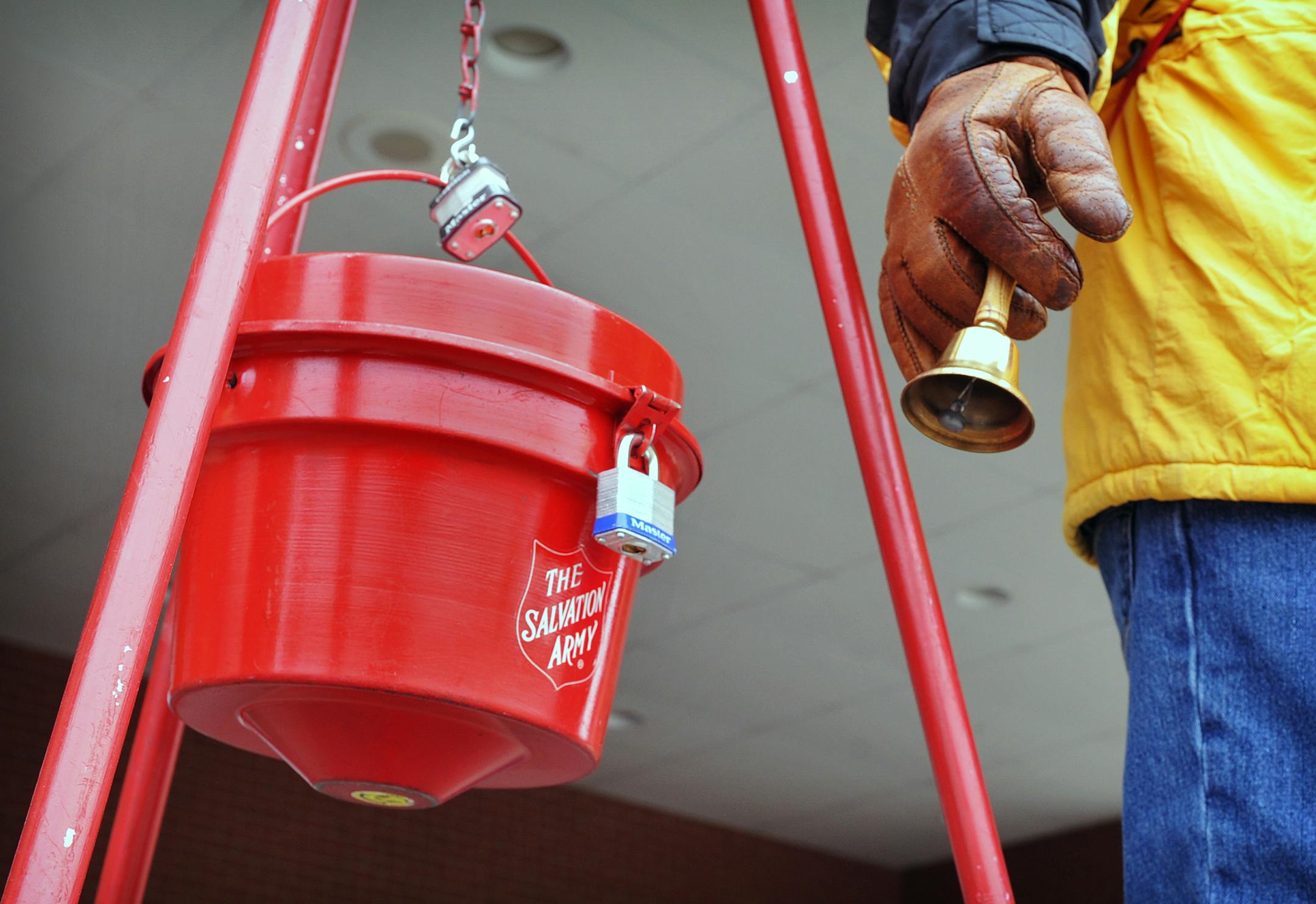
The tale of anonymous donors stuffing thousands of dollars into Salvation Army red kettles is warm and welcome comfort during a cold December week.
The bell ringers have no idea who the givers are, which allows us to cherish the mystery and magic of these generous acts.
Unfortunately, I couldn't stop at the feel-good stage. I've always been curious about the psychology behind Secret Santas of this sort, always wondered why it feels exhilarating, and really hard, to check the box requesting anonymity for my own donations.
Turns out there's intriguing research around this form of giving, but not so much as to spoil things.
So, question No. 1: Do you think the red kettle givers were male or female?
Studies on philanthropy reveal that women are more likely than men to give anonymously. "Typically, men want credit for what they're doing and women are often happy to stay behind the scenes," said Joanna Krotz, a New York-based speaker on women's philanthropy, and the author of "The Guide to Intelligent Giving."
So, they were likely women? Uh, not so fast.
While women tend to "sidestep recognition," Krotz said, they like to "kick the tires" before they donate. "They tend to want to make sure it's going to the right place." By sticking $1,000 or $10,000 into a random kettle, the donor would give up a lot of control.


