The larger-than-life firefighter bursts through an inferno of flames. He carries two fire victims slung over his shoulders and sprints to safety.
That's the kind of fantasy -- firefighter as superhero without the cape -- that Rosemount Fire Department leadership wants to dispel.
The reality: Good firefighters are agile and well-trained and know how to work as a team. And in many Twin Cities suburbs, they're volunteers.
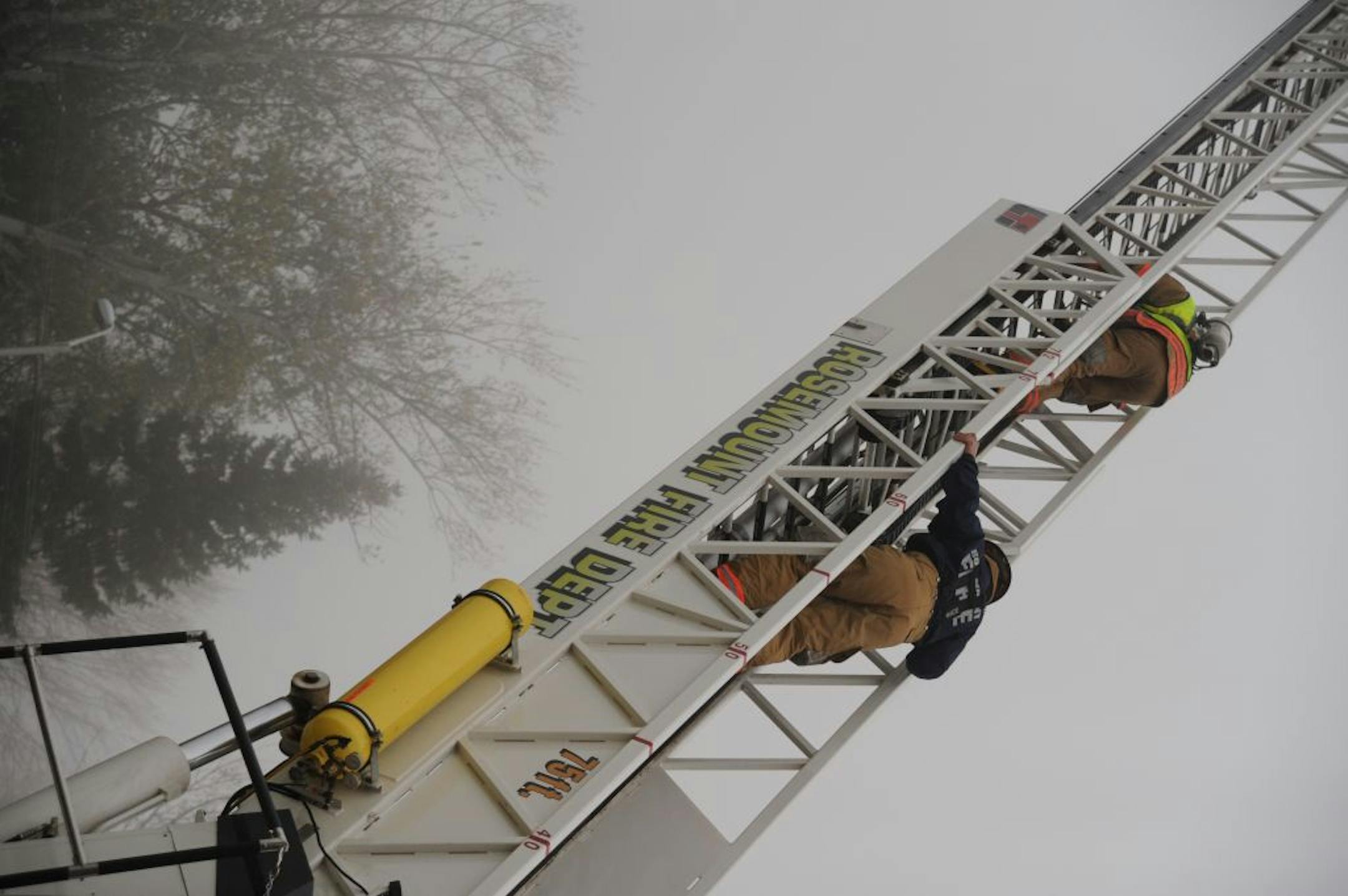
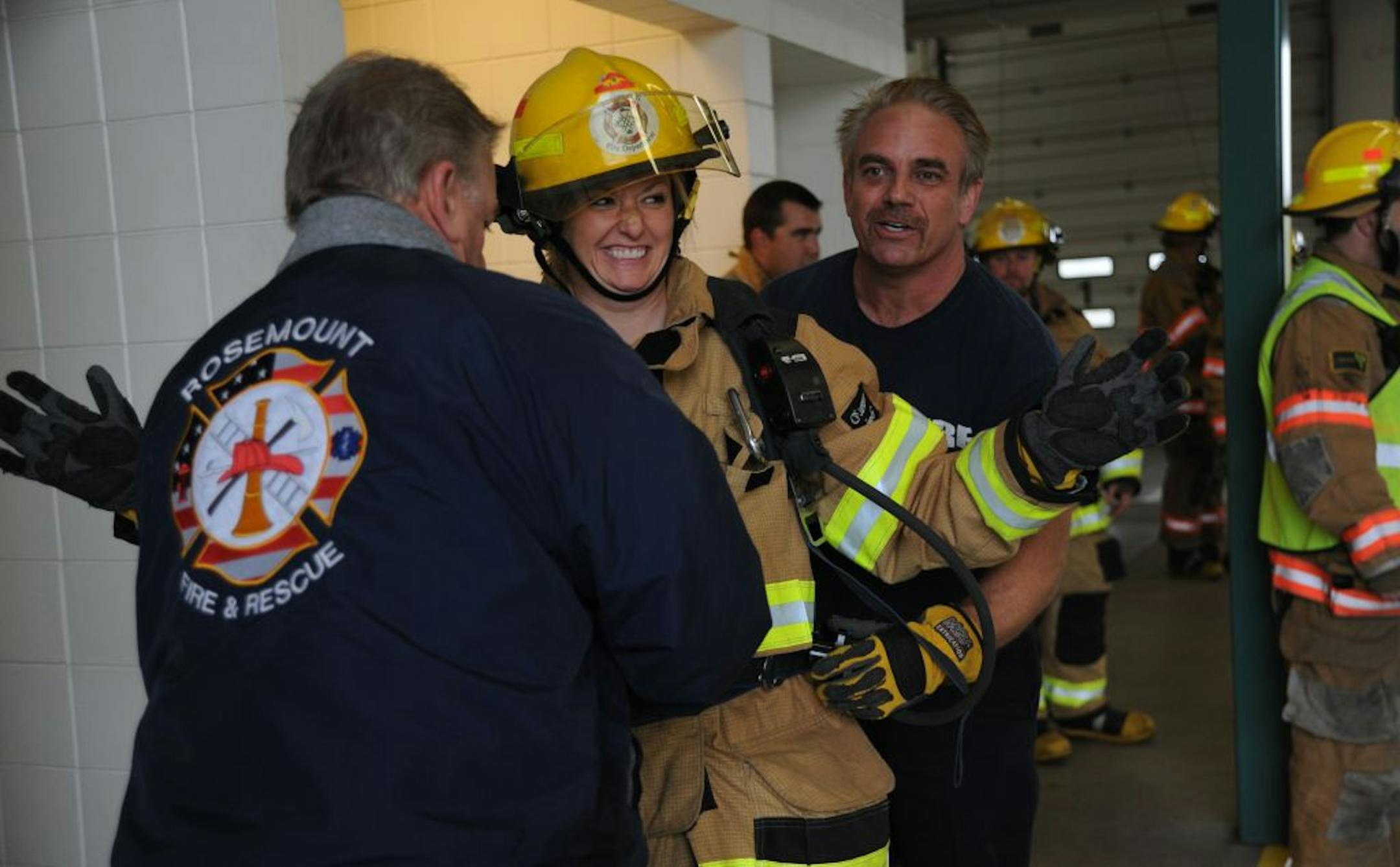
In an effort to generate more interest in volunteer firefighting and dispel the superhero myth, Rosemount Fire hosted its first-ever agility training course. It allowed men and women to put on gear, experience the rigors of a timed test and get some pointers from firefighters overseeing the event.
The object is to increase the number of applicants who take the official test in the spring by attracting a wider swath of people, including women. A practice run could also help settle nerves for the real deal. In years past, some test-takers were so anxious that they ran around the side of the building to throw up.
"I've watched the numbers dwindle every year for recruitment," lamented Rosemount Fire Capt. Kevin Rambo. "It can be intimidating. We want to show people it's not."
Of the 20,600 firefighters in Minnesota, 18,600 are either volunteer or paid on-call, receiving a nominal fee for each emergency. Rosemount is paid on-call, with firefighters receiving $6 per incident.
"In many of the suburban departments, most of the firefighting is done by volunteers," explained Bruce West, executive director of the Minnesota Board of Firefighter Training and Education. "It's more and more difficult to get people to volunteer. A lot of it is we are just so busy with families."