
Rosebud Sioux will meet with Army reps to discuss return of children's remains

Nearly 200 children from the tribe are buried in Carlisle, Pa.

The Philadelphia Inquirer
May 9, 2016 at 11:53PM
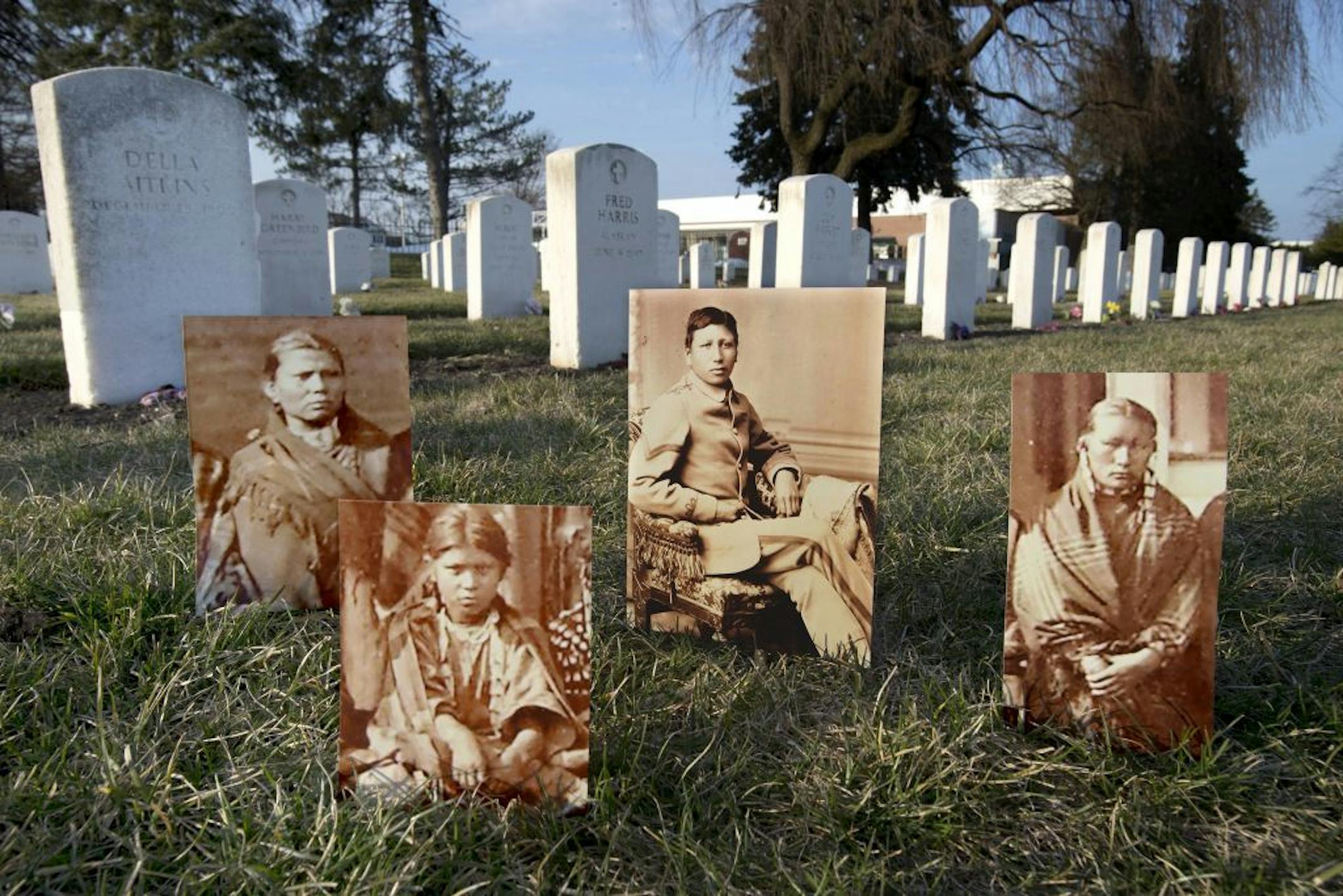
The Rosebud Sioux in South Dakota have begun efforts to repatriate the remains of the 10 Rosebud students buried on the Carlisle Indian School Cemetery. Left to right: Maud Swift Bear, Rose Long Face, Ernest White Thunder, and Dora Brave Bull were among the first students to arrive at the Carlisle Indian Industrial School on Oct. 6, 1879, and are all buried in the cemetery.
The Rosebud Sioux in South Dakota have begun efforts to repatriate the remains of the 10 Rosebud students buried on the Carlisle Indian School Cemetery. Left to right: Maud Swift Bear, Rose Long Face, Ernest White Thunder, and Dora Brave Bull were among the first students to arrive at the Carlisle Indian Industrial School on Oct. 6, 1879, and are all buried in the cemetery. (Tns - Tns/The Minnesota Star Tribune)

PHILADELPHIA - The children died far from their families, stricken by tuberculosis, flu and loneliness, buried on the grounds of what was then the Carlisle Indian Industrial School, which today is the Army War College.

Now there's a chance that some will be sent home to their tribes.

The head of Army cemeteries said in an interview that he's open to meeting American Indian demands to repatriate children's remains, provided talks on the matter prove fruitful and all regulations are met.

"Just like if I was dealing with an individual family member that wanted to conduct a disinterment. What are the family's wishes?" said Patrick Hallinan, executive director of Army National Military Cemeteries.

"We look for a cogent reason to authorize a disinterment, and I believe there's definitely a cogent reason. … I think it's incumbent on us to work with them and assist them to carry that out."

That stance marks a reversal for the Army, which in winter denied a Rosebud Sioux request to return the remains of 10 children to South Dakota.

Now the Army confirms it will send two officials to Rosebud Tuesday to begin "government-to-government consultations"with the Sioux, the Northern Arapaho of Wyoming and a third tribe that now seeks the return of its people, the Northern Cheyenne of Montana.

"I think things are going to happen," said Russell Eagle Bear, the Rosebud historic-preservation officer. "I'm hoping they're going to tell us they're ready to work with us and let our relatives go."
If that happens, he said, an intended summer tribal pilgrimage to Carlisle could become an advance party to plan the return of Sioux remains.

Nearly 200 children are buried in the Carlisle cemetery. They were among thousands taken from American Indian families in the West, sent a thousand miles to the East, and forced through a wrenching experiment in assimilation. The school sought to cleanse their "savage nature" by erasing their names, language, customs, religions, and family ties.

Many American Indians view what took place at Carlisle as genocide.

Hallinan's responsibilities include supervision of the nation's on-base graveyards. The decision to return remains from Carlisle to Rosebud or elsewhere, he said, is his.

"If the tribes are interested and this is something they want to do, we would be supportive to see that accomplished," Hallinan said. "We look forward to working with the tribes, and we think that once we sit down and consult with them, there should be a positive outcome for all involved."

He plans to send staff to two big American Indian conferences this year to see if other tribes want to discuss the status of their ancestors' remains.

While the Army plans to send two people on Tuesday, dozens could attend from Indian nations.

At least six tribes intend to have people there, and the Rosebud Sioux will bring lawyers, political leaders, and tribal staff. South Dakota's senators and congresswoman will send representatives.

"I'm trying to be as positive as I can," said Yufna Soldier Wolf, head of the Northern Arapaho historic preservation office, who will travel to Rosebud.

For years, Soldier Wolf has sought the return of a family member from Carlisle, condemning the Army for using the Indian cemetery as "a tourist attraction."

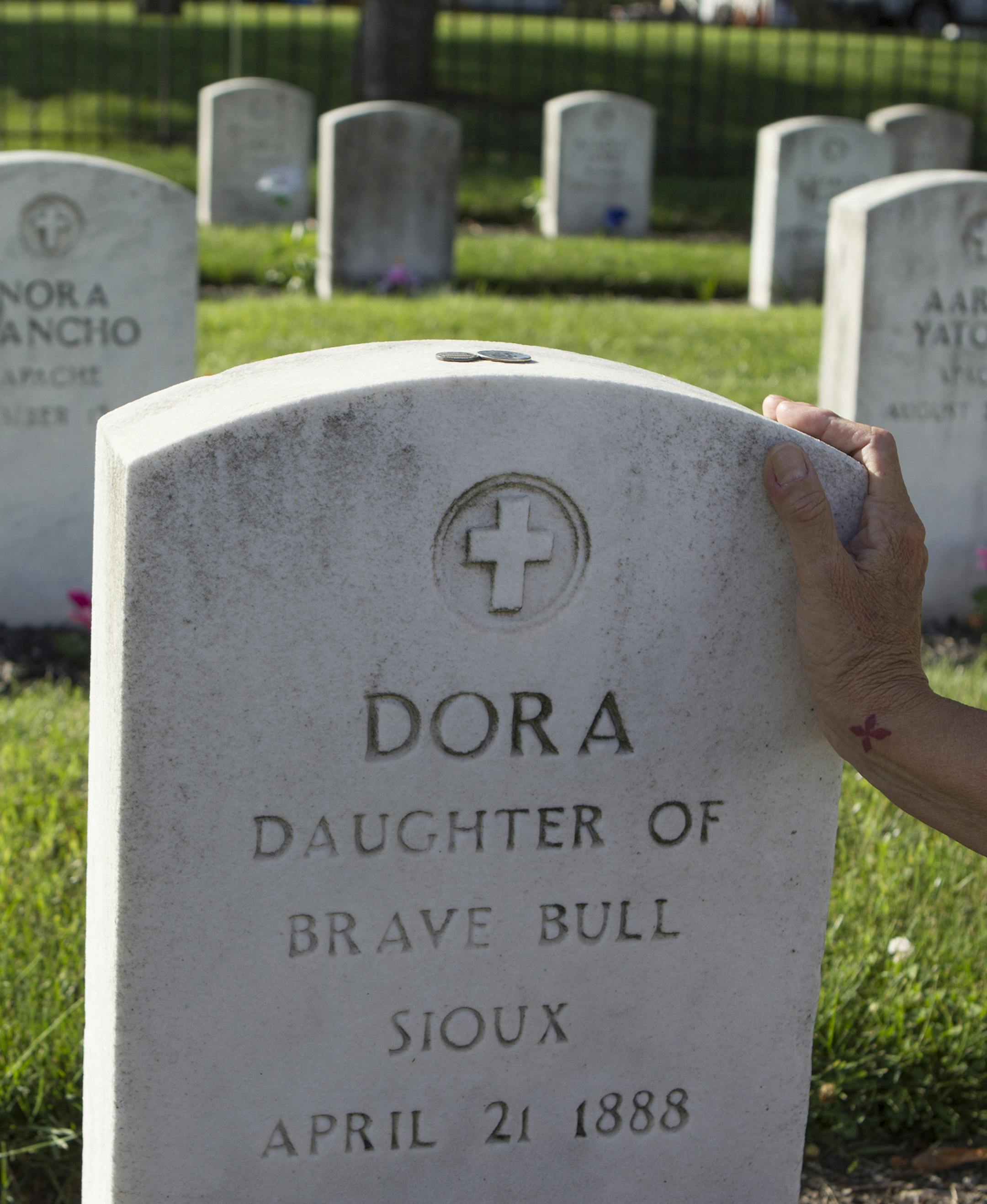
A woman places her hand on the gravestone of Dora Brave Bull at the Indian Cemetery at the Carlisle Barracks in July, 2014. Dora, a Rosebud Sioux, was among the first group of students to arrive at the school on Oct. 6, 1879. She passed away on April 24, 1881. The Rosebud Sioux in South Dakota have begun efforts to repatriate the remains of the 10 Rosebud students buried on the Carlisle school grounds. (Charles Fox/Philadelphia Inquirer/TNS)
Dora Brave Bull’s grave in Carlisle, Pa. She was one of the first students to arrive at the school in 1879. She died in 1881. (The Minnesota Star Tribune)
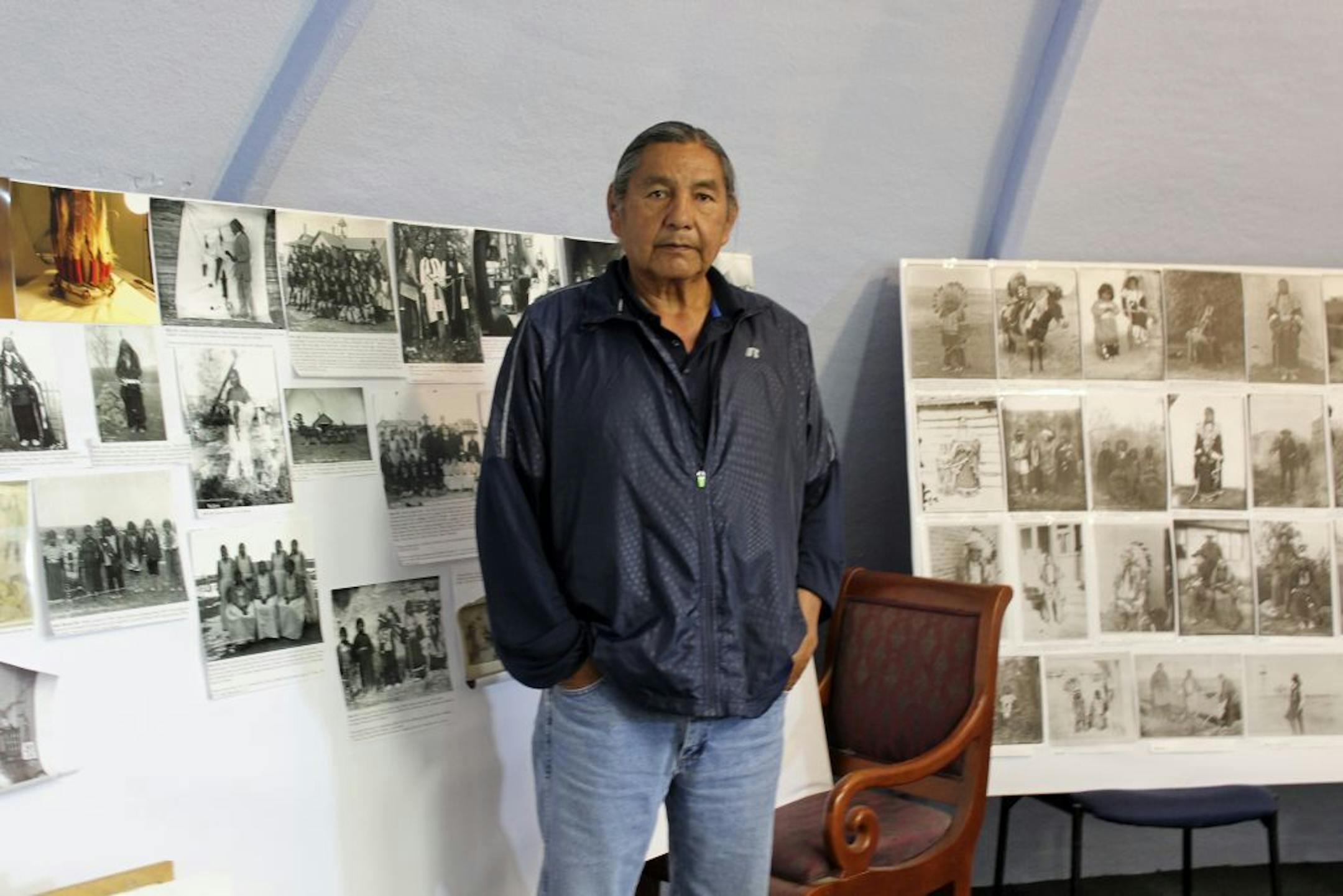
In this May 6, 2016, photo, Russell Eagle Bear, the historic preservation officer for the Rosebud Sioux Tribe, stands in his office in in Rosebud, S.D. Eagle Bear will be leading a meeting Tuesday, May 10 between leaders of several tribes, including the Rosebud Sioux Tribe, and representatives from the U.S. Army to address the possibility of repatriating the remains of at least 10 Native American children who died away from their homes while being forced to attend the government-run Carlisle Ind
In this May 6, 2016, photo, Russell Eagle Bear, the historic preservation officer for the Rosebud Sioux Tribe, stands in his office in in Rosebud, S.D. Eagle Bear will be leading a meeting Tuesday, May 10 between leaders of several tribes, including the Rosebud Sioux Tribe, and representatives from the U.S. Army to address the possibility of repatriating the remains of at least 10 Native American children who died away from their homes while being forced to attend the government-run Carlisle Indian Industrial School in Pennsylvania more than a century ago. (Associated Press/The Minnesota Star Tribune)
about the writer

about the writer

Jeff Gammage